‘This feels like a story for now': Andrew Garfield on The Uprising, his post-plague drama
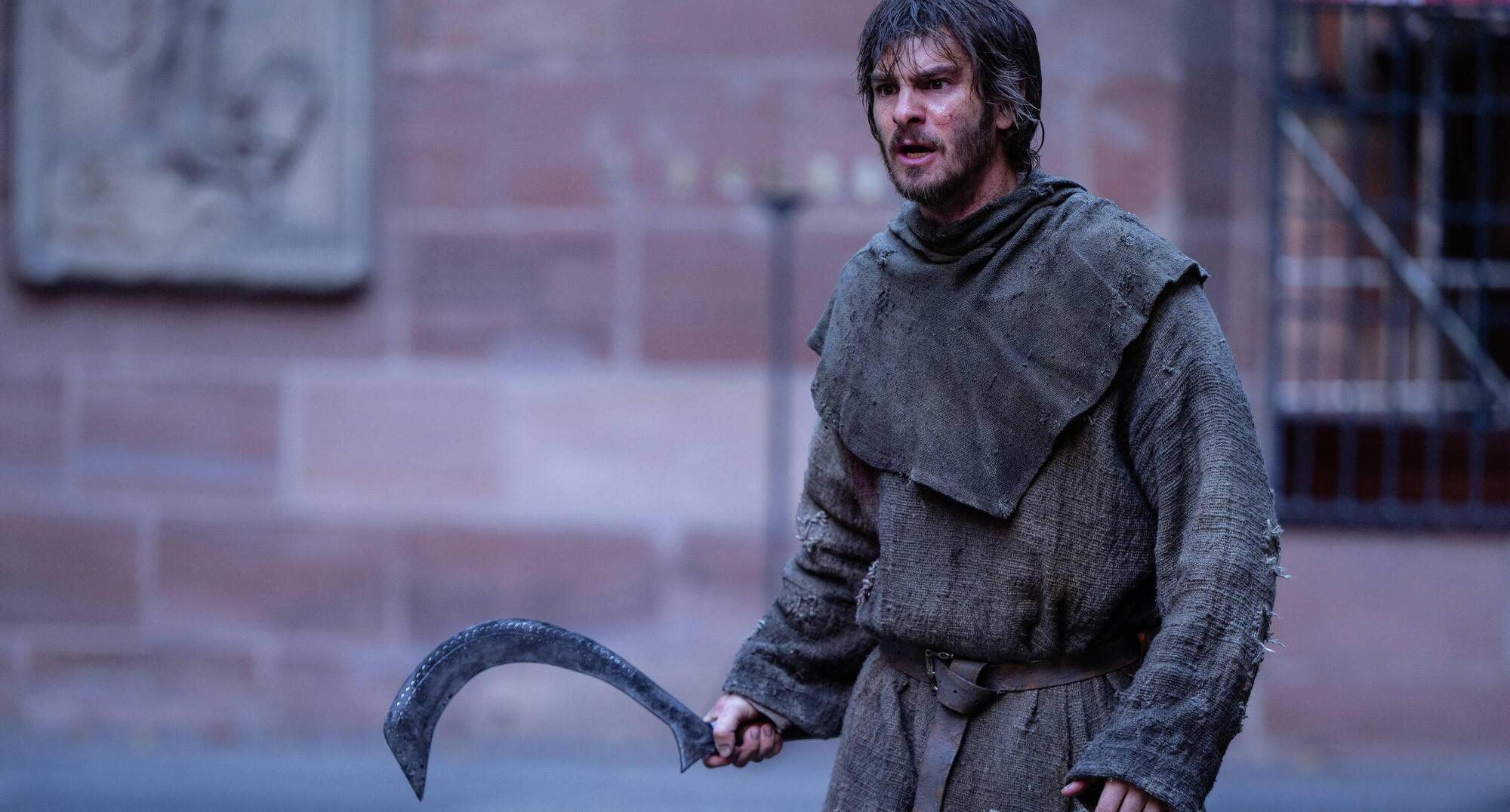
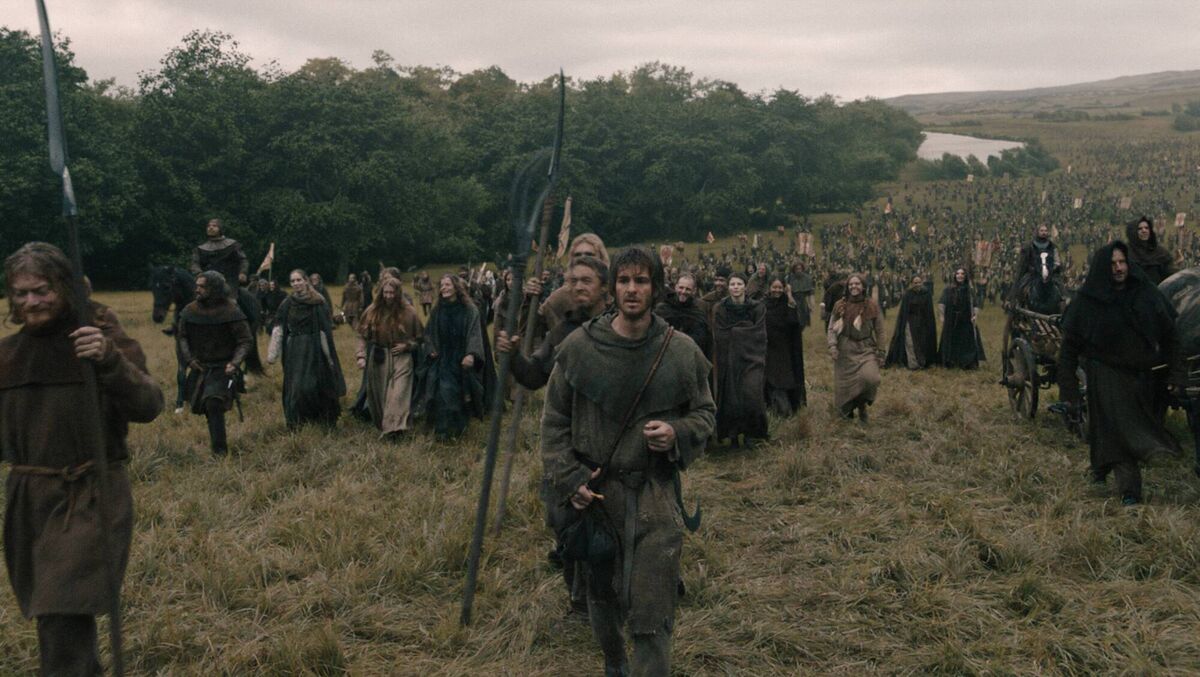
Andrew Garfield as the ploughman in The Uprising.
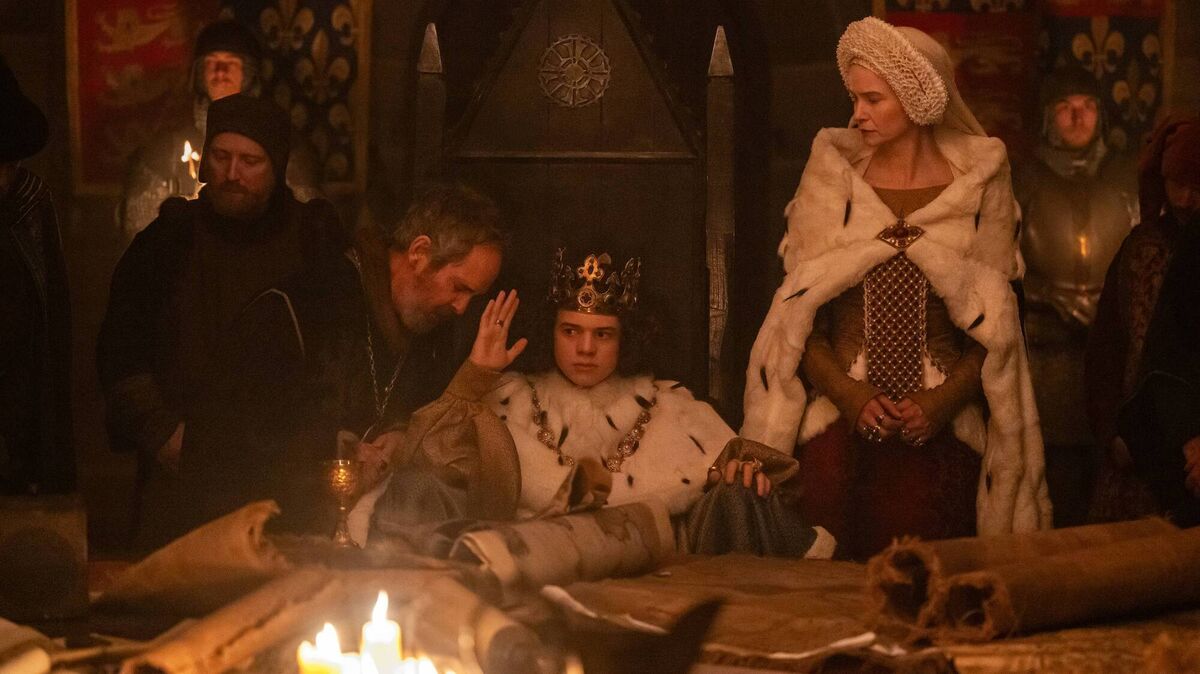
In 1381, England was reeling from grief and anger after the Plague had wiped out almost half the population. For those who survived, resentment was growing towards the troubled young King Richard II, whose government imposed a brutal tax on the poorest members of society. This fuelled growing unrest, eventually erupting into the peasants’ revolt.
a new film from British filmmaker Paul Greengrass, stars Andrew Garfield as the Ploughman, a farmer haunted by the loss of his family.
Driven by grief and a thirst for justice, he rallies an army of ordinary people alongside Wat Tyler, played by Cosmo Jarvis, a soldier who served the king’s late father, and John Ball, played by Jamie Bell, a priest with egalitarian views. Together, they challenge the king’s might in a desperate fight for justice and survival.
Although the film is set in the 14th century, its themes feel strikingly contemporary, echoing the times we are living through today. The word 'plague' is even back in the news, following the recent incident in Russia.
Garfield, 43, who is known for his roles in Marvel’s films and says he was surprised this period of history had never been brought to the big screen before.
“It’s very interesting that it’s never been turned into a film before, this popular uprising, because it’s ripe for a great story like this, and a kind of epic, sweeping adventure for these characters in the way that Paul has told it,” he says. “I feel very lucky that I got to be a part of bringing the story to an audience.”
Speaking about the film’s contemporary themes, the British-American actor says: “Around the world, there are things and conflicts happening where there are people that are being squeezed to that point where they say, ‘I can’t keep living like this. You can’t keep treating me like an animal, and I’m gonna say no to that, and I’m gonna fight to create a new world and a new system’.
“Hopefully, we don’t get squeezed to the point where we decide that if things don’t change, I’ll die trying to make them change. But, you know, who knows?”
Garfield says the film also made him think about the role of violence in gaining social justice.
“It’s a really interesting story for that reason, and the big question for me around it was: what role does violence play in change, and what role does violence have to play in making profound change? Does it work? Does it not work?” he says. “And, you know, but for the grace of God, I haven’t been in that position to actually have to really make those kinds of choices.
“I find it to be a very, very stimulating film in that way, and I do feel like it’s a long-distance mirror to the times we’re in. And maybe, in our kind of context, it’s a more covert kind of oppression that we’re all living under. But it’s an oppression nonetheless.”
Greengrass, who has directed the action-thriller series, is known for his immersive film-making style. Speaking about his experience working with the Oscar-nominated director, Garfield says: “It was definitely the most immersive experience I’ve had.
“I’ve loved Paul for a long time, and I’ve loved his films for that reason. I wanted to work with him for a long time, and when I read this, I thought, ‘Well, I hope that this is the one we can collaborate on’, because it felt very close to my heart. I just felt very, very moved by it. And I thought, ‘This feels like a story for now’.
He adds: “I was very, very excited to be immersed in his world in that way. He does take long takes, so you don’t know where the camera is a lot of the time. He casts an incredible ensemble of actors, obviously, but not only that, he casts an incredible ensemble of extras. There were 150 extras some days, and they were all such good actors and so committed. So anywhere you looked, you felt like you were in reality.”
Garfield, who also stars as OpenAI chief executive Sam Altman in Luca Guadagnino’s upcoming film says he enjoyed coming to the ploughman after playing Altman.
“I started with the emperor and then finished with the ploughman. So that was really interesting. I’m glad it was that order. It was good to finish with someone who was fighting for a new world, a world based in nature, while having previously played the person that’s pulling our new world into a far less, a far more artificial place potentially. So it was a nice ending in a more nature-based kind of place.”
Greengrass, 71, says he was inspired to write during the covid-19 pandemic, when his thoughts turned to the striking parallels between the upheaval caused by the pandemic and the turmoil wrought by the Black Death centuries earlier.
“That period of history, 1381, following the Black Death, there was a great national convulsion and uprising. It felt to me like a great story and an exciting basis for a movie,” he says.
“Like today, people were enraged with the government’s failure. There was a complete command in their thousands, and I wanted somebody to represent them. In my telling of the story, the ploughman is the first to raise his hand in rebellion in Essex.”
He adds: “I didn’t want to make a reenactment. I wanted to make something you experience rather than watch, immediate, alive, as if it were unfolding in front of you.
“And I didn’t want to tell it through the names we remember, like Tyler or Ball, but through someone history never named at all: a farmer. In Andrew Garfield’s ploughman, I wanted to give a voice to the countless ordinary people who rose up and paid the price for it.”
- is Irish cinemas on Friday, October 9