Book review: The reimagined world of Oscar Wilde

John Boyne does a remarkable job of writing a compelling tale with almost no action or introspection; he tells the story almost entirely through dialogue
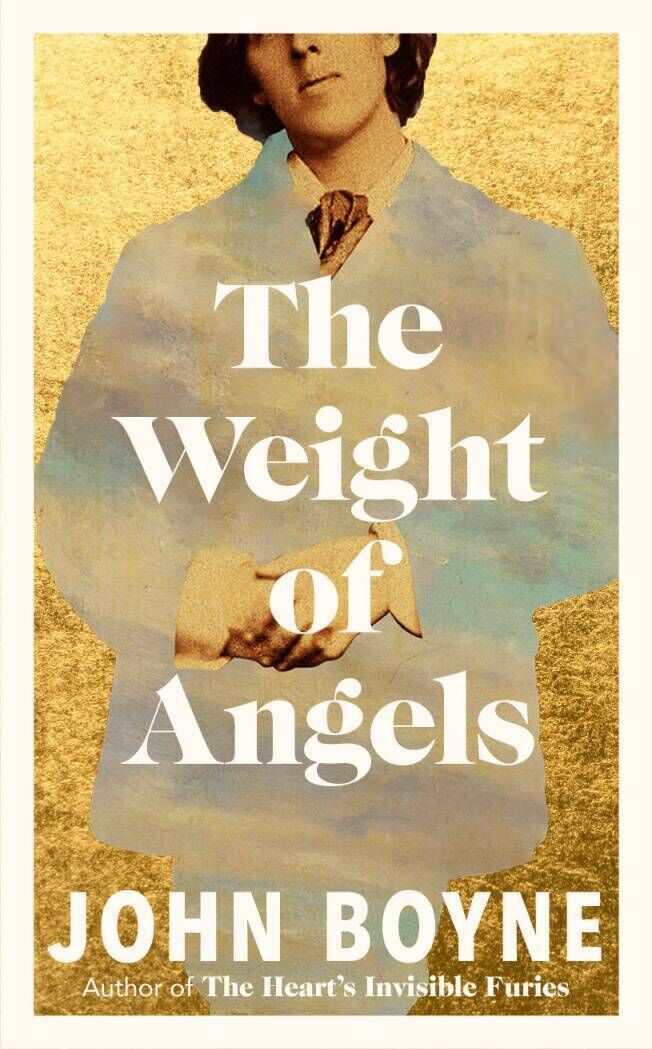
John Boyne has imagined a different life for Oscar Wilde, one that lasted another 50 years and was rich with writing, success, young men, and love. Also, heartbreak, failure, and regret.

John Boyne has imagined a different life for Oscar Wilde, one that lasted another 50 years and was rich with writing, success, young men, and love. Also, heartbreak, failure, and regret.

  • The Weight of Angels
  • John Boyne
  • Doubleday, €16.99

Oscar Wilde was 46 when he died in 1900, his health broken after two years in prison for sodomy. 

His arrest came after he challenged the Marquess of Queensberry, who had called him a sodomite. He sued for libel, and lost.

But what if he hadn’t? What if he had, for once, ignored the taunt?

In The Weight of Angels, John Boyne has imagined a different life for Wilde, one that lasted another 50 years and was rich with writing, success, young men, and love. Also, heartbreak, failure, and regret.

Boyne does a remarkable job of writing a compelling tale with almost no action or introspection; he tells the story almost entirely through dialogue. 

The third-person objective narrator serves primarily as eavesdropper.

To break up the conversations, Boyne includes newspaper articles, letters, and sections written as plays. 

He is a marvellous imitator, and he does an excellent job channelling Wilde. He has a subtle touch; as Wilde ages, the reader senses that he grows weary of always being “on”.

“The tragedy of the young is that they endlessly seek the spotlight,” Wilde says at one point, almost automatically. 

“The tragedy of the old is —” to which an American responds, “Knock it off. I’m not in the mood for any of your bon fuckin’ mots.”

The title refers to Wilde’s regrets, but another weight courses through the book: Society’s attitude toward homosexuality. 

Even Wilde’s friends use language that disparages his gayness; this disapproval pervades his life and helps explain his ostentation: It hides the pain of wanting what he thinks he can never have. 

“A reciprocal love between men who both desired and treasured each other. Even the idea made him feel a wealth of sorrow, for such contentment, he was certain, would surely be impossible to find.”

Imagine, the book suggests, how fruitful a life could be if people were accepted, rather than punished, for who they are. 

Boyne imagines a wealth of new works for Wilde — plays, mostly — and gives Wilde’s young lover Bosie the death that the real Wilde suffered. 

In the novel, it is Bosie who challenges the Marquess and ends up in prison. And it is the narcissistic Bosie who writes the splendid The Ballad of Reading Gaol. 

It is an elegant way of explaining the existence of the poem in Boyne’s reimagined world.

As the book progresses, Wilde is everywhere, meeting everyone, attending coronations, parties, and opening nights, and sparring with other writers, primarily Irish writers. 

He is cautiously friendly with William Butler Yeats, less so with George Bernard Shaw and Bram Stoker. He dismisses James Joyce, saying he’ll read Finnegan’s Wake once it’s been translated into English.

The Weight of Angels is reminiscent in ambition and scope of Boyne’s epic masterpiece, The Heart’s Invisible Furies (2017), in which he traces the history of modern Ireland through the life of one gay man. That novel was sprinkled with cameos of historic figures.

The last third of the book is like Forrest Gump, where Wilde either runs into, sits next to, drinks champagne with, works with, argues with, charms or otherwise interacts with just about every notable figure from the first half of the 20th century: Winston Churchill, Katharine Hepburn, Mickey Rooney, Wallis Simpson, Thelma Converse, Emmaline Pankhurst, Rudyard Kipling, Agatha Christie, Andre Gide, TS Eliot, Charlie Chaplin. 

Also EM Forster, whom Boyne imagines writing mysteries and walking around naked in the sunshine of Papua, New Guinea.

Not all of these interactions are crucial to the plot and certainly their inclusion accounts for the book’s 600 pages, but they are entertaining. Boyne’s Virginia and Leonard Woolf are hilariously bizarre. Still, Wilde confides in them. 

“I am writing about a fool,” he tells them. “A man who makes a grave error and suffers the consequences. He hurts all those around him.” In other words, himself.

The Weight of Angels is a poignant, moving, sometimes funny novel about regret and atonement — regret for the people Wilde betrayed, or hurt, or made promises to that he did not keep, and an atonement that he hopes does not come too late.

BOOKS & MORE

Check out our Books Hub where you will find the latest news, reviews, features, opinions and analysis on all things books from the Irish Examiner's team of specialist writers, columnists and contributors.


More in this section

Scene & Heard

Newsletter

From music and film to books and visual art, explore the best of culture in Munster and beyond. Selected by our Arts Editor and delivered weekly.

Cookie Policy Privacy Policy Brand Safety FAQ Help Contact Us Terms and Conditions

© Examiner Echo Group Limited