Book review: Wilde’s Women
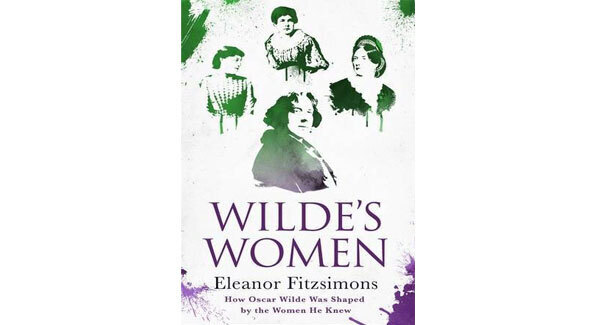
So author Eleanor Fitzsimons’s declared intention of writing instead about the women who surrounded him seemed an interesting proposition.
These women must of course begin with his mother, Lady Jane Wilde, known before her marriage as the poet Speranza, who published pro-Independence, anti-British poems in The Nation in the 1840s.
She was an early advocate of women’s rights, and campaigned for better access to education for women. When she moved to London in 1879 she held a weekly salon, and her connections helped to launch her son Oscar on his literary career.
While still a student, Oscar was briefly infatuated with Florence Balcombe, one of his circle of Dublin friends, but in his absence she became engaged to Bram Stoker, and married him.
Stoker, a friend of the Wilde family and a fellow Trinity student, gave up his post in Dublin Castle to travel to London, where he worked as assistant to actor-manager Henry Irving at the Lyceum during the height of Oscar’s theatrical success, before going on to become the author of Dracula.
Many of the women whose company Oscar enjoyed were actresses, including Lillie Langtry, Ellen Terry, and Sarah Bernhardt. Actresses had more freedom than conventional women, not being hidebound by the need to appear respectable (it was assumed they were not).
Their independence and lack of conformity, as well as their beauty and high spirits, appealed strongly to him. The unconventional women who feature in Wilde’s plays — Hester Worsely in A Woman of No Importance and Gertrude Chiltern in An Ideal Husband, for example — were inspired in part by his actress friends.
Not everyone liked him: Eleanor Marx referred to Oscar in an 1882 letter as ‘that very limp and nasty young man’. However, unlike many of his wealthier friends, she spoke up for him after his disgrace and imprisonment, when theatrical producers were removing his name from the billboards while raking in money from his plays.
His wife, Constance Lloyd, was also an early feminist, an advocate of “rational dress” for women, with an interest in socialism and psychical research. She published articles on fashion and theatre, and was an active participant in Oscar’s editing of the feminist magazine The Woman’s World.
If Wilde’s Women had concentrated on the women in Oscar’s life, it would have been more interesting. As it is, faced with a wealth of material the author has spread her net too widely.
For example, the full story of Mary Travers (recently the subject of a novel by Eibhear Walsh), who sued Lady Wilde for libel when Oscar was only 10-years-old, is included, as is the life of Dolly Wilde, Oscar’s strange niece, who was only six-years-old when he died.
This book has scholarly notes and references, and is a competent digest of the many works already written about Wilde.
However, anyone expecting a lively account of the extraordinary women who surrounded this most colourful of men will be disappointed by this overlong ramble through familiar territory.
CONNECT WITH US TODAY



Be the first to know the latest news and updates














