From the Athenaeum to the Opera House: A history of Cork's finest venue
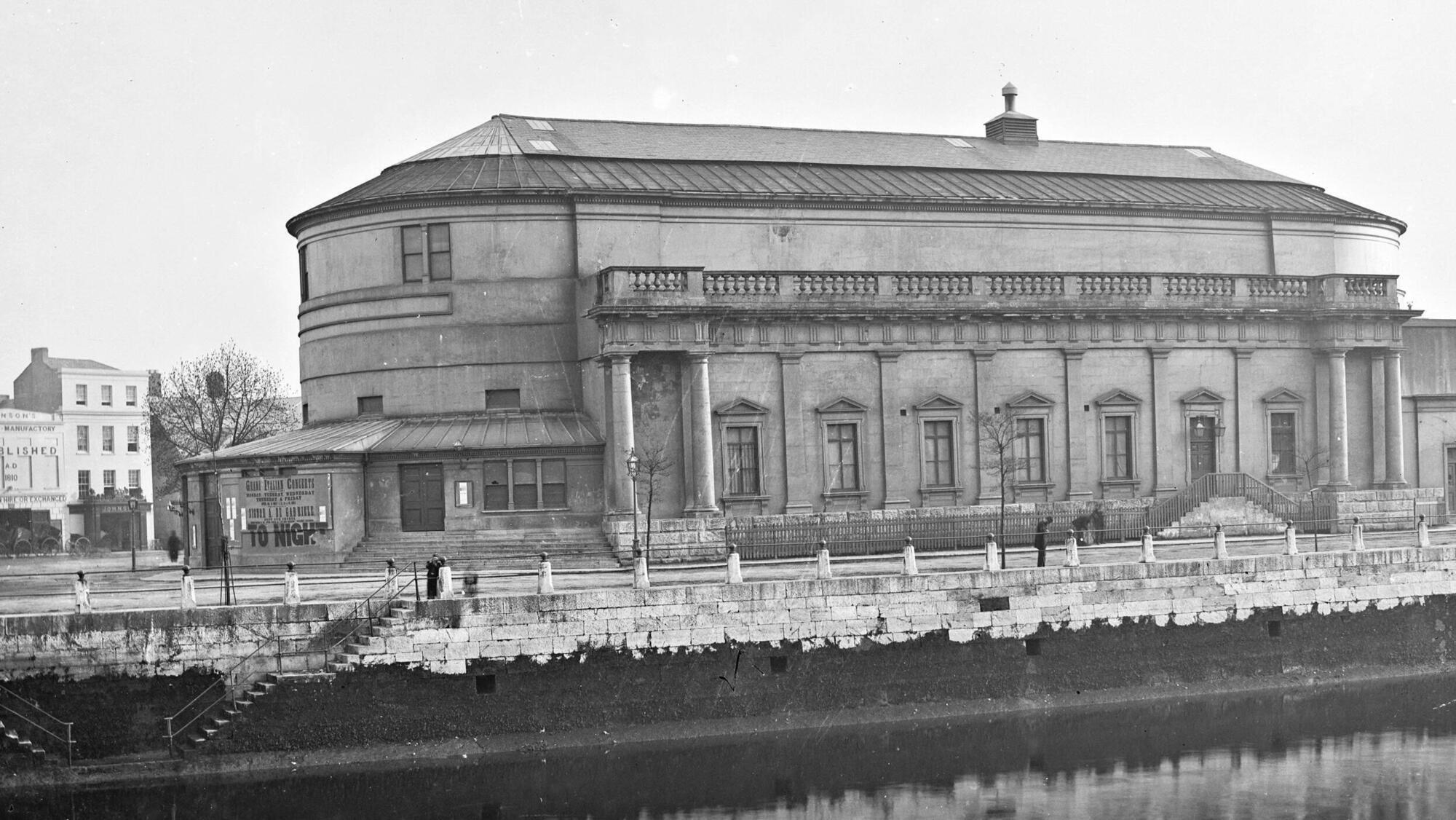
The old Cork Opera House, previously titled the Athenaeum. (Picture courtesy of the National Library of Ireland)
Cork Opera House has been a centre for cultural and entertainment activities in the city since reopening its doors on October 31, 1965. Generations of Corkonians have enjoyed the delights of a wide selection of performances such as the annual Christmas pantomime; the organised chaos of and the variety of shows such as
Older members of Cork’s population, however, will readily recall the night when the current building’s predecessor, the old Opera House, was destroyed by a catastrophic fire that left one of the city’s iconic landmarks in ruins, thereby bringing to an end a history dating back to 1855.
Although that building is remembered principally as the Cork Opera House, it began life in the 19th century as the Athenaeum. It evolved from the aftermath of the Cork National Exhibition of 1852. The exhibition, originally scheduled to take place in the Corn Exchange, near the location of today’s City Hall, was intended to showcase the capabilities of Cork's artisans and manufacturers. Applications from potential exhibitors far exceeded the space available to the organisers, so architect Sir John Benson was engaged to design an additional exhibition building (the Fine Arts Court) that subsequently became the basis for the Athenaeum.
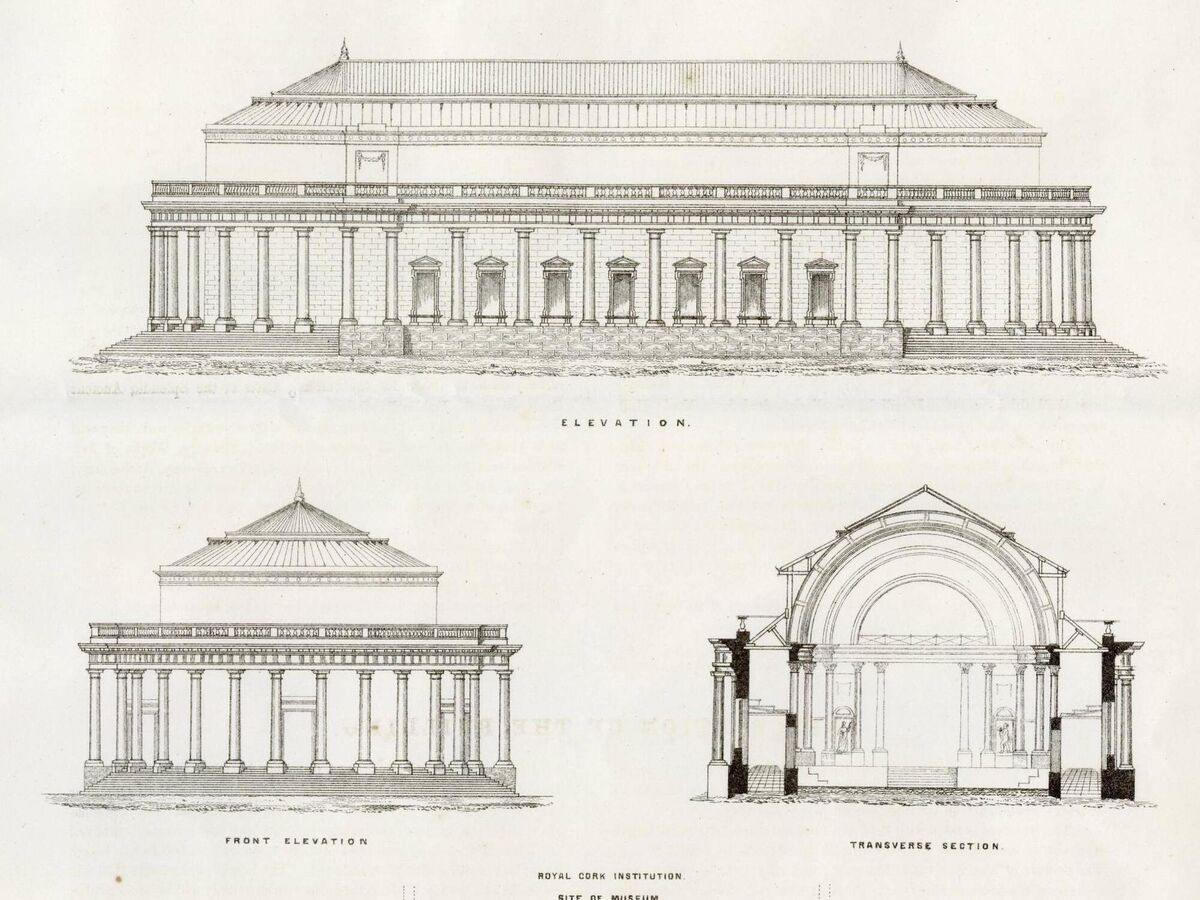
Following the exhibition, the committee sought to find a permanent location for the building that would continue to accommodate cultural activities. The initial plan was to dismantle the Fine Arts Court and transfer it to a site at Nelson Place, now Emmet Place. This site was owned by the Royal Cork Institution, and this ultimately determined the location of today’s Opera House.
The Fine Arts Court was badly damaged in a winter storm in 1853 and was left ruined. Newspaper reports of the day stated it was being dismantled and that none of the materials could be reused. A new design was proposed, again by Benson, which, according to contemporary reports, would become the second-largest hall in the Kingdom!
The new building was completed in late 1854, although budgetary challenges ensured it was quite different from Benson’s original design. The Lord Lieutenant of Ireland was scheduled to perform the official inauguration on 24 November 1854; however, his son was killed at the Battle of Inkerman, during the Crimean War, thus necessitating the postponement of the official inauguration.
It was decided to open the building anyway, and the first recorded performance, a Musical Promenade in aid of Cork’s Industrious Blind, took place on January 29, 1855. The performance yielded a profit of over £60 (almost €10,000 in today’s terms) for the Blind Asylum, thereby initiating a long record of fundraising activities that still continue to this day. The official opening followed on May 23 1855, when the Lord Lieutenant formally opened the building.
However, it was not a financial success as a theatre. Design limitations made stage performances less than satisfactory, and the venue was plagued by acoustic problems and draughts. Amongst the luminaries to appear there were General Tom Thumb in 1858, billed as the smallest man in the world, and Charles Dickens, who performed readings from his works in 1864. Dickens’ visit netted the author £226 (approximately €37,000 in today’s terms), but it was overshadowed by several salacious newspaper reports concerning his marital situation and his relationship with his sister-in-law.
Financial issues plagued the venue during the 1860s and it was sold on several occasions. It was eventually purchased in 1871 by John George MacCarthy, vice president of the Cork Young Men’s Society. James Scanlan, a business associate of MacCarthy, was appointed manager. There followed several years of structural alterations and a rebranding which saw the venue labelled as the Munster Hall for a period. When Cork’s Theatre Royal (location of today’s GPO) was sold in 1875, the owners of the Munster Hall rebranded the riverside venue once again, this time naming it the Theatre Royal and Cork Opera House.
The introduction of balconies and other structural modifications enabled the building to finally become a fully- fledged theatre. The remodelled building opened as the Cork Opera House on September 17, 1877, with a production of HJ Byron's popular comedy The transformation from Athenaeum to Opera House was now complete, and so began a new period of the venue’s history.
During the late 19th and early 20th centuries, the Opera House became Cork's principal entertainment venue. It hosted dramas, concerts and variety performances, as well as touring theatrical and operatic companies, including the Carl Rosa Opera Company and the Moody-Manners Company, among others. Cork audiences earned a reputation for being very knowledgeable, but they could also be harsh, with several artists occasionally feeling the brunt of this criticism.
The Opera House’s audience was generally drawn from all social tiers of the city, and its programme reflected the popularity of theatre, opera, music and popular entertainment during the late Victorian and Edwardian periods. By the early 20th century, the Opera House had become a mature theatre with a substantial regular local audience and an established place within the national and British touring circuits.
It successfully hosted national companies such as the Abbey Theatre and local groups such as the Cork Operatic Society, the Cork Shakespearean Society and the Gilbert and Sullivan Group, and inspired playwrights and authors such as Lennox Robinson, Daniel Corkery and Seán O’Faoláin.
The theatre continued to operate during Ireland’s challenging political and economic circumstances of the early twentieth century, including the Burning of Cork by British forces in 1920. In an ironic twist of fate, the building was itself destroyed by fire in its centenary year, on the evening of December 12, 1955, during a rehearsal for the Christmas pantomime
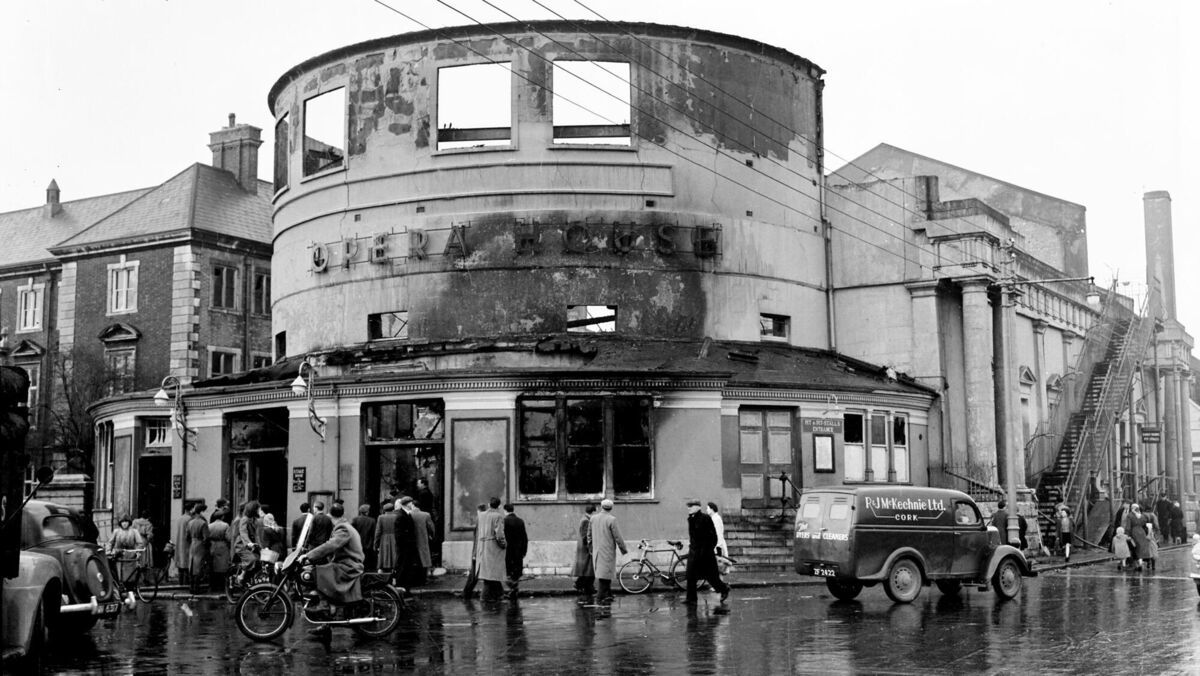
The timber construction and interior furnishings helped the flames spread quickly, and, although firefighters were able to prevent the fire from spreading to the neighbouring Crawford School of Art, the Opera House itself was effectively destroyed. An electrical fault, combined with the building’s wooden construction, was subsequently deemed to be the cause of the fire.
The destruction of the Opera House represented a profound loss for Cork that went far beyond the destruction of an old theatre. It destroyed a building that had witnessed a century of Cork's history, including its journey from colonial loyalty to independence.
The people of Cork responded with a major fundraising campaign, lasting almost a decade, to rebuild the theatre. Eventually the current Opera House was built on the historic site. Designed by Scott Tallon Walker, the new building was opened by President Éamon de Valera in 1965, thereby beginning another chapter in the history of the institution.
From its origins in the 1852 National Exhibition, through its transformation into the Munster Hall and eventually the Opera House in 1877, to its final destruction in 1955, the building reflected the cultural aspirations and development of the city. The Opera House was, and is, a civic institution, a centre of entertainment and a significant part of Cork's social and cultural identity. It was and is more than a theatre.
- Pat Duggan will speaking about the history of the Atheneum on Saturday, 12 September as part of the UCC public conference, Cork Histories. This two-day event will feature keynote addresses from Prof Howard Clarke of the Historic Towns Atlas series and Prof David Dickson. A range of academic and local historians will also be participating, covering a wide range of political, economic, social and cultural aspects of Cork’s history. The conference is booked out, but an opportunity to join a waiting list is available here: https://tinyurl.com/CorkHistories
- Pat Duggan is currently writing a history of Cork’s old Opera House, due for publication later this year.