Book review: Ciaran Carson's extraordinary act of imagination

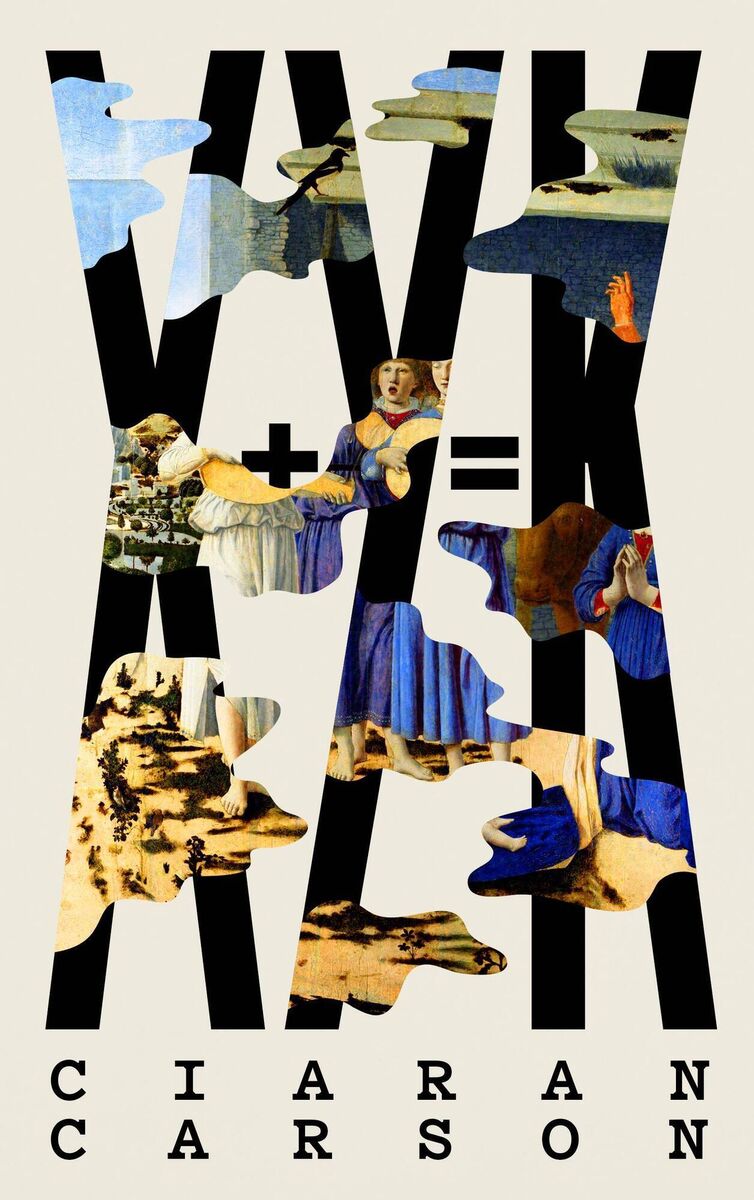
If there is such a genre of fiction as quantum realism, then 'X+Y=K' surely belongs to it
Ciaran Carson's bravura work encompasses speculative fiction, memoir, art criticism, science writing, political history, and essay.

Ciaran Carson's bravura work encompasses speculative fiction, memoir, art criticism, science writing, political history, and essay.

  • X+Y=K 
  • Ciaran Carson 
  • Lilliput, €16.95

Ciaran Caron’s X+Y=K has arrived seven years after his death in 2019. 

This bravura work is helpfully subtitled ‘A Novel’, though this clarification doesn’t indicate the wondrous hybridity of the book, which encompasses speculative fiction, memoir, art criticism, science writing, political history, and essay.

Even the word hybrid, which suggests something composite or heterogenous, seems wrong. This is prose where every day literary rules break down. If there is such a genre of fiction as quantum realism, then X+Y=K surely belongs to it.

The book is divided into three parts: X, Y, and K. 

The opening chapter begins with the narrator, a Belfast Catholic Kilpatrick, recalling a trip to London from where we are quickly diverted into a dizzying sequence of meditations on Peiro della Francesca’s painting The Nativity, the Basilica of the Holy Sepulchre in Jerusalem, and the Crimean War.

These essayistic reflections on geography, art, military history, memory and language lead us finally to the name of Kathleen Goligher, a 19th-century spiritualist medium from Belfast.

In Belfast, the infamous séances of the Goligher circle were investigated by the credulous engineer William Jackson Crawford, who wrote a number of extensive investigations on their apparent paranormal powers.

Crawford was duped by his own self-delusion; the Golighers were later exposed in the 1920s as frauds by the Irish physicist and cultural revivalist, Edmund Edward Fournier d’Albe.

Throughout, Carson weaves numerous accounts of 19th-century spiritualism as it spread from the United States across the Atlantic, ruminations on artists and writers such as JM Turner and John Donne, as well as pieces on image-making processes, including painting, the development of photography, ghostly visions, and writing.

What this all amounts to is an extended disquisition on belief, memory, subjectivity, and perception.

After 140 pages, X ends with a series of questions on whether there exists other invisible worlds beyond our perception, and with Fitzpatrick announcing ‘I was still thinking how I might incorporate this material into my fictional treatment of the Goligher story’.

In part two, Y, Kilpatrick is more recognisable as a character. To find peace from his terrible migraines, he seeks the help of a Dr Fitzwilliam, a Protestant Unionist.

A surreal journey into alternate worlds

Fitzwilliam leads Kilpatrick on a surreal journey into alternate worlds where the rules governing time and space do not apply, and the boundaries between the living and dead dissolve.

The narrative moves between Kilpatrick’s exploration of his personal trauma, reflections on psychic abilities, quantum physics, art history, the surveillance state, and, central to Y, The Troubles.

Amid the speculative elements of the novel, there is a grotesquely visceral dimension to the story of Belfast that unfolds, one that is filled with bombs, material destruction, bodily pain, and violent death.

It is not coincidental either that the two main temporal and geographical co-ordinates of the story are London 2002 and Belfast in the 1970s.

The title of the book is a mathematical equation, so what is the K that X and Y add up to?

Shifting between the first and third person. Kilpatrick — renamed as the K of Kafka’s The Trial — echoed in an early scene when he finds himself questioned by two English policemen.

From there everything gathers into a multiplicity of history, violence, language, art, science, and psychology.

We enter into a strangely multi-world space where time is porous, where mere observations affect what we understand to be real and unreal.

As Kilpatrick reflects: ‘Memory is inseparable in practice from perception, and continually imports the past into the present.’

But these abstract ideas only reveal a lasting humane vision which Carson offers us in his final extraordinary act of imagination.

x

BOOKS & MORE

Check out our Books Hub where you will find the latest news, reviews, features, opinions and analysis on all things books from the Irish Examiner's team of specialist writers, columnists and contributors.


More in this section

Scene & Heard

Newsletter

From music and film to books and visual art, explore the best of culture in Munster and beyond. Selected by our Arts Editor and delivered weekly.

Cookie Policy Privacy Policy Brand Safety FAQ Help Contact Us Terms and Conditions

© Examiner Echo Group Limited