Freya Ridings on her Cork connections: 'This family were holding up a piece of paper'
The British star talks about her new album, Mother of Pearl, and her recently-discovered Irish branch 
Freya Ridings on her Cork connections: 'This family were holding up a piece of paper'

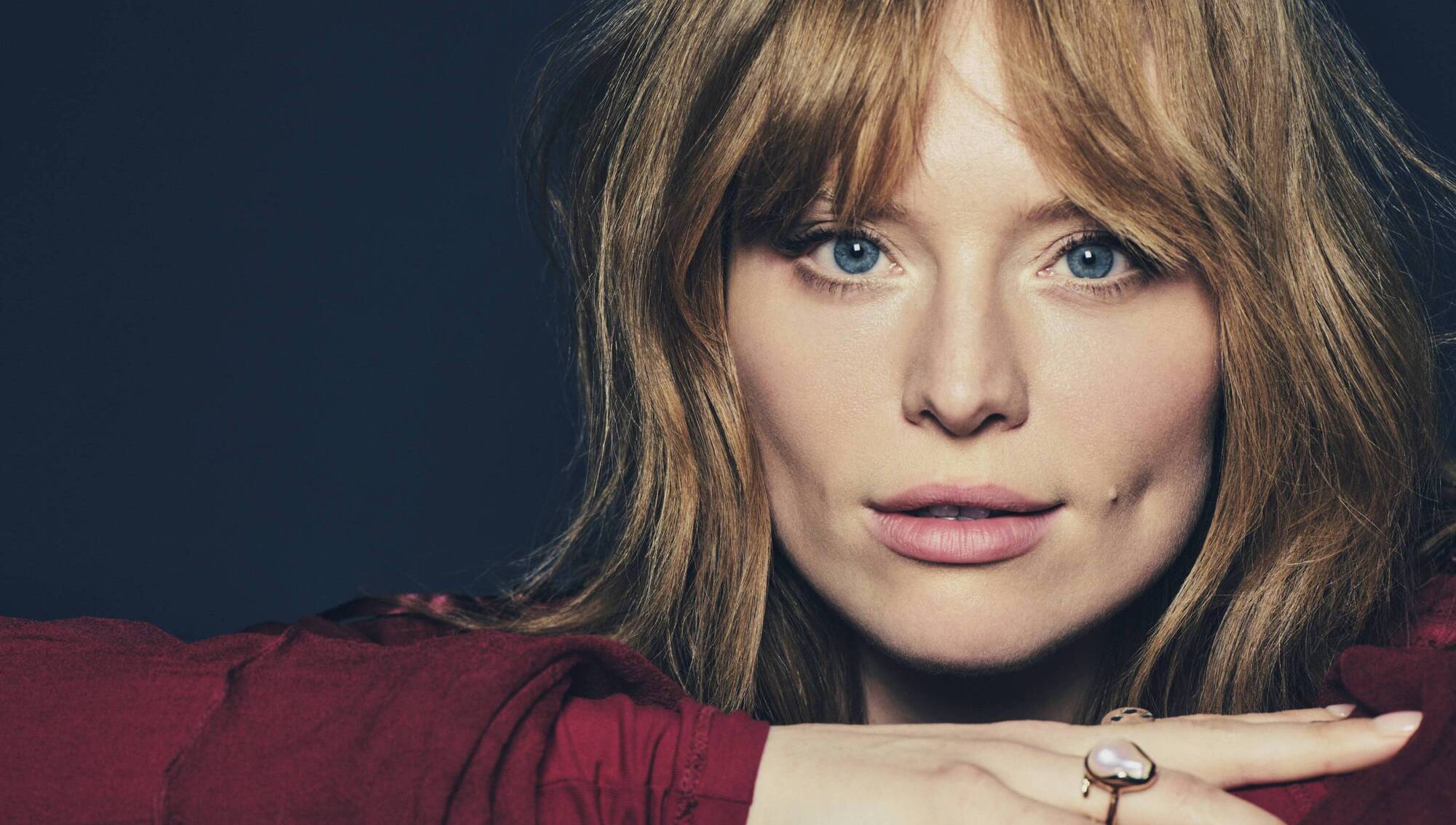
Freya Ridings is releasing a new album and performing Irish dates. Picture: Simon Emmett

Freya Ridings had quite the experience the last time she appeared in Cork. “I was literally playing, and this family came down to the front holding up a piece of paper. I couldn’t quite read it because I was playing guitar and then they shouted: ‘We’re family!’” 

Ridings, whose mother's family have roots in the Rebel County, explains: “They’d worked out that our great-grandmothers were twin sisters. One of them had stayed in Cork, and the other one had left. There were literally about 11 or 12 of them at the show, and it honestly made me well up at the end.


“We FaceTimed my mum afterwards, and I just thought, ‘I have to get her over here to meet them’, because they were just the loveliest people. I’ve always felt really connected to Cork, even before I knew I still had family there."

That sense of ancestry, a shared inheritance and feminine strength runs deep through Mother of Pearl, Ridings’ striking new album. “The title track changed everything,” she explains. “It was kind of a different album before I wrote that song. I wrote it on my own at the piano again, which took me back to [2017 hit] Lost Without You roots.” 

The 32-year-old’s third album also became a way of reconnecting with the women who shaped her family history. “A lot of my female ancestors were artists in their own right, but they had families, became widows, and never really got to fully explore their creativity. For me, making this album came with a lot more reverence this time. It’s not a given that I get to do this. I wanted to make something my grandmothers would be proud of.” 

The title track was a song she hadn’t planned for inclusion; it was only after she played it for her family that it became a catalyst and driving force, right down to the artwork. “I honestly didn’t think my family would approve of me singing it publicly, but they really championed it. The whole album crystallised from that song. The water imagery, the rebirth and death imagery, me being in a battered shell on the cover; it all tied together.” 

After the success of her debut long-player and the pressures surrounding her second record, Blood Orange, Ridings parted ways with her label. “Rebuilding myself brick by brick is really why this album took so long. I had the songs and I believed in them. It was just about trying to find people to fight for me instead of against me.” 

Freya Ridings' third album is Mother Of Pearl.

Ridings has mixed feelings about aspects of the music business. “There is still a low level of sexism in the industry and you can’t really ignore it, even though I tried for a long time, but I’ve also been lucky to have incredible male and female champions around me. It’s about finding your people; the people who run off love instead of fear.”

There's a defiance that rises on tracks such as Euphoria. She discusses the “Celtic fire” often associated with her red hair, noting a scientific curiosity that redheads may feel pain more keenly, which in turn makes music a more powerful “painkiller”.

“Being a redhead and the only redhead in my family, I think my Celtic roots show stronger in me than maybe anyone else in my family.” Her family history is also steeped in storytelling. Of her mother, who has Irish and Scottish roots, she says: “Storytelling is such a big part of my family and my mum’s Irish ancestry. She plays the Celtic harp and has just written a novel set in ancient Ireland. She’s incredibly proud of that heritage.” 

The London-born singer adds that many of her supporters inside the industry come from Ireland, where she feels both a personal and creative kinship. “There have been so many incredible Irish men who have really championed, encouraged and supported me through my career,” she says. 

“Gary Lightbody took me on tour last summer, Hozier has been incredibly supportive and Danny O'Donoghue as well. I think we share this connection and it’s beautiful. There’s a warmth and emotional openness there that I really connect with.” 

For Ridings, the mixture of music and emotional expression became intertwined early in childhood, long before success or touring entered the picture. If This Is A Dream feels like one of those songs that’s always been around, shaped by her parents’ story; her father, Richard Ridings, is an English actor who was always writing songs at home.

Freya Ridings performs several dates in Ireland in September. Picture: Cameron Smith/Getty Images for Bauer Media

“Watching my dad write songs made me assume everybody did it,” she says. “I remember being about seven years old and genuinely worrying that I hadn’t written a song yet and thinking I was already behind somehow. I think that’s why I’ve always been drawn to emotional honesty in songs because music became this thing that could hold feelings that were too big to explain properly any other way.” 

That honesty in songs such as I Have Always Loved You, released as a single earlier this year and performed live on the Late Late Show, began as a child watching her father express what was going on around them. “There was grief in the family around that age and for me, that’s really when the music and the voice came out of me. Songwriting and singing have always been a way of processing love, and when love has nowhere else to go.” 

She also recalls another formative experience where performing first altered her relationship with the wider world. “I’d been quite bullied and ostracised as a kid,” she says. “I remember singing All I Want for Christmas Is You in the playground after watching Love Actually and suddenly all the kids were standing around me saying: ‘Sing it again’. It was probably the first moment when I thought: ‘Oh, maybe people actually like me doing this.’ Before that, I think I’d always felt a bit on the outside of things. It’s strange looking back now because music became the thing that connected me to people.”

Away from streaming services and social media, Ridings believes songs only fully reveal themselves in front of an audience. “There are three lives to a song,” she says. “There’s before you’ve recorded it, where it’s alive and new and sort of like an infant. Then there’s recording it, where it goes through its teenage cool phase. And then after you release it, it changes because it’s not just yours anymore. It belongs to other people too.

“What it becomes live, I don’t even know yet. I want the shows to feel cinematic and ethereal, and beautiful. I want to give people a space to feel grief and strength and hopefully come out the other side feeling empowered.” 

With her vivid red hair and strong Cork ancestry, Ridings speaks about Ireland and Scotland less like touring territories and more like places where fragments of herself are reflected back from the crowd. “When I tour in Ireland and Scotland, I genuinely look into the crowd and feel like I’m seeing younger versions of myself. It honestly makes me emotional because I’ve never really had that feeling anywhere else.” 

  • Freya Ridings’ third studio album, Mother of Pearl, is released on May 29 via BMG. Her Irish tour begins at Belfast’s Ulster Hall on September 6; followed by Dublin’s Olympia Theatre on September 7; Cork Opera House on September 8; and St Canice’s Cathedral, Kilkenny, on September 10

x

More in this section

Scene & Heard

Newsletter

From music and film to books and visual art, explore the best of culture in Munster and beyond. Selected by our Arts Editor and delivered weekly.

Cookie Policy Privacy Policy Brand Safety FAQ Help Contact Us Terms and Conditions

© Examiner Echo Group Limited