Ripe for change as older narrator yearns for belonging
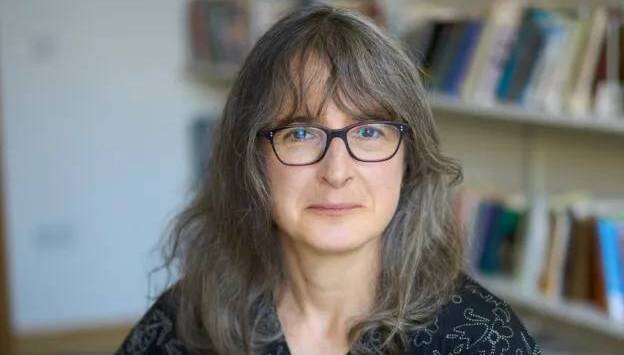
Author and academic Sarah Moss has written 10 novels and two memoirs. Born in Scotland, she grew up in England, but now lives in Dublin.
Back in 2020, anxious to escape from post-Brexit Britain, Sarah Moss left Coventry, where she was teaching, and brought her family to live in Dún Laoghaire.
The novelist had accepted a post to teach creative writing at University College Dublin, and, despite the lingering covid restrictions, the family felt happy and settled at once.
But it got her thinking of the whole theme of belonging.
“My father was Russian American Jewish, and my mother is Yorkshire working class,” she says. “I grew up in a bunch of places and have lived in a bunch of places. I’ve never been able to say, ‘that, there, is where I come from.’”
This had never bothered Sarah much, because her friends are also internationally mobile, but coming to Ireland, where there is more investment in belonging, ownership, identity, and land made her investigate her sense of place.
“Can you make belonging if you don’t have it?” she wondered. “What are the politics of making belonging if you don’t have it — and particularly if you are an English person in Ireland. It’s not up to me to say, ‘I belong here now’. That doesn’t have a good history.”
We’re in Dublin’s Brooks Hotel, talking about her ninth novel, Ripeness, which centres on Edith, a happily divorced 73-year-old, who has found utter contentment since settling in the Burren. Daughter of a woman who lost most of her family in the Holocaust, she’s wondering if she’s finally found a place to call home.
Why did she choose an older woman as the third-person narrator?
“It never feels like a decision,” says Sarah, explaining that she has characters living in her head.
“I’ve been living with Edith for years in different ways. I tried to write about her in the ’40s, but that didn’t work, and she sits quite nicely here.”

Alternating chapters take us back to the ’60s, when, at 17, soon to start at Oxford University, Edith spends a summer at an Italian villa, helping her sister Lydia through late pregnancy and childbirth. Lydia’s friends, fellow dancers from her company, are also there, and although on holiday, dance practice remains a constant in their lives.
Sarah had been thinking about writing a ballet book for years, and seeing photos of Margot Fonteyn taken by Joan Leigh Fermor, wife of the famous writer, scholar, and soldier Patrick, gave her a focus. The couple, living in Greece, had set up a glamorous bohemian house.
“There is a sequence of photos of Fonteyn on holiday, including a set of her with Frederick Ashton on a boat. They are practising, using the side of the boat as a bar. You can see the sails behind them. There’s another of Fonteyn sunbathing naked. Her poise is exquisite — she is totally in control, and that gave me the idea of dancers at play. They are still inhabiting the dance with their bodies, though not with discipline.”
Writing retreat
This idea came to Sarah during a six-week writing retreat on the shores of Lake Como in 2023.
“The villa was absolutely gorgeous. It had been used for artists since the 19th century as a place to go to support yourself in the summer, and that gave me the setting.
“But being liberated for six weeks didn’t work for me at all. It turns out that I actually need the rhythms of domestic life. I need to be cooking, doing laundry, and looking after people. Though, obviously, you need a balance.”
Sarah’s first novel, Cold Earth, was published when her two sons were small. “My entire career has been as a parent. I have never known it any other way. It’s a shifting balance, like standing on a wobble board.”
The Burren in Co Clare was the obvious Irish setting, because, having lived for a year in Iceland, Sarah adores the barren limestone landscape. Which isn’t to say that she doesn’t find it frustrating.
“These walking guides say, ‘this is 10k, and it will take you five hours’. You think, don’t be ridiculous, what nonsense, but it does! I like to stride out and cover ground and get there, but the limestone won’t let you.
It insists that you slow down and pay attention and read the land under your feet. If you don’t, you’re going to fall over or fall down a hole. I really love that. It’s frustrating, but I think it’s good for me, both as a hiker and as a writer.”
Ripeness is a gorgeous book; sunny, sensual, and absorbing. The author writes so brilliantly about the physicality of dance, and the scenes of childbirth and new life are exquisitely described.
“I was a friend’s birth companion shortly after my son was born, and it made me realise that most women never see birth. My son was five months old, so it was vivid.
"I knew exactly what she was going through and how it felt, but it made me think that the only women who see birth now are professionals, and it must have been so different in the days when you helped your friend or your sister and would have known what was going to happen.”
Lydia’s baby is going for adoption, and she refuses to see him.
“My second son was a home birth, and the midwife told me that one of her most important roles, straight after the birth, was to hand the baby to the mother. She said that otherwise the mother might walk off.
“I thought, how could anybody do such a thing, but I can, kind of, imagine it. All that work; hours and hours and hours of it — and you just want to lie down and have a cup of tea.”
Sarah has always taught and has no trouble with public speaking.
Put me in front of an audience of 500 and tell me to talk for an hour — I will be fine. But send me to a party, and I will want to hide behind a curtain with a book.
"I met the woman who is still my best friend at somebody’s seventh birthday party. I hid behind one end of the curtain, and she hid behind the other. We met in the middle.”
Currently on a year’s break from UCD, Sarah is doing some freelance teaching.
“I absolutely love it,” she says, “and can’t imagine not doing it in some form. I find it very generative because it forces me to think properly about what I’m doing. So much of my practice is playful and experimental. It’s good to be made to think rigorously about it.”
What is the benefit to students of an MA in creative writing?
“It won’t make a good writer out of people who are not. But it can intensify a process that would have happened over a long time. You can help people to experiment, to think well about reading and writing, and to bounce off each other. Done well, it can be exciting and productive, and generative, but that’s not to say that it produces publishing contracts.”
As someone who came from England half my lifetime ago, I can vouch for Edith’s feelings about dual nationality. I tell Sarah that she has got Edith’s emotions exactly right.
Currently applying for an Irish passport, Sarah says she wrote the novel as a hymn to Ireland, and to the Burren in particular.
Does she intend to stay in the country indefinitely?
“I hope so,” she says. “Friendship is hugely important in my life, and I have good friends here. They’re the joy of my life.
“I have the occasional yearning, but you have to stop somewhere, and it’s pretty good here.”
No obligation. Ts&Cs apply.
More in this section