Book review: A gay man at war with himself who fought to free his country
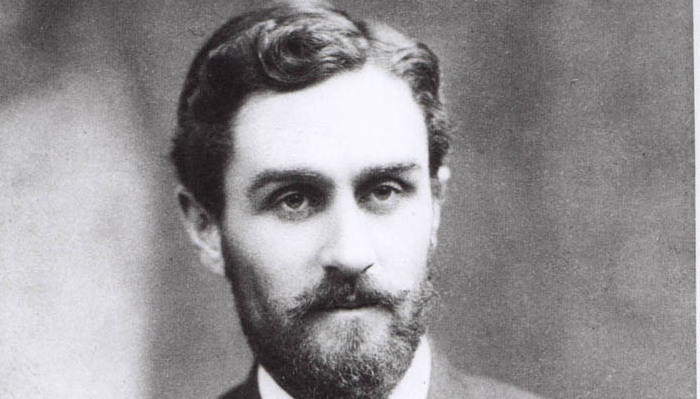
Dying at the end of a rope in an English jail, rebel Roger Casement displayed the courage that defined him
Book review: A gay man at war with himself who fought to free his country

Roger Casement was knighted in 1911 by the same British authorities who would execute him in 1916 for leading the Easter Rising and attempting to overthrow their rule.

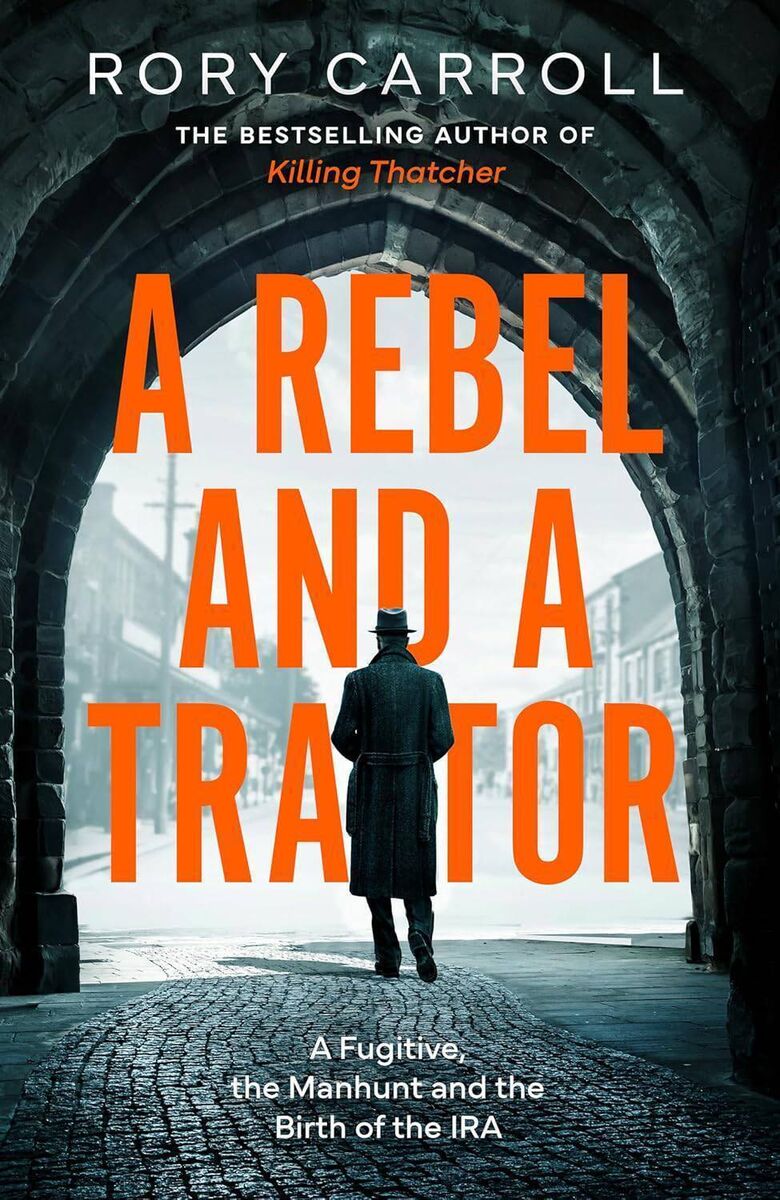
  • A Rebel and a Traitor: A fugitive, the manhunt and the Birth of the IRA 
  • Rory Carroll
  • HarperCollins, €15.99

Some stories are worth telling more than once. Some lives are so full and complex and important they can be relived on the printed page in many ways. 

Roger Casement was one such man and his peripheral role in the 1916 Rising is a story that grows on the page.

Rory Carroll is a Guardian journalist, whose previous book, Killing Thatcher, was a propulsive narrative about the IRA bombing of the Grand Hotel in Brighton and the subsequent manhunt for the culprit.

A Rebel and A Traitor mines the same ancient quarrel between the Irish and English, but brings it back to an earlier, less complicated phase, and to individuals who have long since been carved in to myths of granite. 

Once again, there is a manhunt, this time for Casement. It is led by an intelligence chief, Reginald Hall, a flawed character.

The tale moves at the pace of a novel. Carroll’s main characters are well mapped out, and the writing brings alive the world of an imperial Britain fraying at the edges while a senseless war is reshaping Europe at the cost of millions of lives.

Meanwhile, in the oldest colony of the empire, a new and separate future is being imagined.

The story is taken up in 1914, when Casement is still a hero in London, due to his brave exploits in exposing cruelty in darkest Africa and South America. 

He has been knighted and is at the heart of the British establishment.

Openly, he advocates for Home Rule for his native Ireland. Secretly, he is consorting with those who are fomenting rebellion. 

His “grandiose notions” for Ireland “elided the fact that most Irish people wanted not independence, but autonomy within the United Kingdom”. 

His deepest secret, however, is that he is gay in Victorian times.

Casement comes across as displaced and lonely, feted by a British establishment he despises, and suspected by the Irish rebels, and their allies in the US, whose cause he shares.

Foreign service career could have been a passport to eternal privilege

He came from Anglo-Irish stock and his career in the British foreign service could have been a passport to eternal privilege.

But once he embarks on a journey to recruit and acquire arms, his fate as a perceived traitor and a rebel is sealed.

Hall, the intelligence officer, personifies empire. He is a product of the navy that conquered and plundered. He is ruthless in pursuing the crown’s enemies.

And Hall reserves a particular contempt for somebody like Casement.

So Casement sets off, first to New York to acquire weapons. Then, he is dispatched to Germany to seek help from the country that would be subsequently referenced in the Proclamation as “our gallant allies”.

In Germany, things begin to fall apart. En route, Casement encounters a young man, Alder Christensen, who would betray him. 

The Norweigan is a grifter, playing both Casement and the British, whom he first approached offering to spy on Casement.

The charade developed in to “a surreal game of double and triple bluff in which only Christensen, the ringmaster, fully knew what was happening”.

Casement’s attempt to raise a brigade from Irishmen who had served in the British army but were prisoners of war was a disaster. Just 52 agreed to sign up from around 2,500 Irish prisoners.

Casement joined in Germany by Joseph Plunkett

Casement is joined in Germany by Joseph Plunkett, another doomed figure of supreme courage. Plunkett is condemned by ill health, but dedicated to striking a blow.

His role and fate form another thread in the narrative.

Meanwhile, Hall is on the job of defeating the rebels. He develops means of cracking codes and the intelligence tells him that a rising is imminent. 

He keeps his cards close to his chest. He shared some of his intelligence with other agencies, but not all.

Hall decides the best approach is to allow the rising to happen, to “better let this festering sore come to a head”.

That would give reason for a savage crackdown on dissent among the Irish. His approach ultimately rendered the Easter Rising a historic staging post for Irish independence.

Carroll does not shy away from aspects of the rising that dared not speak their name for up to a century. 

The leaders, a cabal in the Irish Republican Brotherhood that infiltrated the command structure of the Irish Volunteers, were “a minority within a minority, a junta”, he writes. 

In the absence of support from the living nation, they claimed to represent one that used to exist, and might again.

This, of course, would also be the stance of the Provisional IRA, which came in to being 53 years after the rising.

The Provos mined history and emerged with a perversion, robbing the graves of Plunkett and the others, as if the world was still under the yoke of imperial Britain. 

They bombed and killed innocents for 30 years, with the aid of their “gallant allies”, the vicious Libyan dictator Muammar Gaddafi, and the Irish-American organised crime boss James Whitey Bulger.

Casement came ashore from a German submarine on Banna Strand in North Kerry on Good Friday 1916, attempting to call off the rebellion, because he thought it doomed without support from Germany.

His stay was short before he was captured. Had he died after arriving on that lonely outpost of empire, he would have been spared the months that followed and the exposure of his secret life.

It wasn’t to be. Within days he was in the Tower of London, the ‘departure lounge’ of those who had betrayed crown and country down through the centuries, even if Casement insisted that his country was not theirs.

Reginald Hall was determined that his former quarry would go to the scaffold. He was instrumental in leaking the diaries that documented Casement’s “sexual encounters, hundreds of them, with dates, locations, names, and details”.

Casement’s brief respite at the end was his speech from the dock, where he repeated the convenient misapprehension recited in the Proclamation that unionists and nationalists would get on grand in a free Ireland, but “English politicians manipulated and armed Ulster for their own ends”.

If only the Brits got out of the road, sure, the unionists would feel perfectly at home in a united Ireland.

Dying at the end of a rope in an English jail, this rebel displayed the courage that defined him. 

His executioner later noted that Casement “appeared to me the bravest man it fell to my unhappy lot to execute”.

There is much to ponder within the pages of Carroll’s retelling of a seminal period and some of those who inhabited it.

The success of podcasts like The Rest Is History has shown the appetite that exists for history that is accessible and relatable. In that vein, A Rebel And A Traitor is a cracking read.

x

BOOKS & MORE

Check out our Books Hub where you will find the latest news, reviews, features, opinions and analysis on all things books from the Irish Examiner's team of specialist writers, columnists and contributors.


More in this section

Scene & Heard

Newsletter

Music, film art, culture, books and more from Munster and beyond.......curated weekly by the Irish Examiner Arts Editor.

Cookie Policy Privacy Policy Brand Safety FAQ Help Contact Us Terms and Conditions

© Examiner Echo Group Limited