Book review: Biography reveals Casement more than a little crazed
'Broken Angel' is an excellent portrait of a troubled figure and it offers many lessons to those open to absorbing them
Book review: Biography reveals Casement more than a little crazed

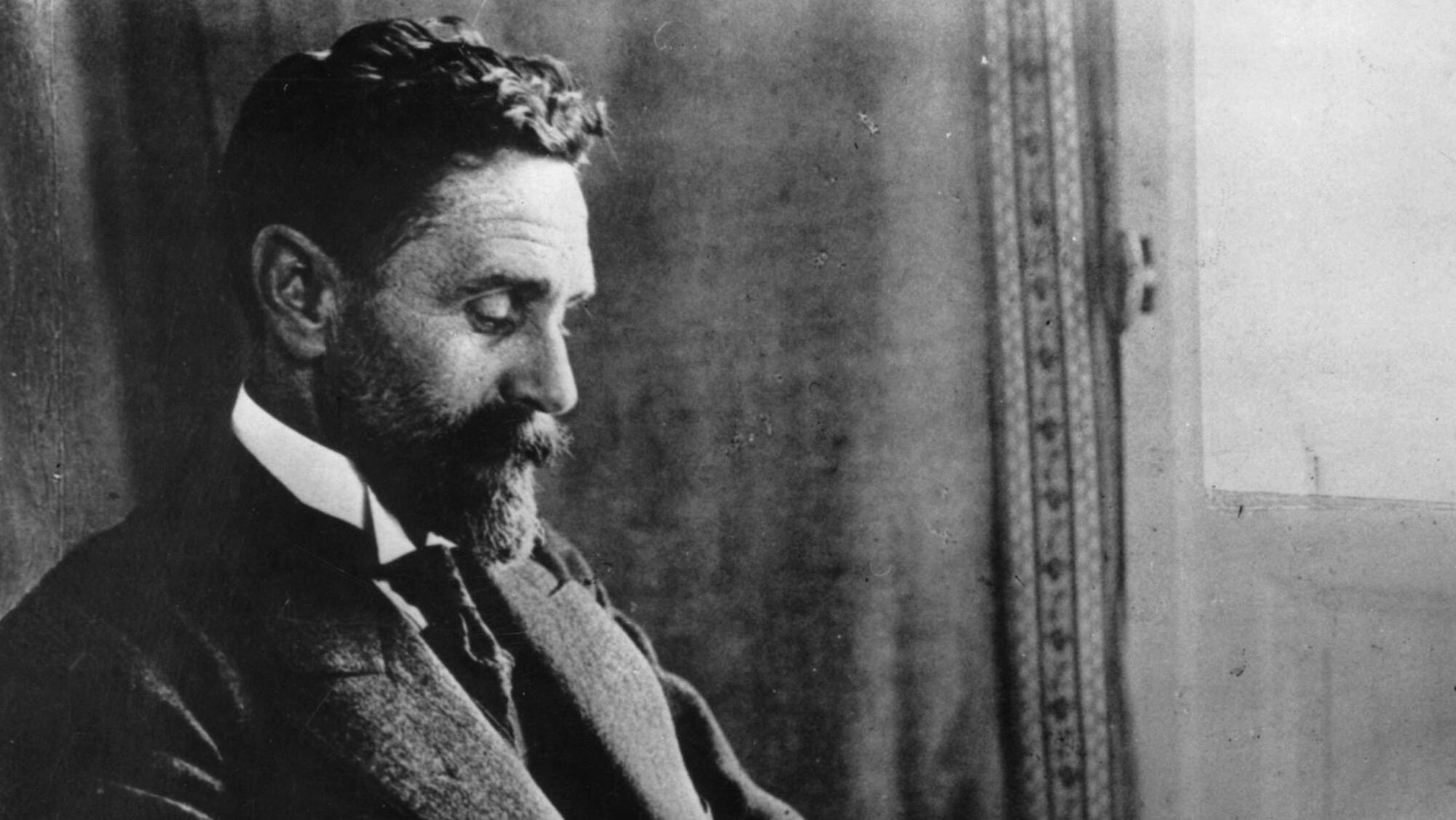
It is impossible to read Roland Phillips’ comprehensive and authoritative biography of the ultimately tragic Roger Casement without concluding that Casement, for all his nobility and courage, for all his humanity and generosity, was more than a little bit bonkers. File picture: Topical Press Agency/Getty Images

  • Broken Archangel: The Tempestuous Lives of Roger Casement 
  • Roland Phillips 
  • Bodley Head, £25.00 

In the centuries-long struggle towards full Irish sovereignty, impossibly romantic ideas about nationalism, culture, language, land, the world’s view of Ireland and religious division were often active agents.

Denied the comfort of any meaningful democratic process, an influential minority of Irish nationalists allowed imagination, vanity, and the greenest of green hubris shape a worldview that was often implausible. 

This was, at worst, recklessly dangerous for their cause and sensitive individuals.

That seductive romance sometimes elevated mythology to fact, sometimes indulged an idea of exceptionalism that was then, and is certainly not now, hardly justified.

At its extreme incarnation, this romanticism led to a kind of insatiable obsession that fed a gripping insanity.

It is impossible to read Roland Phillips’ comprehensive and authoritative biography of the ultimately tragic Roger Casement without concluding that Casement, for all his nobility and courage, for all his humanity and generosity, was more than a little bit bonkers.

That judgment, based on Casement’s behaviour, his mountainous correspondence, his sexually explicit diaries, the freely expressed fears of relatives, friends, and enemies, his abject misunderstanding of international diplomacy, his childish naivete around Germany’s intentions for Ireland during the First World War, and the reach of British counter-surveillance, will not however push him from Irish nationalism’s pantheon.

Author Roland Phillips creates ‘an excellent portrait of a troubled figure from a perspective free of misplaced romance’ in his latest book ‘Broken Archangel'.

Neither will his disastrous misjudgement of people, which was at its sharpest when he believed Norwegian Adler Christensen — whom he trusted all too deeply — was a reliable figure even as he tried to sell incriminating evidence to the highest bidder.

That Phillips used a phrase from another exceptional, if similarly unhinged man of action, from the early decades of the last century TE Lawrence — Lawrence of Arabia — as the title of this tremendously detailed book seems to confirm this perspective.

Lawrence was a broken archangel too. Like Casement, he came from straitened Anglo-Irish circumstances and struggled all his life trying to, if not deny his sexuality, then to keep it unconfirmed.

Attitudes to homosexuality when Casement and Lawrence were active young men were very different and far more hostile.

The subtitle of this book — The Tempestuous Lives of Roger Casement — points to a second similarity between Lawrence and Casement.

Lawrence invested great effort, political and personal, to try to ensure, when the First World War ended and the Ottoman empire was sundered, that the Arab world would know independence and control its own destiny.

As every news bulletin today confirms, Lawrence was betrayed and those grand ambitions frustrated as promises made to Arabs were forgotten.

In contrast, Casement had greater success in his campaigns to protect grievously abused indigenous populations in the Congo and in Peru’s Putumayo region, where they were treated as disposable beasts of burden and brutally exploited in the name of “civilising” European capitalism.

When, in the early years of the last century, he arrived in the Congo — first as an employee of a British shipping company and later as an envoy of the British Foreign Office — he found himself working in the personal playground of King Leopold of the Belgians rather than a state-run colony of a European country.

The asset-abundant region was regarded as the king’s private property, and the unfortunate Congolese as transient labour units enslaved by the rapacious rubber trade.

Though this was just 120 years ago, slavery was rampant and unchallenged by the many beneficiaries of that appalling exploitation.

Unfettered brutality, particularly sexual brutality towards young boys and girls, was the order of the day.

When issuing bullets to their troops, the Belgian authorities insisted that for each bullet entrusted to the enforcers, they must return a human hand lest they imagined that ammunition might be wasted.

Casement was horrified and, to his eternal credit, began an international campaign to force Belgium to end what was —to use one of today’s terms — a genocide.

Irish patriot and British consular official Roger Casement is escorted to the gallows of Pentonville Prison, London. He was charged and found guilty of treason after trying to obtain German aid for Irish independence. File picture: Hulton Archive/Getty Images

During that campaign, he made many friends who would support him and his work. One of those was Joseph Conrad, a Ukrainian whose real name was Jozef Teodor Konrad Korzeniowski.

Conrad’s Heart of Darkness was heavily influenced by the dystopian nature of Leopold’s colony-cum-slave-camp.

Conrad regarded Casement as “a creature of sheer temperament — a truly tragic personality.”

Nevertheless, Casement confronted huge commercial interests to bring reforms to the Congo.

He was not deterred, despite great challenges to his physical health and mental wellbeing. Eventually, he made it impossible to invest in Congo rubber extraction by highlighting brutality.

Later, in Peru’s Putumayo region, he faced similar atrocities and responded with humanity and determination, and his international reputation as a champion of the weak and vulnerable was secured.

However, the disinterested response of the British government sowed the seeds of his disenchantment with authority, a disenchantment that was to come to full fruition during his years in Germany before the 1916 Rising.

Despite those great and almost unprecedented achievements, he had yet to show his hand as a determined if overly romantic Irish nationalist.

An orphan at 12, Roger David Casement was born in 1864 in Doyle’s Cottage, Sandycove, Dublin, the youngest survivor of his mother’s 11 pregnancies.

When he went to Germany during the early years of the First World War, his intention was to raise an armed force from the Irish soldiers serving Britain who were captured by Germany.

His expectations were at best bizarre and, in reality, dangerously misjudged.

He greatly overestimated the enthusiasm among that sorry cohort for the nationalist cause, just as he overestimated Germany’s commitment or capacity to arm an Irish insurrection.

He was not alone in this — many of those plotting against British rule, particularly John Devoy, grossly overestimated the support for revolution in Ireland.

At this later stage of his life, Casement’s motivation was as much a hatred of Britain as it was a love of Ireland. Unsurprisingly, it all ended disastrously.

Captured after he and two others landed at Kerry’s Banna Strand in a bid to postpone the looming 1916 Rising because he knew that vital German support would not materialise, he was quickly in a London courtroom where a jury found him guilty of treason. He was hung in Pentonville on August 3, 1916, a weary 51-years-old.

His executioner, John Ellis, a hairdresser and newsagent from Rochdale, believed Casement to “be the bravest man it fell to my unhappy lot to execute”.

Casement was buried in a Pentonville lime pit, as a treason conviction meant his body could not be released to his family. 

His remains were disinterred, and he was buried in Glasnevin in 1966 to mark the 50th anniversary of 1916 — despite his expressed wish to be buried in his beloved Antrim. Even in this final act, his vulnerability was exploited.

This is an excellent portrait of a troubled figure and from a perspective free of the misplaced romance that colours so much of that sorry time’s history. It offers many lessons to those open to absorbing them.

x

BOOKS & MORE

Check out our Books Hub where you will find the latest news, reviews, features, opinions and analysis on all things books from the Irish Examiner's team of specialist writers, columnists and contributors.


More in this section

Scene & Heard

Newsletter

Music, film art, culture, books and more from Munster and beyond.......curated weekly by the Irish Examiner Arts Editor.

Cookie Policy Privacy Policy Brand Safety FAQ Help Contact Us Terms and Conditions

© Examiner Echo Group Limited