Author interview: For Tóibín, it’s all about keeping the show on the road
Currently trying out the opening for a new novel, Colm Tóibín is looking forwards to seeing his latest opera show at the 75th anniversary Wexford Opera Festival in October
Author interview: For Tóibín, it’s all about keeping the show on the road

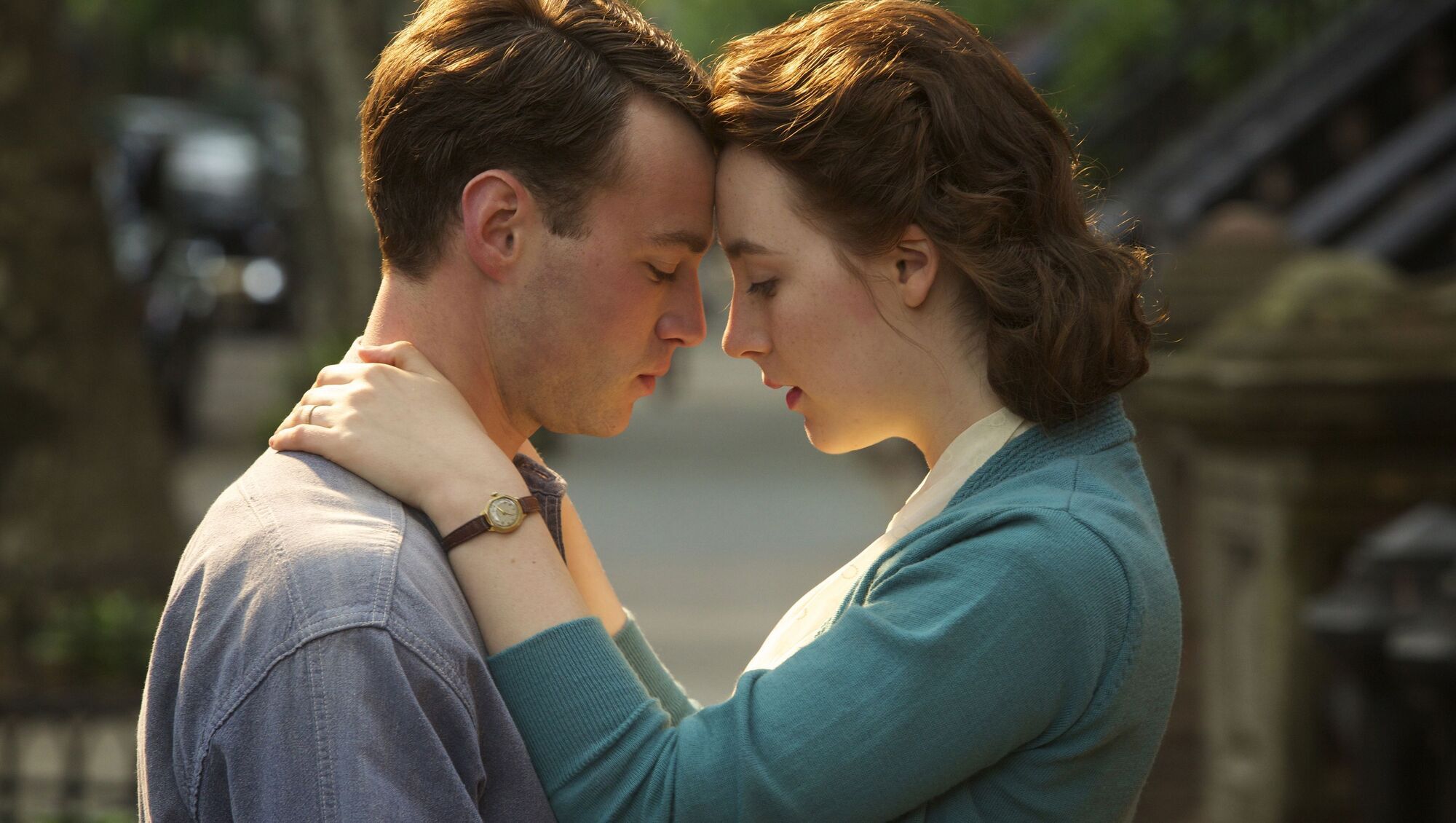
Domhnall Gleeson and Saoirse Ronan in a scene from ‘Brooklyn’ which brought commercial success to Colm Tóibín who says: ‘It was great, it just sets you up ... it freed me up and produced a space I could work in without having to worry all the time.’ File picture: Lionsgate/ PA

  • The News from Dublin 
  • Colm Tóibín 
  • Picador,  €14.99

I’m talking to Colm Tóibín in his office at New York’s Columbia University. The Enniscorthy native says that it’s quiet, because people don’t teach on a Friday. 

The author of 11 novels loves his day job; he likes teaching; likes the students, and he enjoys being on the West Side. He lives quietly but spends time with his partner in Los Angeles also.

“I come and go,” he says.

Colm has always struck me as a happy man. He never plays the part of the tortured artist — never talks of the mystique of writing or complains about writer’s block.

“The main thing is to keep the show on the road,” he says. “It’s always about the thing that’s not delivered or the piece that’s not yet written.

“It starts with that; you realise you haven’t done them and you just get going.”

We’re discussing The News from Dublin — Tóibín’s latest collection of stories. Although some are set in Enniscorthy, most of them examine what it is to live elsewhere. 

I loved them for the exquisite writing, and for the skilful structure; I loved the insights and open endings — you get the sense that Tóibín totally trusts you as a reader rather than spoon feeding you full details.

Death of Lady Gregory’s son, Robert

The opening story, The Journey to Galway centres on the death of Lady Gregory’s son, Robert, a pilot shot down in the First World War. 

The telegram is sent to Coole Park, with a request from the postmistress, that Lady Gregory should deliver the bad news to Robert’s wife, Margaret. 

That journey filled with grief is authentically told, and in a twist, we learn that Robert’s marriage had been in flux.

“Nobody knew that until James Pethica wrote a piece in The Dublin Review,” Tóibín tells me. 

“He had the notebook. There was such a problem before the war broke out, because no one knew what was going to happen, and with Robert’s death it was all fine; solved.”

This isn’t the first time Tóibín has written of Lady Gregory; there was a biographical essay, Lady Gregory’s Toothbrush — then a play, then an opera, and a short story in his last collection, The Lost Family.

“I did all the research for Lady Gregory’s Toothbrush, and a lot of those things stayed with me.”

Colm Tóibín loves his day job; he likes teaching; likes the students, and he enjoys being on the West Side of New York. File picture: Karlis Dzjamko

A Free Man tells of an abuser who, released from prison, tries to settle in Barcelona. That one started with an image.

“I’d been thinking about being on your holidays in Spain and looking into a bar or a café and realising that one of those guys sitting at a table drinking sangria is a criminal on the run.

“Seeing him living it up. Simply that image. A doorway and a figure, an Irish tourist passing and seeing somebody from the newspaper.”

In Sleep, a man troubled by the death of his brother, needing help, visits a psychiatrist in Dublin. 

That one, based on the author’s life, recounts the time he sought help from the late Ivor Browne. I ask if the hypnosis healed his trauma, suffered in childhood at the death of his father.

“I’m not sure that it’s healing,” he says. “It’s recognising something and putting a narrative on it. But that scene is Ivor Browne, totally; that long room in his house in Ranelagh.

“That’s the most autobiographical story. It wasn’t that all of it depended on the truth, but the actual hypnosis part is down to the letter.

“I was always going to write that story,” he muses. “It stood out, but it was a question of what form it would take. And the decision was to go really close in, rather than make it about the past or a metaphor.”

Stories written over 10- to 12-year period

The stories in this collection were written over a period of 10 to 12 years.

“I started A Free Man in 2011 — in Charles de Gaulle airport. I wrote the opening and knew, more or less, where it had to go. 

“But in order to get from A to C — C being the end, I have to go to B, and I don’t always know where that is.

“With a story there has to be one event that matters. One image, or one scene. Nothing else. It’s to build up to that and get out of it. 

“When you come to the end you realise the end you had been planning needs to be brought down a notch.

“It isn’t the man at the end running screaming through the streets — he must very quietly get home.”

He writes stories concurrently with his novels, but with his deadline close, he realised he still had three stories to complete. 

“I’d begun them; it wasn’t as if I didn’t have ideas for them, and they were all written last year,” he says.

Shortlisted for the Booker Prize three times

Tóibín has, famously, been shortlisted for the Booker Prize three times, but never won.

“I’m always the bridesmaid,” he quips. He has, however, been awarded the David Cohen Prize for Literature, and in 2022-2024, was the Laureate for Irish Fiction. But what’s more important to him — prizes, or the commercial success he gained from his novel Brooklyn? Did that, and the movie starring Saoirse Ronan make a difference to him?

Brooklyn was great,” he says. “It just sets you up. When you get to my age (70), publishers become wary of you.

“If you’re not ‘hot’ then nobody wants you. It freed me up and produced a space I could work in without having to worry all the time.”

In the story, Five Bridges, the protagonist, an undocumented Irishman living in America, realises he must return home and will leave on the day of president Trump’s initial inauguration.

“I wrote that on the day it happened,” Tóibín says.

Living in New York under Trump

What’s it like, living in New York under Trump?

“A lot of people I meet don’t ever talk about it,” he says. “They never mention it. It’s interesting to watch how creeping fascism works. That it works gradually, drip by drip and slowly people get used to the fact.

“A student in the next building from mine was taken yesterday for no legal reason,” he tells me.

It ended well, thanks to the influence of Mandani, and the governor of the state Kathy Hochul, but it happens in other states and cities all the time.

Currently trying out the opening for a new novel, Tóibín is looking forwards to seeing his latest opera show at the 75th anniversary Wexford Opera Festival in October.

“It’s called the First Festival,” he says, “and is about four Wexford people falling in love with four opera singers. It’s a comedy but has a sort of dark moment in the middle of the whole thing.”

When I talk of Tóibín’s generosity to other writers, he reminds me that he once got into terrible trouble for saying in a newspaper interview that he never reads crime or genre fiction because he gets bored with the prose.

“It looked awful. I’m still living with the consequences of that.”

In contrast, the writer Andrew O’Hagan recently dedicated his book on friendship to Tóibín, because ‘generosity defines him’. 

In it he tells of a time that, hearing of a mutual friend’s grave illness, Tóibín immediately wrote a cheque for £2,000, and sent it with a note saying, ‘Cash this, you fucker!’, so that the man could take his wife to Italy on holiday.

“It was a simple thing,” says Tóibín, with a shrug. “If there’s shortage of money.

“When someone asked Dorothy Parker if there was anything they could do, she had a simple answer. ‘Yes! Get me a new husband’.” 

Laughing he says, “I didn’t know Andrew was going to write that.”

x

More in this section

Scene & Heard

Newsletter

Music, film art, culture, books and more from Munster and beyond.......curated weekly by the Irish Examiner Arts Editor.

Cookie Policy Privacy Policy Brand Safety FAQ Help Contact Us Terms and Conditions

© Examiner Echo Group Limited