'It was a nicely worded invitation': Turner Prize-winning artist Martin Creed on his visit to Cork
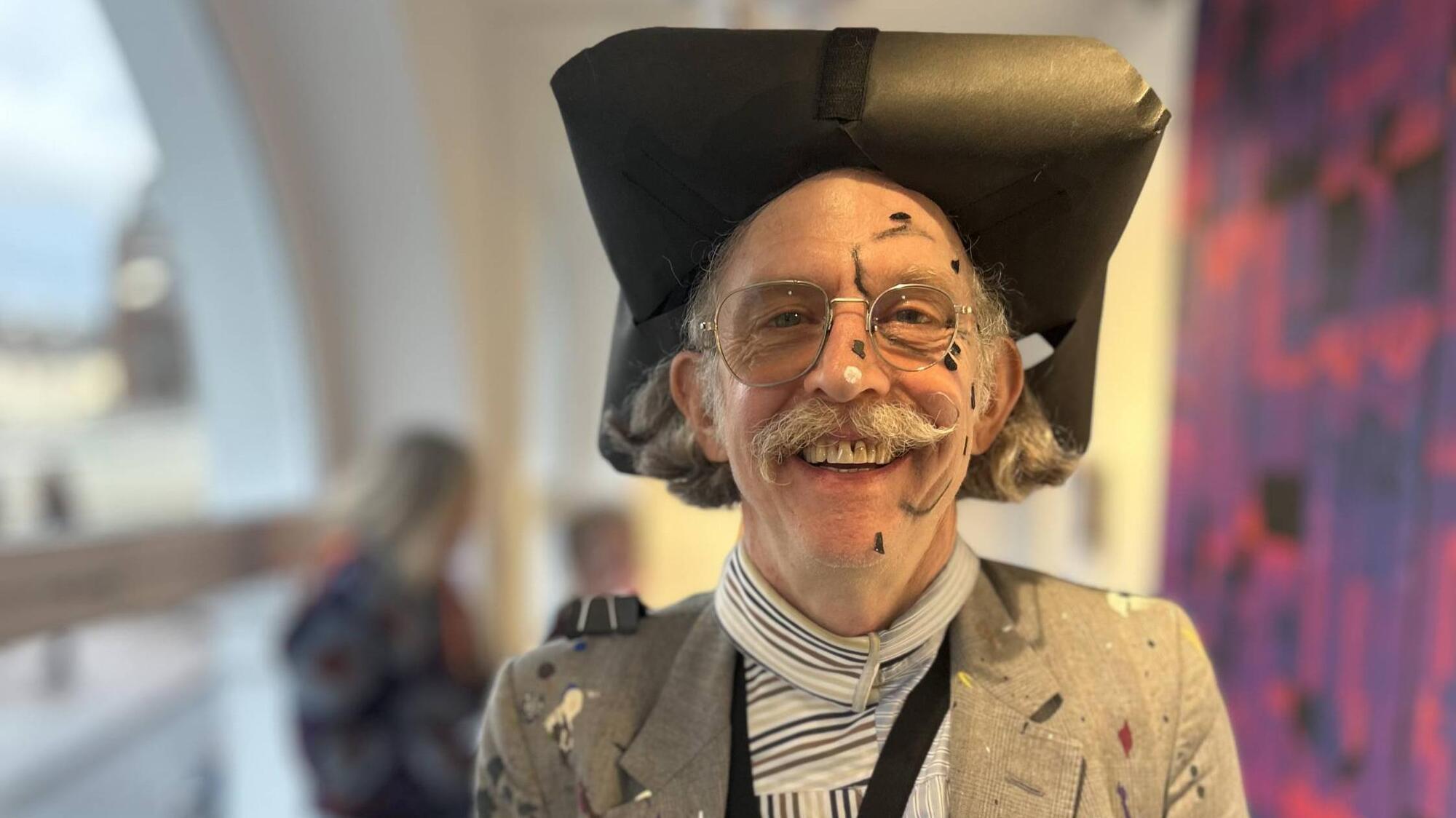
Scottish artist Martin Creed in Cork. Picture: Marc O'Sullivan Vallig
It’s easy to recognise the Turner Award-winning Scottish artist Martin Creed. His fulsome moustache is one giveaway, his large black faux leather hat another. Today, it is part of an ensemble that includes a jacket and shoes decorated with darts, a pair of sunglasses with mismatched lenses, and a tie on the back of his neck rather than the front.
Creed was in Cork for the recent MAKE conference at Cork School of Music. This year, the theme was Sound and Materiality, and he seems a perfect fit; as well as producing visual art, he writes and performs music.
He makes no bones about what drew him to be a speaker at MAKE. “It was a nicely worded invitation,” he says in his distinctive Glaswegian burr. “I’ve always had a good time coming to Ireland, so I didn’t really think about saying no. I do say no to things, but I suppose the invitation coincided with a desire on my part to go out and do some more stuff.
"This past year, I've not been doing any live shows because I've been trying to finish a film. That was very private and lonely work. So then, more recently, I've been wanting to do some gigs and stuff.”
Creed says the film — as yet untitled — is not necessarily autobiographical, but is based on his childhood memories. “I wrote down what I could remember of being really small, which is not much. And then I went to all the places in those memories and tried to film. I used an old 35-millimetre camera; it’s very lo-fi.”
One of those places was the school he attended in Glasgow. Going back there was not particularly emotional, he says. “It’s funny, because my mum and dad still live in the house I grew up in. The school is nearby, and I’ve always walked past it when I visit. It hasn’t changed much really.”
Before they retired, Creed’s mother was a physiotherapist, while his father was a silversmith who taught at the Glasgow School of Art. “They were very encouraging when I decided to become an artist; they thought art and music were the highest forms of achievement.” Creed moved to London at 17 to enrol at the Slade School of Art.
“It was a very exciting time,” he says. “I had no expectation of ever making money from art, but the Young Brit Artists, people like Damien Hirst, were a few years ahead of me. I was kind of in the second wave of Brit Art, but I benefited hugely because everywhere in the world, it was cool to be a part of that.”
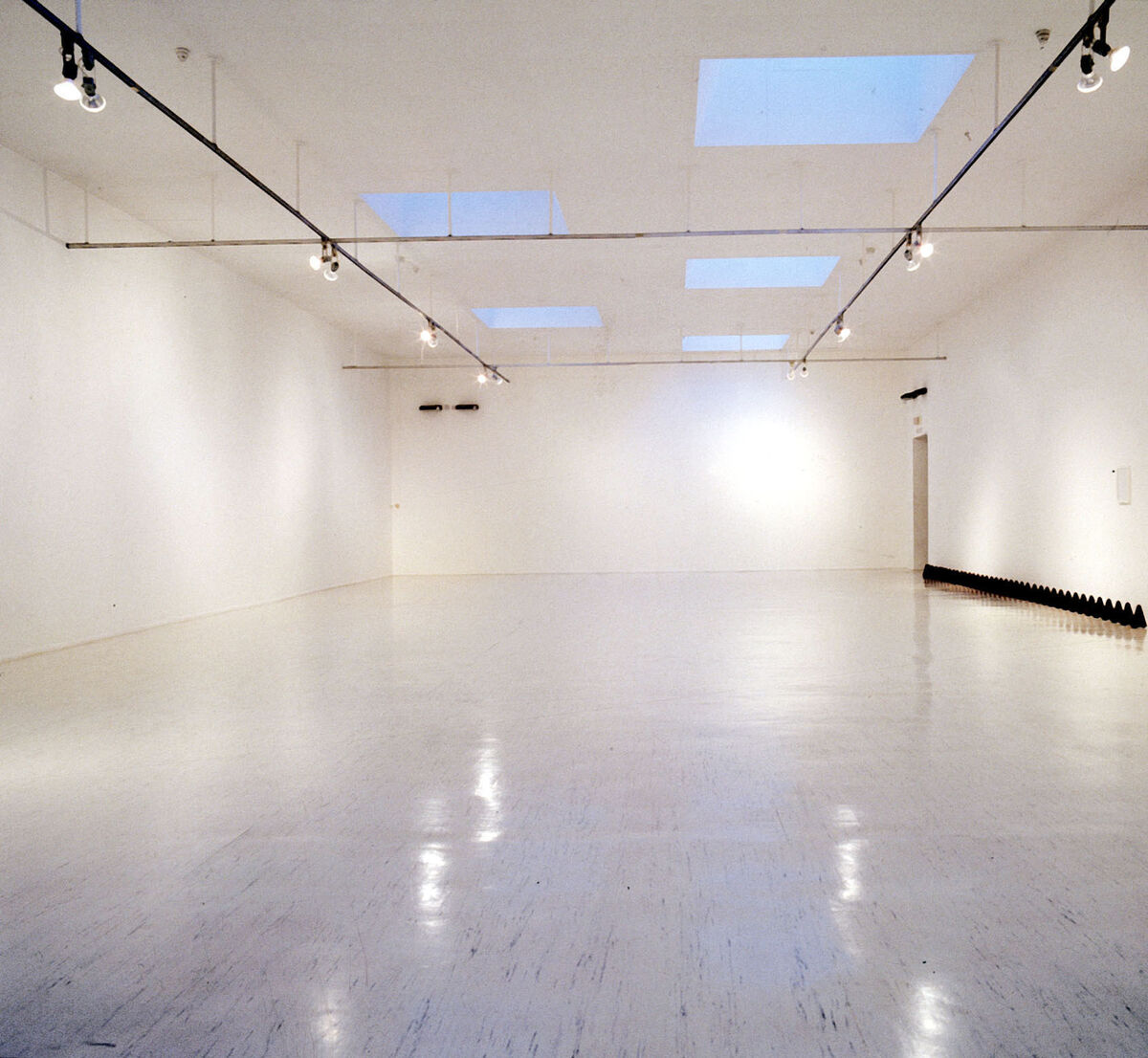
Creed has always given his artworks a unique number, insisting each has equal value. If he is to be remembered for any one of them, however, it will surely be Work No 227: The lights going on and off, the installation that won him the Turner Prize in 2001.
Consisting as it does of an empty gallery in which the lights are switched on and off at five-second intervals, it was the subject of some notoriety, with the art critic Waldemar Januszczak dismissing Creed as “tedious… and the worst winner of all of the Turner”.
Today, to Creed’s delight, Work No 227: The lights going on and off is in the permanent collection of Tate Britain.
“I think the reason I made that work was to do with feeling there was nothing I could put in the room,” he says. “Because if you have a show, you're basically saying, 'hey, look at this, isn't it great'? And I was thinking, well, there is nothing that I think is that great. But if I was to do something in the room without putting anything in there… I could just switch the lights on and off. It’s like a wee bit of theatre, really.”
It is only recently he realised the work might also have been inspired by the electrical fixtures in his family home in Glasgow. “You know how, for health and safety, the light switch is on the wall outside the bathroom? Well sometimes, when my mum was in the bath, I’d switch the light on and off, just to annoy her, basically. And maybe that’s why I made the work in the gallery as well, just to annoy people a little bit, you know?”
After winning the Turner, Creed was taken up by the prestigious Hauser & Wirth Gallery in London. “They just said, 'work on anything you want, we’ll fund it'. So I got a studio for the first time in my life, and I had four or five staff. I did some good work, I think, in those years. But eventually, after the crash in 2008, there was less money, and then I gradually went back to being more of a one-man band, which I feel is my natural thing anyway.”
Music is a major part of Creed’s activities. He has released a slew of singles, along with two albums, in 1997 and in 2014, but it seems fair to observe the indie rock he trades in is rather limited in its appeal, and it is for his visual art he remains best known.
These days, at 57, Creed lives alone, in an apartment in the Barbican Estate in central London. He has had several long-term girlfriends, but has never had children. “Whenever I've been involved in relationships,” he says, “I've always been like, oh shit, but what if they get pregnant? I've always been scared of that. I feel like I can barely look after myself.”
The most responsibility he has been prepared to take on is the care of his chihuahua. “And even that’s like having a three-year-old that doesn’t grow up.”
He no longer has a studio, preferring to work from home, and his main interest at present is in designing clothes. “I started during lockdown, partly because I had no shows,” he says. “That's when I started making hats, and I thought, well, I'll put on a show, you know, I'll get dressed up to go to the supermarket.
Now, I often get dressed up to just be at home. There's no audience, but clothes really help me. I can't emphasise that enough. I'm also addicted to coffee. I stopped drinking and smoking, so it's the only drug I've got left. I often think that working, all work, is basically just a pretext to wear clothes and drink coffee.”
- MAKE 2026 Symposium: Materiality and Sound was presented by MTU Crawford College of Art and Design at the Curtis Auditorium at MTU Cork School of Music on March 7
- Further information: martincreed.com