Israel booed as five countries are eliminated in Eurovision semi-final
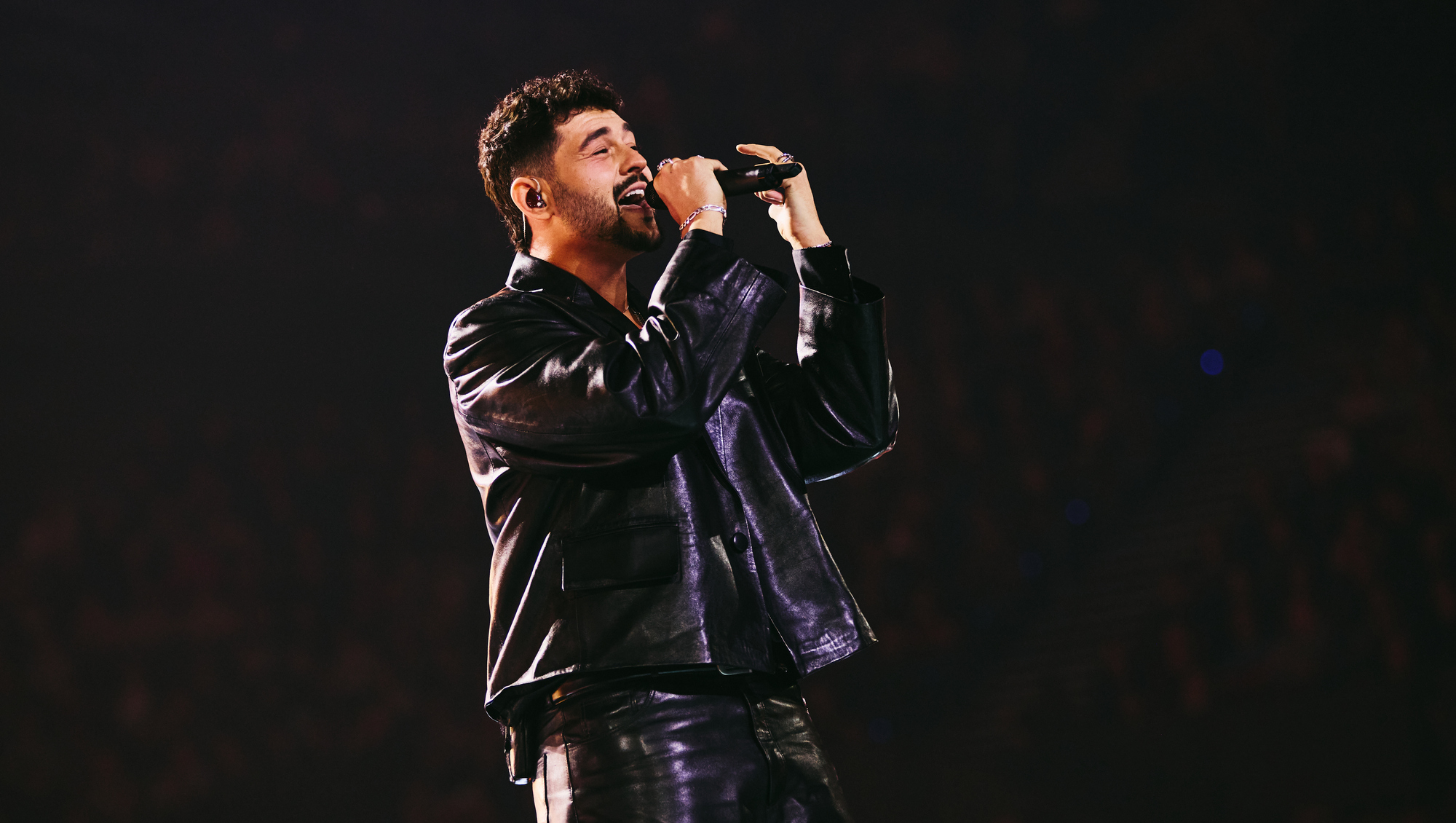
Israel’s Noam Bettan performing in the first Eurovision semi-final (Alma Bengtson/EBU/PA)
Israel’s Eurovision entry Noam Bettan was booed by the crowd during his performance as five countries were eliminated from the Eurovision Song Contest during its first semi-final.
The 28-year-old made it through to Saturday’s final after receiving a mixed reception from the crowd before his performance began at the Wiener Stadthalle in Vienna, Austria, with some members of the audience shouting, and later booing during the quiet moments of his song
Portugal, Georgia, Montenegro, Estonia and San Marino were the countries eliminated from the contest following a popular vote, with the latter seeing veteran British pop star Boy George join its entrant Senhit to perform the song which he co-wrote.

Read More
The result means Moldova, Sweden, Croatia, Greece, Finland, Belgium, Lithuania, Poland, and Serbia all qualified alongside Israel.
Before Bettan sang earlier in the night, BBC Eurovision commentator Rylan Clark noted there had been “a lot of controversy” surrounding Israel at this year’s contest.
After his song, Bettan told the crowd: “Thank you so much.”
Bettan performed inside a shiny diamond, wearing a black outfit, surrounded by female dancers in black and white bodysuits.
A number of protests reportedly took place in the Austrian capital this week over Israel’s inclusion in the contest amid its actions in Gaza, with Ireland, Iceland, the Netherlands, Spain and Slovenia all boycotting the event in protest.
Russia was banned from Eurovision after its full-scale invasion of Ukraine in 2022, but Israel has continued to compete despite disputes.

Israel’s 2025 entrant, Yuval Raphael received the largest number of votes from the public last May, ultimately finishing runner-up to Austrian winner JJ after the jury votes were taken into account.
Two protesters unsuccessfully attempted to storm the stage and throw paint during her performance.
UK entrant whose real name is Sam Battle, told the Press Association that people can “express their opinions” at the song contest.
Asked about the impact that protests against Israel’s participation could have, Battle said: “People can be themselves, and they can also express their opinions, and they can do that this year because the canned audience is unedited, so we’ve just got to see what goes on…
“The audience isn’t controlled, the audience participations with the microphones, they’re allowed to wave whatever flags within the sizing rules and the flammability rules and stuff, so we’ve just got to get on with it.”

Elsewhere, Tuesday’s semi-final was opened by Moldova’s Satoshi, who performed his song while interesting performances came from Croatia’s Lelek, who performed with face tattoos against a fantasy-themed backdrop, and Greece, whose entrant Akylas performed in a striking tiger print outfit.
Lithuania’s Lion Ceccah also offered one of the night’s most eccentric performances, painted silver and appearing in a Grim Reaper-like outfit, before stepping out of it and into black mist, which was mirrored by Serbian metal band Lavina, whose singer also wore a gothic outfit.
Finland’s violinist Linda Lampenius and singer Pete Parkkonen performed their classically tinged pop song which is among the bookies’ favourites to win the contest, backed by a collection of flaming wooden furniture.
Italy’s Sal Da Vinci and Germany’s Sarah Engels also performed alongside the 15 competitors, but are already qualified as part of the big four, who contribute the most to the song contest financially.
During Saturday's final, RTÉ will show Eurovision-themed episode where priests Ted and Dougal perform as part of its boycott of the contest over Israel’s participation.