Book review: Rare insight into an obscure Irish traditional music icon
This fine biography does that most rare of things: it brings to life, on the printed page, exactly how Tommie Potts felt the music that so defines him. And why
Book review: Rare insight into an obscure Irish traditional music icon

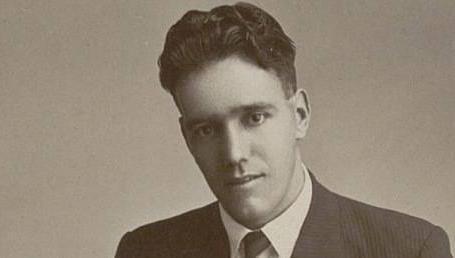
Tommie Potts was never fully understood even among his own peers, many of whom regarded him with suspicion. Picture: Irish Traditional Music Archive

  • Tommie Potts: The Sorrowful and the Great 
  • Seán Potts (edited by Aoife Nic Cormaic) 
  • Irish Traditional Music Archive, €40 

Marking the death of Tommie Potts in March 1988, one of his nephews paid tribute to the Dublin-born fiddle player on national radio.

Speaking to RTÉ’s Morning Ireland, Seán Potts claimed “he was unique, very creative, and inventive in his music”. 

“He thought deeply about music,” he said. “He didn’t find performing easy”.

Tommie Potts didn’t find recording easy either: he released just one commercial album and, even in his pomp during the 1950s and 1960s, received little formal recognition. 

Often cited as a singular influence within Irish traditional music — ‘a gifted oddity’ — he remains an enigmatic character about whom not a whole lot is known. 

So, there is much for this fine biography, beautifully curated by his grandnephew, to unpack.

His career — in as much as his music can be framed as such — spans the development of popular culture in Ireland during the first 60 years of the State. 

The book takes its title from a quote — “Sorrowful and great is the artist’s destiny” — attributed to Franz Liszt, the Hungarian composer, virtuoso and devout Catholic, one of a number of unlikely international influences on Potts’s life and work.

Devotion to music was a constant

Born in 1912, he was raised as part of a large family in The Coombe, where his parents ran an open house for musicians. 

“Music”, the author suggests, “was like the Sacred Heart lamp in the house: devotion was constant.”

There are flecks of classical and even early jazz motifs scattered throughout what exists of Potts’s playing and he alluded regularly to a wide breadth of reference, from Bach and Beethoven to Menuhin, Paganini and even Stephane Grappelli and Fritz Kreisler. 

He developed a distinctive playing style cut in his own likeness — moody, introspective, and spiritual — and was often overcome while performing, lost deep in the music.

The spectre of death long surrounded him and clearly influenced his playing. He was a 24-year-old firefighter when he attended a fire at the Exide Battery factory on Pearse St and saw three of his colleagues lose their lives. 

Already prone to melancholy — his daughter suggests he may also have been on the autism spectrum — this episode affected him profoundly. “He would never be the same person again,” Helen Potts suggests. Nor, the author suggests, would his music.

In later life he experienced the premature deaths of several of those closest to him: his wife Nellie, and his peers, Sean Ó Riada and Willie Clancy, after whose death he didn’t speak for days.

Best known for his only album 'The Liffey Banks'

Potts is arguably best known for his only album, a 22-cut elpee for Claddagh Records called The Liffey Banks, released in 1972. 

It was committed to tape during a social event in Luggala that was attended by, among others, Charles Haughey and the Scottish actor, Sean Connery.

The record, which has become a niche cultural touch-stone, divided opinion from the get-go: like much influential art, those who like it tend to slavishly adore it. 

The fiddle player, Paddy Glackin, determines it to be “one of the most important recordings ever”.

Potts himself despised it, believing it to capture the music in a less than pure state. 

His aversion to the commercial exploitation of art — a trait inherited from his father — led him to donate whatever royalties the album generated to the Dublin Penny Dinners. 

But Potts certainly knew his own worth too and needed no reminding. 

“Tommie’s ego when it came to music,” the author writes, “often concealed by his spiritualism, was not insubstantial.”

Tommie Potts playing in Ennis: 'The most comfortable he felt was when he travelled to play with the “opinionated and contrary musicians of Clare”.' Picture: Courtesy of the Irish Traditional Music Archive

Potts was never fully understood even among his own peers, many of whom regarded him with suspicion. 

Like Ó Riada, he was at the heart of a cultural tension that still under-pins much of the conversation around traditional Irish music: a search for authenticity. 

The origins of which are rooted in the vexed question of ownership.

Between the preservation of ‘the tradition’ and the desire to innovate — or, to use Pott’s own term, “to develop the music” — who approves the licence? Who owns the music?

That line between invention and fabrication was one that Potts negotiated throughout his life, often successfully and other times less so. 

Little wonder, then, that the most comfortable he felt was when he travelled to play with the “opinionated and contrary musicians of Clare”. 

It was in the company of unbound, like-minded players in Inagh and Kilmaley that “he found his centre” and where, perhaps, he felt that his music was understood.

The Sorrowful and the Great is a full-bodied compound of family, social, and cultural history, and unfiltered musicology. 

Doctoral thesis on Tommie Potts’s music

The later chapters, in particular those that draw on the late Micheál Ó Súilleabháin’s 1987 doctoral thesis on Potts’s music, are dense, technical, and certainly not for the faint-hearted. 

And yet they’re key to understanding just how unique and singular a player he was.

But the book is at its most compelling when it places Potts into a young, often seething, and turbulent nation in search of a political and cultural identity.

In as much as it examines the philosophical tensions long inherent in Irish traditional music, so also does it stealthily — and effectively — deal with the growth of international artistic influence in post-independent Ireland.

Aspiring to artistic self-sufficiency under de Valera, the impact of technology, media, and the greater availability of recorded music and literature all impacted hugely on the fledgling state. 

And certainly too on Tommie Potts’s music: although not formally educated, he read and listened avidly, and his work often betrays this cultural curiosity.

Respectful profile of a complicated man

But beyond all else, The Sorrowful and the Great constructs an insightful and respectful profile of a complicated man whose music continues to resonate. 

Potts is described variously as hot-headed, cold, cranky, fun-loving, kind, and quiet. He was a disciplinarian and practical joker, a loving father who could be distant and remote. 

And as a history written from inside the family looking out, it’s to the author’s credit that he manages to navigate those nuances so effectively.

Particularly in those passages — sometimes overt and other times more considered — that deal with mental illness. 

Tommie Potts was consumed by depression and ‘music literally drove him to tears’.

And it’s in the sequences about his friendship with the late psychologist, Professor Ivor Browne, who treated him, that the book elevates itself beyond the realms of just biography and into something far more visceral.

As such, it does that most rare of things: it brings to life, on the printed page, exactly how Tommie Potts felt the music that so defines him. And why.

BOOKS & MORE

Check out our Books Hub where you will find the latest news, reviews, features, opinions and analysis on all things books from the Irish Examiner's team of specialist writers, columnists and contributors.
More in this section

Scene & Heard

Newsletter

Music, film art, culture, books and more from Munster and beyond.......curated weekly by the Irish Examiner Arts Editor.

Cookie Policy Privacy Policy Brand Safety FAQ Help Contact Us Terms and Conditions

© Examiner Echo Group Limited