Book review: Fight to discover your identity
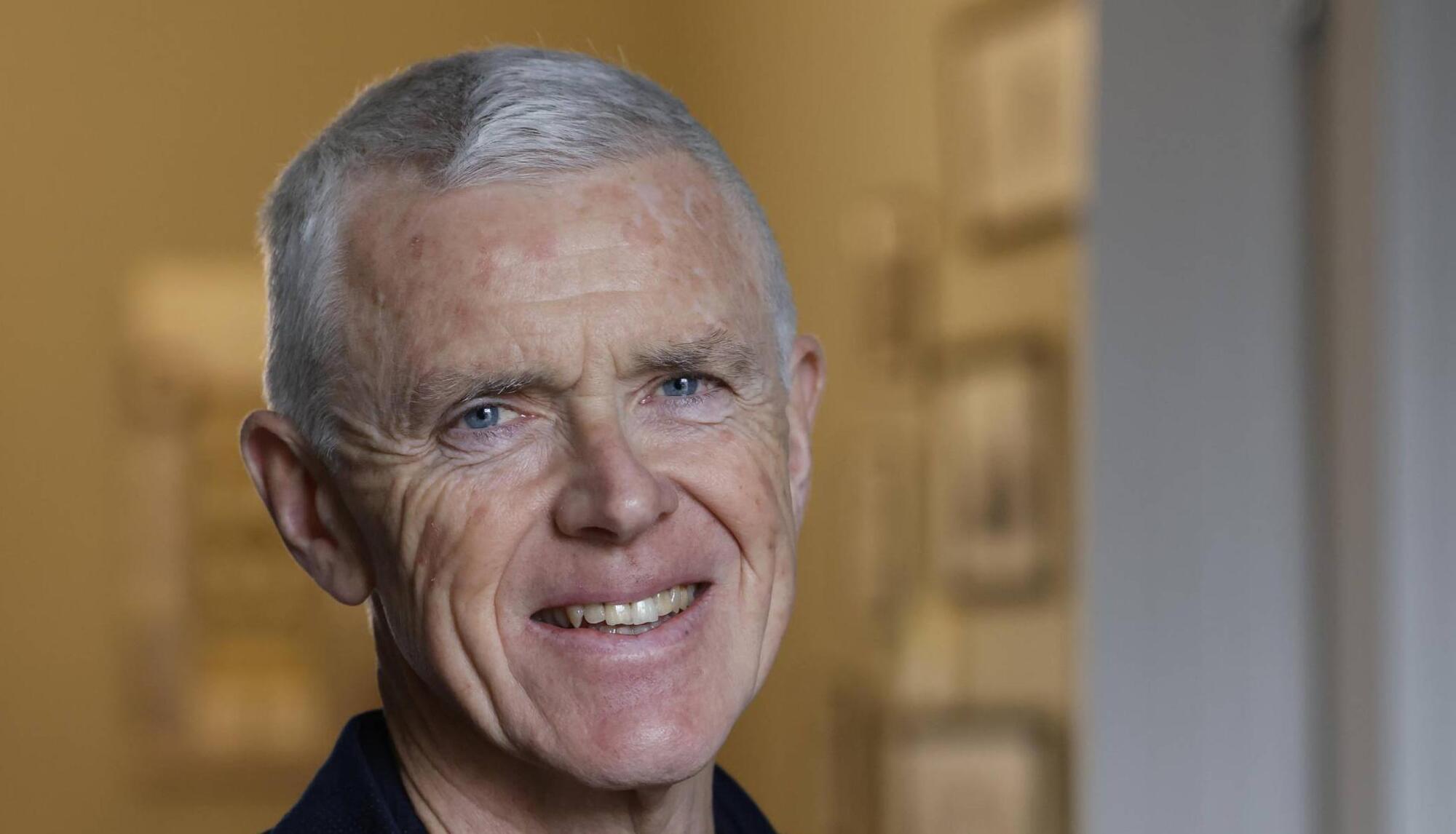
Paul Cullen had always been fascinated by the unanswered questions about his origins, but for many years pushed them to the back of his mind for fear of upsetting the people who had raised him
Book review: Fight to discover your identity

Born in London in 1963 to an Irish mother, Paul Cullen had been adopted. And like most of the people trafficked through that era’s arcane and secretive adoption system, he grew up knowing little or nothing about his true origins. Picture: Nick Bradshaw/ The Irish Times

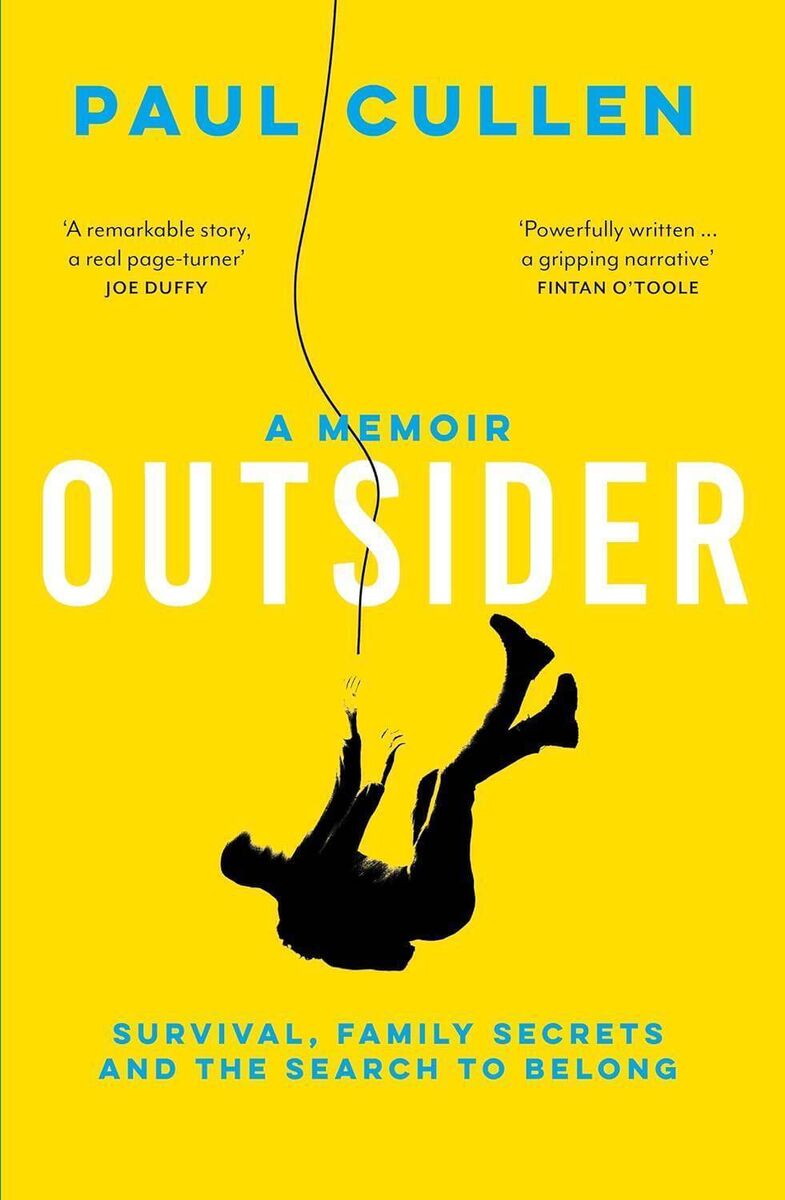
  • Outsider: A Memoir of Survival, Family Secrets and the Search to Belong
  • Paul Cullen 
  • Hachette, €16.99 

On October 7, 2017, the journalist and author Paul Cullen was walking near the snow-capped peak of Zugspitze, in the German Alps, when he lost his footing and plunged 150 metres into a deep and inaccessible gully. 

He might have died, or been paralysed, but instead slid to a halt and was eventually rescued by a helicopter ambulance.
But as he lay in that icy gully, Paul Cullen felt sure he was done for. 

“I relinquish hope,” he writes, and his big regret is that he might expire without ever truly knowing who he really was.

Born in London in 1963 to an Irish mother, Paul had been adopted. And like most of the people trafficked through that era’s arcane and secretive adoption system, he grew up knowing little or nothing about his true origins.

Luckily for him, he ended up in the care of Mary and Pat, a quiet and hard-working working class Dublin couple who devoted their lives to his upbringing. 

In Outsider, he writes about them with moving candour: “My parents,” he says, “typical of their generation, were modest, undemonstrative people.

They were poor at expressing or showing affection, but it was there all the same.

Mary worried constantly that the adoption board would return one day to take ‘my Paul’ away from her. 

Having lost a baby herself in the most horrific circumstances, she veered between helicopter parenting and frenzies of resentment about Paul not really being ‘her child’.

She told him stories to explain his adoption, but they were rarely the same. 

Sometimes Paul’s parents had died in a car crash, other times his birth mother was dismissed as a ‘hussy’ and a ‘tramp’. The truth, of course, was more prosaic.

The English writer Jeanette Winterson, another adoptee, once said that “adoption drops you into the story after it has started — it’s like reading a book with the first few pages missing…”. 

Paul Cullen had always been fascinated by the unanswered questions about his origins, but for many years pushed them to the back of his mind for fear of upsetting his actual parents, the people who had raised him.

Over time, with the help (and hindrance) of a Catholic adoption agency, Paul made contact with his birth mother, Olive, who had been trying to reach him for decades. 

He travelled to the midlands to meet her, though not without reservations: “Life was hard enough with one Irish mammy,” he notes dryly. “I didn’t need another one.” 

And when he is confronted with her in a quiet hotel, he wonders how he should feel.

“Was this a celebration, or a solemn occasion? How would I be received?” 

Over time, he and Olive do establish a tentative relationship, but she is reluctant to discuss the past, and has little information to offer about his birth father, a mysterious Dublin guard who could be anywhere, alive or dead.

It is after his Alpine mishap that Paul Cullen resolves to find out as much as he can about his beginnings. 

Eventually, he tracks young Olive down to a notorious mother and baby home in north London called St Pelagia’s, and uses his journalistic skills to unearth records that illustrate the callous complicity of the UK and Irish governments in the deportation of single Irish mothers and their babies.

In this cleanly written and painfully honest memoir, Paul reveals the pain and suffering endured by both his mothers in a cant-ridden, supposedly Christian society that cared more about appearance than compassion.

A dogged reporter till the end, Paul even managed to track down the woman who had arranged his adoption, now 93 and almost blind.

“We thought we were doing the best at the time,” she tells him. “But maybe we weren’t.”

x

BOOKS & MORE

Check out our Books Hub where you will find the latest news, reviews, features, opinions and analysis on all things books from the Irish Examiner's team of specialist writers, columnists and contributors.
More in this section

Scene & Heard

Newsletter

Music, film art, culture, books and more from Munster and beyond.......curated weekly by the Irish Examiner Arts Editor.

Cookie Policy Privacy Policy Brand Safety FAQ Help Contact Us Terms and Conditions

© Examiner Echo Group Limited