Book review: Violent and divided, the US of a bygone era is sadly familiar
This book is long, at times dense, and tough to digest, but ultimately a worthwhile read — a story of an America that hasn't changed that much at all
Book review: Violent and divided, the US of a bygone era is sadly familiar

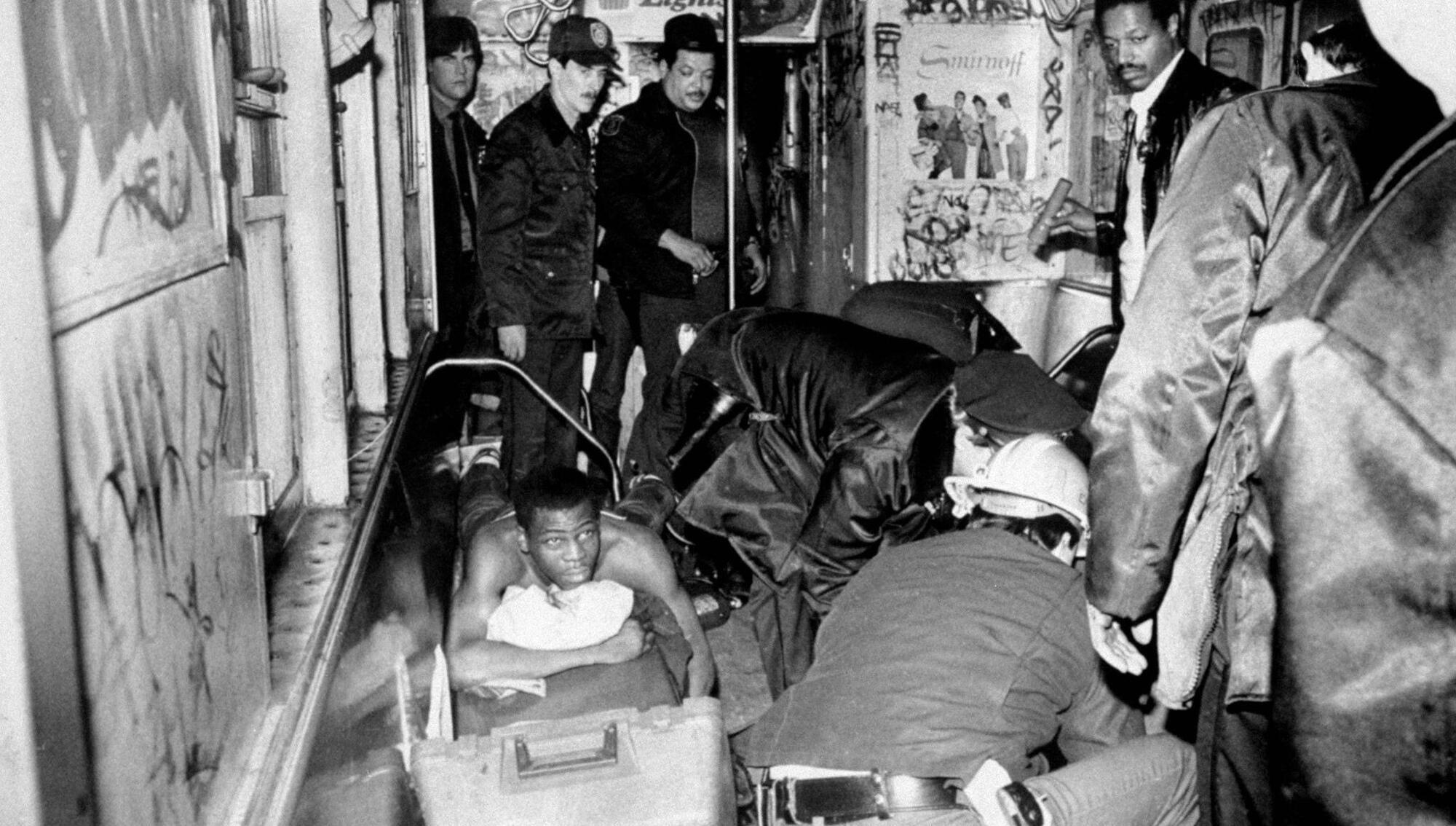
One of the four men wounded by Bernie Goetz is aided on the Seventh Avenue IRT train in New York on december 22, 1984. Picture: Carmine Donofrio/NY Daily News via Getty

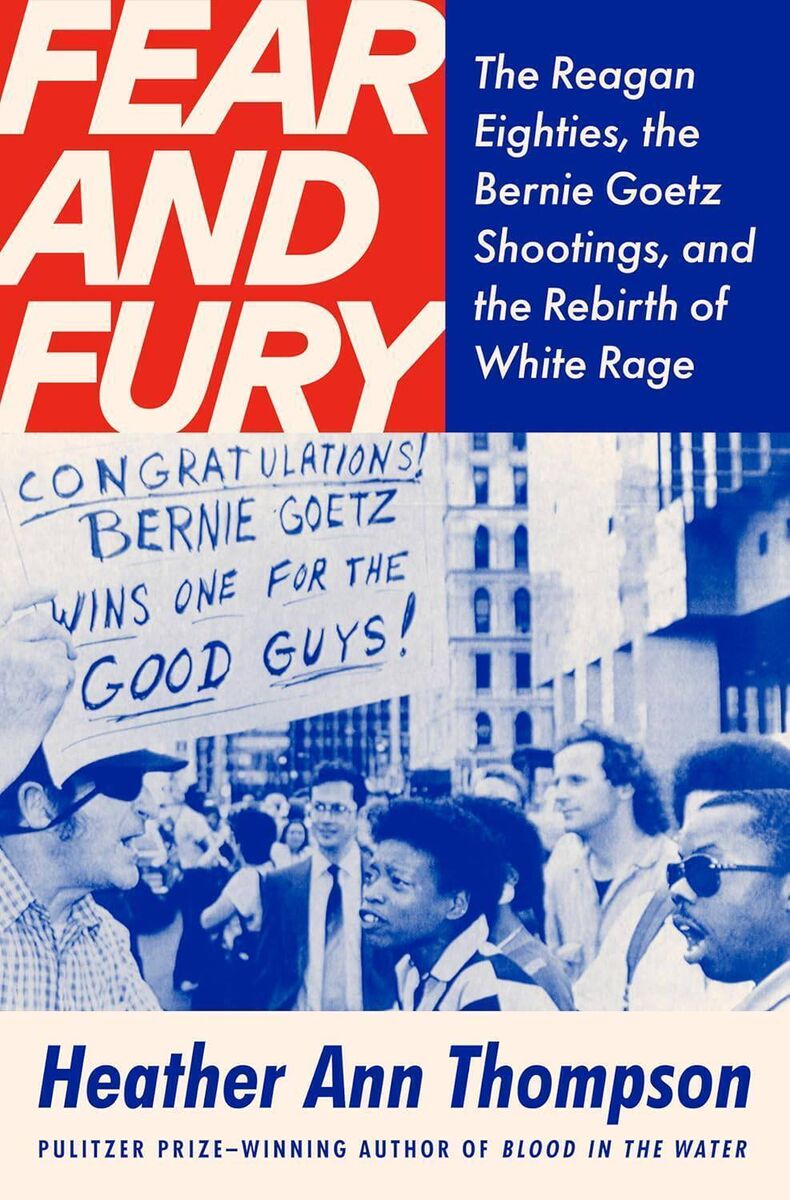
  • Fear and Fury: The Reagan Eighties, the Bernie Goetz Shootings, and the Rebirth of White Rage 
  • Heather Ann Thompson 
  • Pantheon, $35.00 

Three days before Christmas, 1984, four young black men from the South Bronx boarded a 2 train and headed downtown.

Hard-up for money and unable to find meaningful work in a part of New York City long neglected by the authorities, their plan for the afternoon was to use screwdrivers to prise open coin boxes on machines in video arcades and to make off with the change.

At one point during a journey where other passengers reported the quartet were laughing and horsing around, but not bothering anybody, Bernhard Goetz, a 37-year-old who lived alone in Manhattan, boarded their carriage. 

A random encounter that would change America.

When one of the men, Troy Canty, sidled up to Goetz and asked him if he could spare five bucks, he responded by pulling out a Smith and Wesson .38. 

Then, very methodically, he started shooting until all four lay slumped in pools of blood around the carriage.

Calmly and efficiently, he walked up to the victims to inspect his handiwork and even checked if a shocked female passenger who had thrown herself on the floor during the carnage was OK. 

At that point, he made his exit, walking down between the tracks to the next station, working his way back to his apartment, and going on the lam in New England for nine days.

“If I had more bullets, I would have shot them all again and again,” said Goetz after finally turning himself into police in Concord, New Hampshire.

The — my — problem was I ran out of bullets, and I was going to gouge one of the guys’ eyes out with my keys afterwards.

“You can’t understand this. I know you can’t understand this. That’s fine. The only reason I didn’t do it is because he had changed his look.”

While he had hidden out in plain sight, New York City was convulsed by what he had done. 

One half of the population viewed him as a vigilante hero, a Charles Bronson in Death Wish type character finally turning the tables on the hoodlums. 

This was a constituency fed up with the perceived lawlessness of the streets, applauding somebody literally taking matters into his own hands. 

The other side regarded him as an out-of-control maniac who cold-bloodedly shot to kill four men because one of them pan-handled him for some spare cash.

No evidence was ever presented that showed his victims were bent on doing him any harm, and Goetz being white and the men he sent to hospital all being black of course further divided the people of Gotham.

Those are the bare facts of an encounter that came to define the city and the country in that tumultuous and hectic decade. 

Author Heather Ann Thompson  won the 2017 Pulitzer Prize for History for her previous book. Picture: Matt Wilson/Comedy Central via Getty

In Fear and Fury: The Reagan Eighties, the Bernie Goetz Shootings, and the Rebirth of White Rage, Heather Ann Thompson revisits the case. 

Situating it in that particular time and context, she tells the stories of the victims, Canty, Barry Allen, Darrell Cabey, and James Ramseur, offering a detailed portrait of the harsh environment they came from — a disenfranchised, dispossessed community. And so much more besides.

Thompson writes about a period more than four decades ago. A land and a time before Fox News and the birth of the hugely influential, right-wing industrial outrage complex. 

But, in the days after the shootings, the mainstream media was almost uniform in its support of Goetz.

Only Jimmy Breslin, the doyen of newspaper columnists in the city, struck a discordant note about the cheerleading of the shooter. 

Unfortunately, Breslin sullied his own bib later in the drama when he conducted an interview with a sedated, brain-damaged Darrel Cabey, whose garbled answers were eventually used against him by the defence attorneys.

In the first half of the book, Thompson covers the court case in detail. Maybe too much detail for the casual reader. 

Narrative sags with too much detail

Evincing a historian’s desire to include everything that was said or acted out during the trial (they go to visit a replica subway car for a re-enactment), the narrative sags. 

Even after the sentencing, there is another extensive trawl through what went down in the jury room. 

Her lengthy revisiting of those deliberations, including one juror’s obsession about the trajectory of the bullet that left Cabey paralysed from the waist down, does, eventually, offer an understanding of why Goetz, somebody with a history of making racist remarks to neighbours, spent just eight months in jail on a minor weapons charge.

“These details were not enough to convict Bernie Goetz because in 1980s New York, even a strange, anti-social, gun-wielding loner like Goetz was more sympathetic to these jurors — a slice of mainstream New York and America both — than four unemployed Black teenage dropouts trying to survive and somehow thrive in that same city and country,” writes Thompson. 

“Ultimately, the jury could not see Goetz as a vigilante or a predator because they did not see the young Black people he had shot as victims.”

Aside from a granular examination of the shooting, the trial, and the civil case brought by Cabey, this work also explains the incident’s enduring impact on American society.

Thompson traces a path from then to now, a period when right-wing news outlets peddle a constant narrative that New York is again a lawless city on the brink of destruction. Which it is not. 

Especially trenchant in its support of the subway shooter, the New York Post became the paper of “law and order” from then on, a stance that ensures it continues to constantly hype and exaggerate the extent of criminality in the five boroughs today.

Theirs is a lucrative grift because fear sells well and, in many ways, the Goetz case offered a template for the media’s coverage of subsequent instances of racial violence over ensuing decades.

This book is long, at times dense, and tough to digest, but ultimately a worthwhile read. 

The story of a very different America that, in so many depressing ways, hasn’t really changed at all.

x

BOOKS & MORE

Check out our Books Hub where you will find the latest news, reviews, features, opinions and analysis on all things books from the Irish Examiner's team of specialist writers, columnists and contributors.


More in this section

Scene & Heard

Newsletter

Music, film art, culture, books and more from Munster and beyond.......curated weekly by the Irish Examiner Arts Editor.

Cookie Policy Privacy Policy Brand Safety FAQ Help Contact Us Terms and Conditions

© Examiner Echo Group Limited