Book review: 'Escape from the Anthill' is both illuminating and wise
The essays in this reissued collection are told with great wit and on a variety of fascinating subjects where there is neither a dull sentence nor a careless thought
Book review: 'Escape from the Anthill' is both illuminating and wise

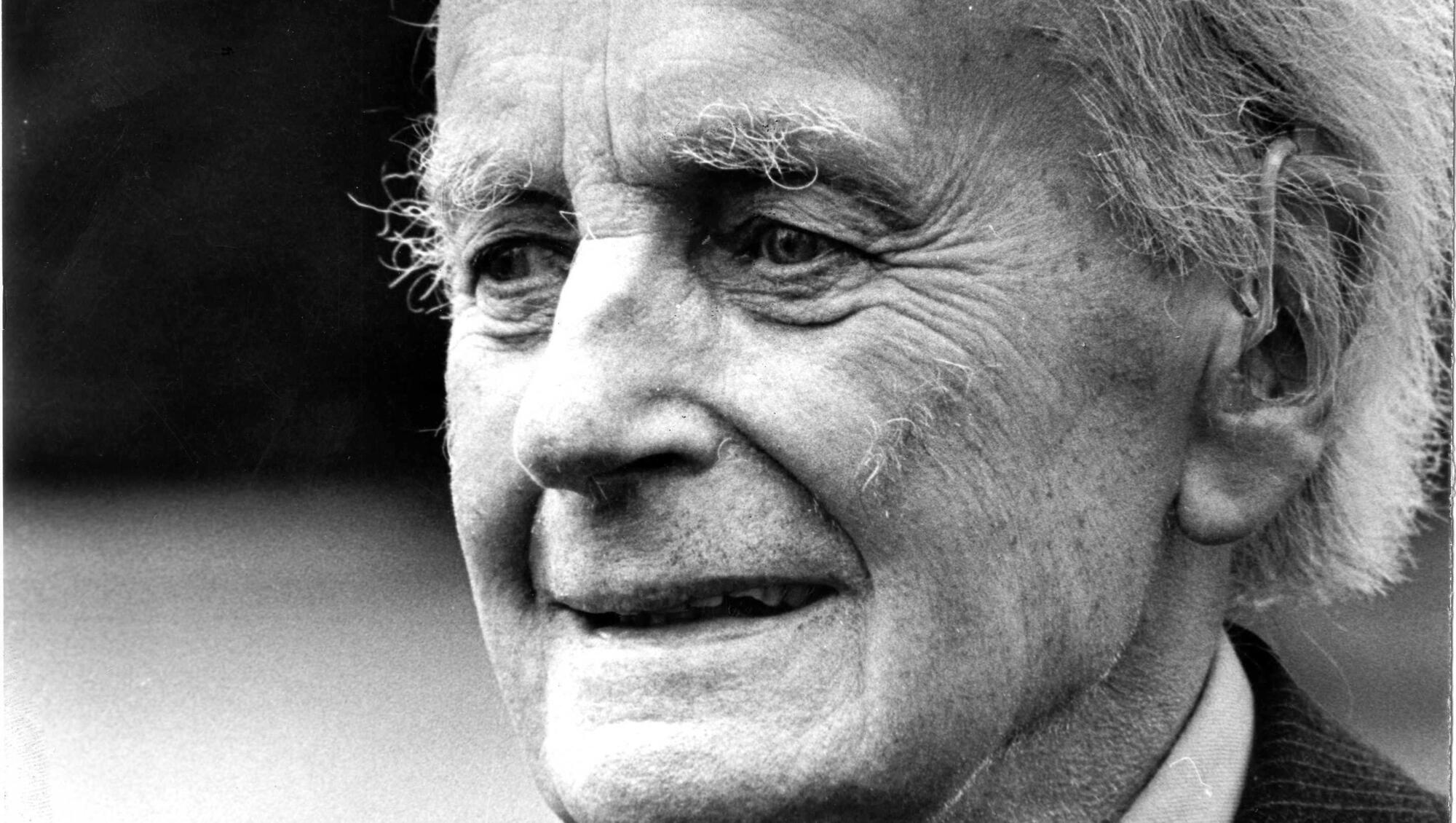
Re-reading the essays is a reminder of why Hubert Butler’s reputation as the greatest Irish essayist of his era has continued to grow. File picture: Pat Langan/ The Irish Times

  • Escape from the Anthill
  • Hubert Butler
  • Lilliput Press, €16.95 

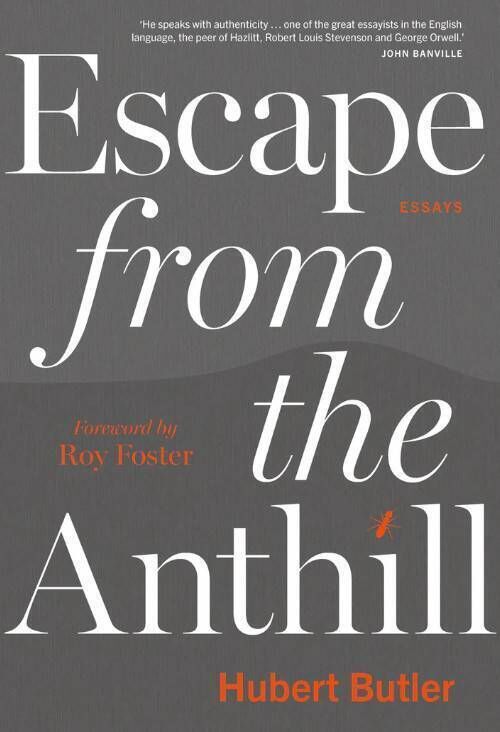
Hubert Butler’s  Escape from the Anthill, first published in 1985, has been reissued by Lilliput Press for its 40th anniversary with a foreword by historian Roy Foster.
The book collects essays that were published in a variety of periodicals, magazines, journals, and newspapers in the mid-20th century — between the late 1940s and 1970s.

Re-reading the essays is a reminder of why Butler’s reputation as the greatest Irish essayist of his era has continued to grow. 

Indeed, Butler’s mastery of the form compares with any essayist, Irish or not: John Banville, one of Butler’s great champions, has described him as the “peer of Hazlitt, Robert Louis Stevenson, and George Orwell”. 

These are essays, told with great wit, on a variety of fascinating subjects where there is neither a dull sentence nor a careless thought.

Butler was born in 1900, in time to live through turbulence of the Irish revolution, and died in 1991 on the cusp of the dramatic transformation of modern Ireland. 

Butler lived in Kilkenny, where he belonged to what used to be termed the ‘Ascendency’, a class that precipitously declined in the new Irish Republic.

He has been described as a Protestant Republican, though Foster suggests that “Anglo-Irish nationalist” would be more accurate — Foster also admits that Butler was nonetheless impatient with the term ‘Anglo-Irish’; like Elizabeth Bowen, he felt his Irish-ness was not in question.

The first part of Escape from the Anthill contains 13 essays preoccupied with the history and place of Irish Protestant culture in Ireland from the late 18th century to the late 20th century. 

His approach, however, is never narrowly nor dryly focused on the fate of a single class. 

Instead, his curiosity for the marginal is abundant: Essays range across plans to create a ‘New Geneva’ of Swiss Protestant refugees in Waterford in the 1780s, to the burning of the apparently fairy-possessed Bridget Cleary in 1895 in The Eggman and the Fairies.

Butler, who had been influenced early on by Horace Plunkett and AE (George Russell) remained always interested in the confluence of politics and literature.

Some of the essays, such as that on EM Forster and Edmund Wilson’s critical approaches for fiction, will most probably not have the same immediacy for contemporary readers as they once had. 

But this might be to miss the point of Butler’s mastery of the essay form, and particularly of pitch: His reproaching of Patrick Kavanagh’s ludicrous disparagement of the Gaelic revivalist generation, and his suspicion of Protestant writers, in Envoy and Mr Kavanagh is at once witty, generous, and ruthless.

Butler regarded the partition of Ireland as a disaster that stranded the Protestant population of the republic. 

He also deeply laments the flight of an Anglo-Irish class that had once provided the intellectual and artistic energies of Irish nationalism: 

“These were dreams with reality and achievement behind them but they could not stand up to the Gaelic dream of Patrick Pearse, for it had been sanctified in blood.”

His own idealisations do not make him less clear-eyed about the failures of violent nationalism, including his abhorrence of antisemitism and the totalitarian wreckages of the European 20th century run throughout. 

In The Artukovitch File, he details his tenacious efforts to track down a former Croatian government minister and Nazi collaborator who had been given shelter in Dublin after the war, and the final essays of Escape from the Anthill about his experiences in Greece, Serbia, Croatia, and Russia reveal the breadth of his interest in the wider world.

Illuminating and wise, Escape from the Anthill is the work of a great writer with a deep concern for humanity.

x

BOOKS & MORE

Check out our Books Hub where you will find the latest news, reviews, features, opinions and analysis on all things books from the Irish Examiner's team of specialist writers, columnists and contributors.

More in this section

Scene & Heard

Newsletter

Music, film art, culture, books and more from Munster and beyond.......curated weekly by the Irish Examiner Arts Editor.

Cookie Policy Privacy Policy Brand Safety FAQ Help Contact Us Terms and Conditions

© Examiner Echo Group Limited