Karl Whitney: How one long day in hospital brought perspective on connection
‘We look for movement and progression in our lives, even though much of our time on earth is spent experiencing neither.’
Christmas is a time to tell ourselves reassuring stories about the world and our place in it. But sometimes you get the story you don’t expect, one told in a way you had never anticipated.
There were 13 days left before Christmas Day — an inauspicious number in retrospect, if you’re of the mind to look for omens. (I’m not usually, but on this one I’m choosing to go full omen.)
I woke in the early hours and, on the way back from the bathroom, feeling slightly faint and seeking to be horizontal in bed once more, I tripped and hit my chin hard against the door handle of my bedroom, which — for a brief moment that was enough to stun me — acted as both a hard punch to my chin and a knife that cut it open.
I lay on the ground and touched my face and neck. I must be sweating pretty badly, I thought — then realised that it wasn’t sweat but my own blood.
As I slumped there in the dark I wondered how severely I had injured myself, and, somewhat melodramatically, if this was the end.
I had been planning to keep things simple before Christmas, to spend time with people I cared about and to minimise the kind of high-octane drama that can kick in when pubs and buses are packed, taxis are nowhere to be found, and the city vibrates uneasily with excitement and alcohol.
Some chance of that, I thought, as I looked down at my white T-shirt that was now streaked with blood.
I put a plaster on my face to cover the cut. Minutes later it was soaked; I replaced it with another plaster and the same thing happened.
Eventually I took another look, and it was clear that the cut was an open wound that would need stitches. I would have to go to A&E.
I was prepared for a wait, so packed a book and a magazine. Maybe a couple of hours at most, surely?
I cycled to the hospital, thinking that there might be an outside chance that I could still be stuck there once the buses finished for the day and not really wanting to draw attention to myself by sitting with a bandaged, bleeding face on public transport.
I checked in at reception, glanced at the waiting room: Three rows of seating and not too many people.
Hopefully I’ll be done before the afternoon, I thought (it was just after 9am). The reality was that I would sit in that room without seeing a doctor for the next 11 hours.
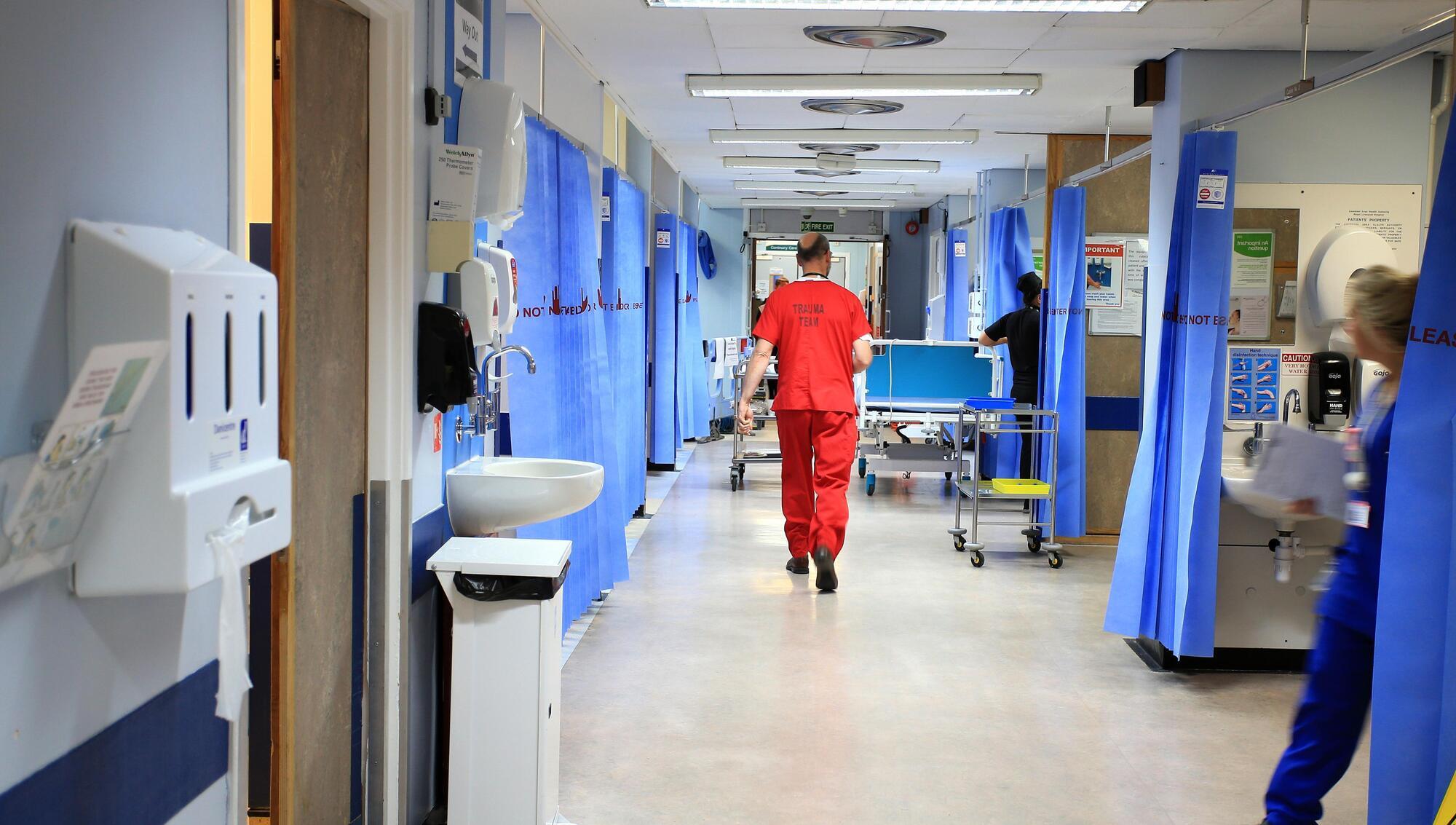
This is not necessarily a column about the ills of the Irish health system, even though I’m sure you can see from the account I’ve given that sitting with a bleeding face in a brightly lit room full of people for an entire day isn’t an ideal healthcare experience.
The morning passed by, and, as time wore on, I got a sinking feeling.
Some of my fellow travellers in the waiting room complained loudly; others had been waiting overnight in that floodlit purgatory.
I tried to switch off so completely that the only thing I might react to would be the sound of my name being called out by a nurse, but I knew that could well be some time.
I occasionally tuned into the conversations that were happening around me. I observed others, as I’m sure they too were observing me.
There’s not much to hold your attention in the waiting room, so the smallest thing assumes a larger significance, and the longer you’re there the easier it is to lose perspective: It becomes the centre of your world for the duration of your confinement.
One man was particularly active on the phone. He’d make calls with the speaker on, shouting loudly towards the screen while the other person’s voice responded. You couldn’t help but hear the whole thing.
Ordinarily I’d get annoyed by this kind of activity and move elsewhere, but where would I go? I couldn’t put on earphones without risking missing being called.
So, ears unblocked and eyes open, I became a sponge for everything that happened in that room.
The waiting room is essentially a place where narratives are paused. You’ve broken your arm or been punched in the face.
That part of your story is in the past; what incited it and how it played out is behind you. And how it will be resolved is yet to come.
For some, the pause becomes an end: As I sat, I saw an empty hearse pass by the window.
Yet the grievance is still fresh (to remind me of this my face began bleeding heavily once more) and you’re frustrated by not being able to properly picture how the narrative that was set in motion by your injury or illness will be satisfactorily resolved.
We crave closure and the waiting room is not the place to find it.
Outside it was Christmas but inside the hospital it felt like it was always the same moment: One day that had been prolonged and extended to near breaking point.
The tension and the drama of that unending day seeps into you as you sit there.
By the time my mam arrived to keep me company, it was after 7pm. I had been sitting in that room for 10 hours, subject to a basic triage and tests although nothing had really been addressed or resolved.
I had successfully resigned myself to the postponement of anything meaningful happening — but even I had limits.
I was beginning to reach those limits, muttering darkly of going home, when I heard my name called and found myself in another part of the hospital being quizzed by a doctor whose lightly ironic tone made me relax.
We look for movement and progression in our lives, even though much of our time on earth is spent experiencing neither.
But at least that part of our existence is within our control — or so we tell ourselves.
When we feel that control slipping away, when we sit in a room with no end in sight, we crave movement.
So, when I experience that progression from one room to another, I felt elation: That things could actually move forwards; that an end was, if not yet in sight then possible, even probable.
That delight made me become more expansive. I was no longer just an observer but a participant in the ongoing drama.
We sat on a row of seats next to a woman whose name was familiar to me from her work for a national newspaper.
We chatted a little about how she found herself there; an overnight bag next to her had indicated to me that she was going to be staying in hospital for at least the next day or so.
Another woman was homeless and talked to us about her life — a tale of violence, alcoholism, but told with resilience and humour.
In hospital for an X-ray, she initially refused the wheelchair that was on offer before being wheeled away and shouting back over her shoulder to tell us to take care.
It was a little while before I was stitched up and sent on my way.
When we left the hospital, my abiding feeling wasn’t of the desperate frustration of the many hours I spent waiting for something to happen, but of the sense of jubilation and connection I felt once something did occur.
From one perspective it was a long day, but from another it was merely a brief snapshot of the ongoing moment of the hospital, a place in which stories are paused frustratingly then set in motion again with dizzying regularity.
BOOKS & MORE
Check out our Books Hub where you will find the latest news, reviews, features, opinions and analysis on all things books from the Irish Examiner's team of specialist writers, columnists and contributors.