Evil literature and indecent dancing: Why 1926 was a pivotal year in Irish cultural history
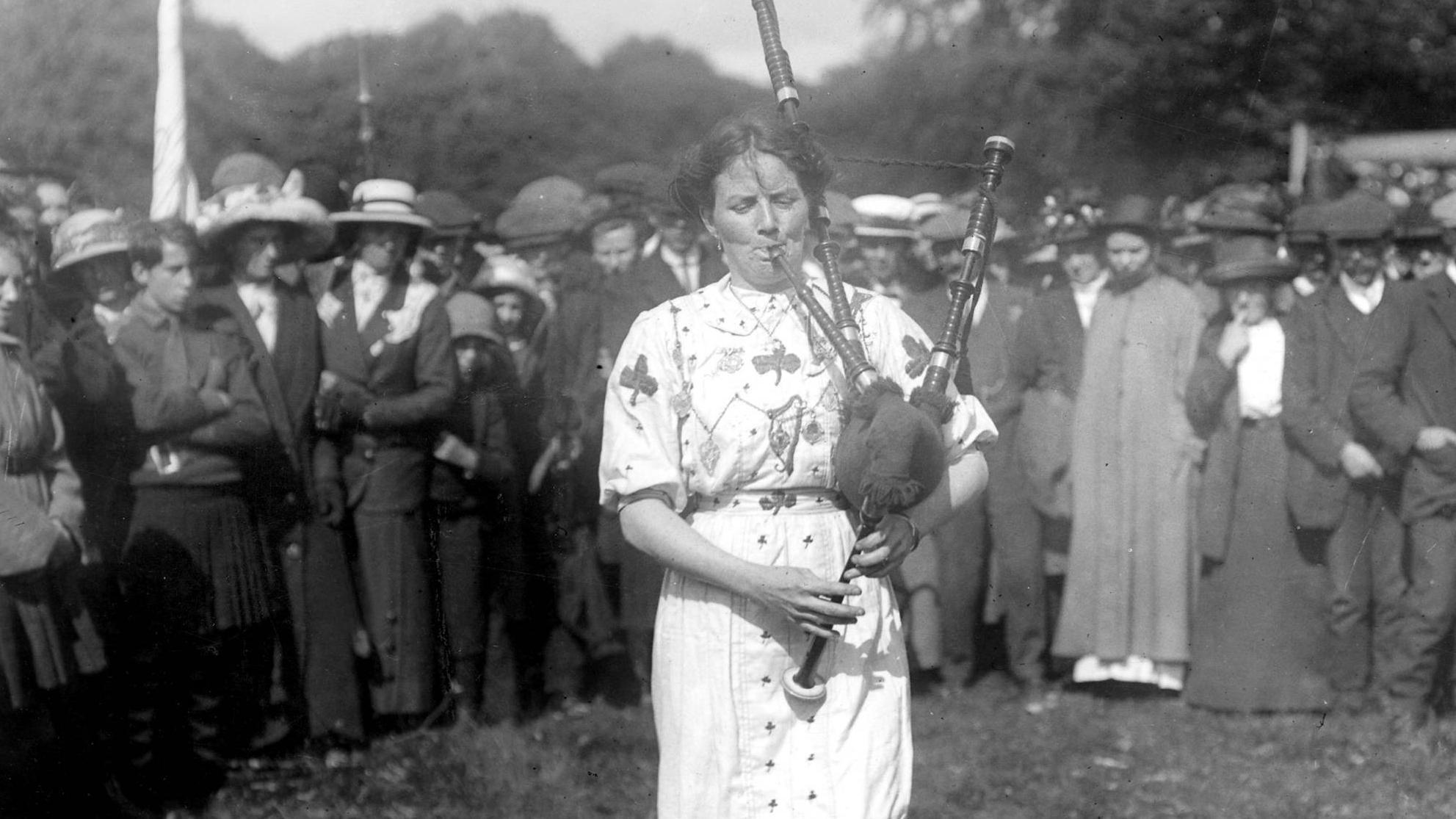
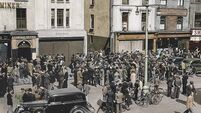
A female piper at a feis in the Mardyke, Cork, in 1926. Unfortunately, Church-inspired legislation in the era would tighten the State's grip on culture and women's rights. Picture: Irish Examiner Archive
The release of the 1926 Census records has cast a welcome spotlight on a pivotal year in Irish political and cultural history.
A century ago this month, Fianna Fáil was founded as a republican party destined to engage with Free State politics just three years after the ending of the civil war.
This was a landmark moment in the legitimisation of the 26-county state established under the 1921 Treaty.
De Valera’s new party mobilised large swathes of the disaffected and won office within six years, profoundly altering the Irish political landscape.
HISTORY HUB
If you are interested in this article then no doubt you will enjoy exploring the various history collections and content in our history hub. Check it out HERE and happy reading
While the full records of the census became available only last month, the general reports were released from 1928 onwards, with summaries available as early as August 1926.
What the republican paper called the ‘grim reality’ of poverty, emigration, depopulation and severe social inequality that the figures revealed was politically weaponised by Fianna Fáil and its allies to attack the ruling Cumann na nGaedheal party and its woeful record in the social and economic realm.
In cultural terms, Cumann na nGaedheal undertook a number of initiatives designed to deliver on the promises of independence. 1926 saw the launch of the Irish radio service, initially titled 2RN and later Radio Éireann.
The BBC had come into being in 1922, and its Northern Irish station 2BE in 1924. Part of the impetus for establishing an Irish station revolved around the need for a counterweight to what Minister for Posts and Telegraphs JJ Walsh called the ‘British music-hall dope and British propaganda’ being received in Ireland from the BBC.
Irish radio’s tightly controlled output in its early decades included the effective exclusion of ‘jazz’, essentially the pop music of its day. It was foreign and free sounding with sensual/sexual associations, and its silencing was an effective censorship that symbolised the State’s moralistic cultural protectionist project.
A central perceived problem with jazz was its link to non-traditional, ‘indecent’ dancing, a pastime that exercised the bishops (not literally, obviously) throughout the 1920s and early 1930s and led eventually to the repressive Public Dance Halls Act of 1935.
Censorship had begun with the cinema. The 1923 Censorship of Films Act allowed a succession of film censors to ban and cut films with abandon if they were perceived to be impinging on the strict codes of Irish Catholic morality.
According to the first film censor James Montgomery, the greatest threat to Irish culture was not Anglicisation, as Douglas Hyde of the Gaelic League had famously declared, but ‘Los Angelesation’, emanating from Hollywood. Montgomery proudly declared that his ignorance about cinema was irrelevant — for he knew the Ten Commandments!
The cultural agenda of the Free State was dictated by Catholic moral concerns, a situation that would not change when Fianna Fáil took the reins of government.
The engine driving the Catholicisation of the identity and culture of the Irish Free State was a movement called Catholic Action, which flourished internationally in the interwar period and involved harnessing social and political power through lay organisations under clerical control to defend and assert that church’s interests.
The leading lights of the movement in Ireland included the Catholic Truth Society of Ireland, the Irish Vigilance Association, the Catholic Young Men’s Society, the Ancient Order of Hibernians, the Legion of Mary, the Knights of St Columbanus and the massed ranks of young men mobilised by the Christian Brother Canice Craven, editor of
A central objective of the Catholic Actionists in the mid-1920s was the establishment of a censorship of publications to complement the existing controls on film.
An intensive propaganda and lobbying campaign was waged and most of the aforementioned organisations took various initiatives to pressurise the government. All sang from the same hymn sheet, with backing from the pulpit and the bishops.
The campaign was built around the need to ban, first and foremost, what was called ‘birth control literature’, as well as other ‘evil literature’ such as the sensationalist imported popular press, ‘demoralising’ fiction and ‘sex novels’, ‘indecent’ photographs, and advertisements relating to ‘sexual diseases and female disorders’.
Contraception was increasingly prevalent since the First World War and its growing acceptance in post-war Britain led to widespread advertising in newspapers and magazines that had wide circulation in Ireland.
Artificial birth control was deemed unacceptable not just because it was sinful, but because its advertising and promotion was seen as inherently indecent and obscene. This "propaganda", as it was styled, also freed "vice of one of its more powerful restraints", leading to a deleterious effect on "general morality".
In February 1926 Minister for Justice Kevin O’Higgins succumbed to the pressure and established a Committee on Evil Literature to consider the need for new censorship legislation. The committee submitted its report in December 1926.
It reflected the priorities of its primary witnesses from the serried ranks of Catholic Action and recommended the establishment of a state censorship board that would prohibit publications deemed ‘indecent and obscene’, ‘demoralising and corrupting’ as well as those that advocated ‘the unnatural prevention of conception.’
The notorious Censorship of Publications Act 1929 was the result. For the next five decades successive censorship boards — controlled until the 1960s by Catholic Actionists — waged war on Irish and international literature and placed a blanket ban on information about contraception and abortion.
Abortion was already illegal; the ban on contraceptive information was followed by a ban on contraception itself in 1935 — another milestone in the incremental incorporation of Catholic moral teaching into the laws of the land, and another retrograde step for the health and freedom of Irish people in general, and Irish women in particular.
The seeds planted in 1926 bore bitter cultural and social fruit. Grim reality indeed.
- Donal Ó Drisceoil lectures in History at University College Cork. He is currently completing a history of censorship in 20th-century Ireland.
Donal Ó Drisceoil will be speaking on "Ireland 1926: ‘race suicide’ and ‘evil literature’’ as part of the Culture and Society panel at Census 1926: Capturing a Social & Cultural Moment, a public symposium taking place in University College Cork on 25 May.
Organised by UCC’s School of History, with support from the Central Statistics Office and UCC’s Future Humanities Institute, this event brings together a wide range of speakers representing the fields of history, demography, statistics, genealogy, archival studies, cultural studies and linguistics.
Organised around the thematic pillars of People, Place and Culture, the programme features short presentations and lively panel discussions.
The panel on Culture and Society also includes presentations on the Irish language by Sorcha de Brún; music makers in the census by Aoife Granville; traces of Traveller/Mincéir names in the 1901, 1911 and 1926 censuses by Sindy Joyce; and a genealogist’s guide to Census 1926 by Nicola Morris of Accredited Genealogists Ireland.
Full details, including a registration link, are available here.