Film of the week: An absorbing tale of mutual madness in Joker: Folie à Deux
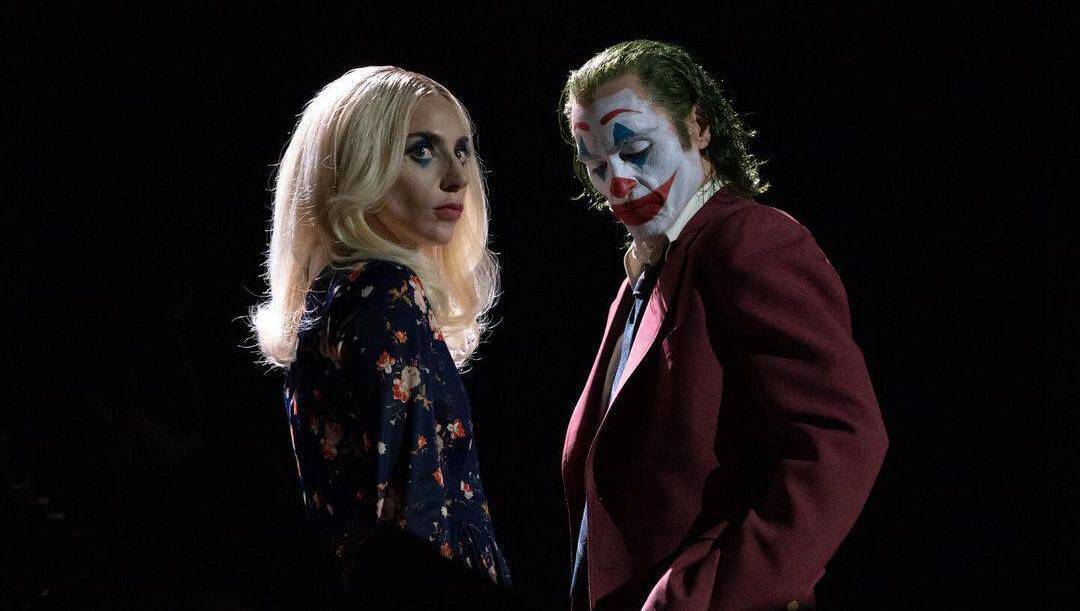
Joaquin Phoenix and Lady Gaga in Joker: Folie à Deux (2024)
Few contemporary actors are as adept at manifesting grief as Joaquin Phoenix; he radiates the kind of hurt that’s liable to lash out at any moment.
His lead turn in (2019), where he played the ‘killer clown’ alter ego of failed stand-up comedian Arthur Fleck, gave that quality a sinister twist, one that gets bent completely out of shape in (15A).
Locked up in an institution in Arkham whilst awaiting trial for multiple murders — one of which was committed live on TV — Arthur is encouraged by his lawyer, Maryanne Stewart (Catherine Keener), to slough off the Joker persona and present himself as a victim who was physically and psychologically damaged by the abuse he suffered as a child at his mother’s hands. Enter Lee Quinzel (Lady Gaga), a self-celebrating pyromaniac and the Joker’s biggest fan and enabler: by feeding his fantasies of greatness, Lee persuades Arthur to double down on his alternate personality as his televised trial begins.
Written by Scott Silver and Todd Phillips, with Phillips reprising his director’s role from the 2019 movie, begins as an absorbing tale of mutual madness, and particularly when Arthur and Lee’s fantasies mesh in pastiches of classic musical song-and-dance numbers. Lady Gaga gives the story a badly needed shot of pizzazz, even though her character, as it gradually mutates into that of Harley Quinn, is effectively a crutch to Arthur’s wounded ego. Neither character, for that matter, offers much by way of redeeming features: both are dedicated to sustaining their mutual delusion of wreaking havoc in order to salve the hurt of their childhood years.
There’s a certain amount of fascination to be found in their nihilism, and the performances are strong (Brendan Gleeson provides terrific support as a brutal prison guard), but true tragedy — that Arthur’s relationship with his mother is described as Oedipal is no accident — generates a cathartic pity and terror in its audience, and Arthur and Lee are too pathetic to be terrifying, and too self-absorbed to evoke our compassion.
Ambitious in its attempt to excavate ‘the conflicting forces, the fractures within ourselves,’ offers a similarly split personality as it tries to reconcile the dark nature of Arthur Fleck’s growing complexity with his comic book origins.
(theatrical release)

A Different Man (15A) stars Sebastian Stan as Edward, an aspiring actor who undertakes radical facial surgery to correct his neurofibromatosis. Newly confident and outgoing, Edward’s reinvention goes swimmingly until he discovers that his former neighbour, Ingrid (Renate Reinsve), has written a play about his experiences, and has cast Oswald (Adam Pearson) in the lead role.
Written and directed by Aaron Schimberg, the film is initially driven by Edward’s despair at his physical appearance; the story becomes far more interesting when it explores his psychological fracturing under the stress of maintaining multiple personas.
Sebastian Stan is impressively fluid as the chameleonic Edward, but he (along with everyone else) is upstaged every time the irrepressible Adam Pearson’s Oswald appears on screen.
(theatrical release)

Sci-fi thriller Things Will Be Different (15A) follows siblings Joe (Adam David Thompson) and Sidney (Riley Dandy) as they escape from pulling off a heist by skipping out of their timeline for a fortnight and holing up in ‘a magical safe house.’
Writer-director Michael Felker takes an endearingly offbeat, lo-fi approach to the time-travel logistics — the pair learn to communicate with the future via an old Walkman cassette player — all the while ramping up the tension as Joe and Sid gradually come to realise that their supposedly flawless plan is being pulled apart by forces beyond their control or comprehension.
Riley Dandy and Adam David Thompson are solid if unspectacular as the bickering siblings with much family history to unpack, but a claustrophobic tone and multiple twists sustain the story until the final revelations.
(theatrical release)