My life in books: I love chance finds and I don’t buy online
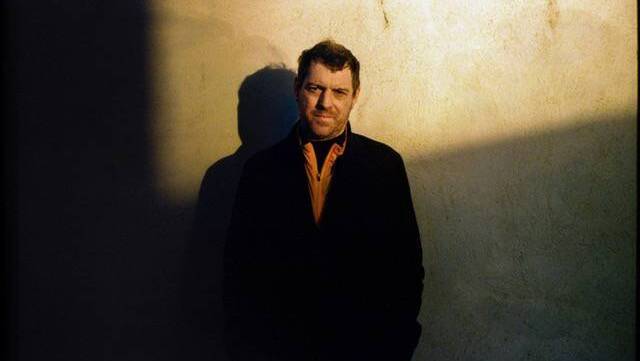
Author Adrian Duncan: Irish artist and writer is based in Berlin. Picture: Steve Pyke
I’m re-reading Vona Groarke’s exceptional . I am also re-reading Amit Chaudhuri’s limpid and lovely Sojourn.
Tim Robinson’s from Penguin Ireland.
Years ago, while I was studying in IADT in Dún Laoghaire, I used to take the 46A bus there and back. It gave me two hours of reading each day and I ‘tasked’ myself with Kant’s . I remember finding it thrilling for a while, but I did not finish it, and I have no idea where the book is now.
Chekhov’s short stories. I bought a Penguin Classics edition back in 2007 and found in , one of the most beautiful moments in the world. It’s the section that ends with ‘There’s dew on the grass …’
by JA Baker. I only got around to reading it last year, and I have rarely read passages of such descriptive force. So too, Stephen Sexton’s — so alive and so rich.
Daša Drndić’s .
by Hannah Arendt. She wrote it after Eichmann in Jerusalem to explore the ‘thoughtlessness’ she saw as common among those who carried out the brutalities of German national socialism. It’s a brilliant if unfortunately incomplete project — she passed away while composing section three: Judging.
Natalia Ginzberg’s (based in Mussolini-era Italy) showed me how it is possible for a fictional work to help inform your sense of an historical era.
A study of what readers experience when they read a descriptive passage of prose.
by Marguerite Yourcenar.
I saw Béla Tarr’s seven-hour adaptation of László Krasznahorkai’s in an old repurposed bunker in Berlin once. It was immense, and I remember thinking the adaptation had incredible visual consonance with the book. After I got home from the screening that night, I slept for hours, dreaming of rain.
St George’s in Prenzlauerberg in Berlin and Charlie Byrne’s in Galway. I don’t buy books online, and I especially like chance finds, and those two bookshops are brilliant treasure troves.
I organise the non-fiction books into sections of research. Last year I finished a film about fascist-era architecture in Italy, so there’s a whole shelf with books on the subject. There’s another shelf on Irish bungalows (a fixation of mine for 14 years), another on Wittgenstein and Frege, etc. In terms of fiction, I group authors’ works together.
Coffee and water. I like the old synapses firing when I read. Although, in the winter, if in the evening I’m reading a memoir or something of that kind, I do like a small drop of whisky.
Francie Brady from Pat McCabe’s . I read the book several times in my early teens and then saw the theatre production Frank Pig Says Hello soon after, and all of this at such formative years made an indelible mark on me. I love how McCabe stayed for the whole of the novel solely within the viewpoint of the troubled Francie. This meant that no sentimentality could creep into the book, and I believe this is what has made the impression of this character last.