Book review: Bronte sisters revisited in 'Charlotte'

Martina Devlin’s engaging historical novel is based on the bare biographical bones of the Brontes' Irish roots
Book review: Bronte sisters revisited in 'Charlotte'

Martina Devlin: Her book has much to say about the literary industry that grew around three remarkable sisters. File picture: Fergal Phillips

  • Charlotte 
  • Martina Devlin 
  • Lilliput Press, €14.99 

The Brontes had Irish roots. Their father, Patrick, hailed from Co Down but changed his name from Brunty to fudge his nationality, and familial proximity to Catholicism. 

And Charlotte, the longest living of his children, married an Anglo-Irish farmer and preacher called Arthur Bell Nicholls, who somehow persuaded her to honeymoon in Banagher.
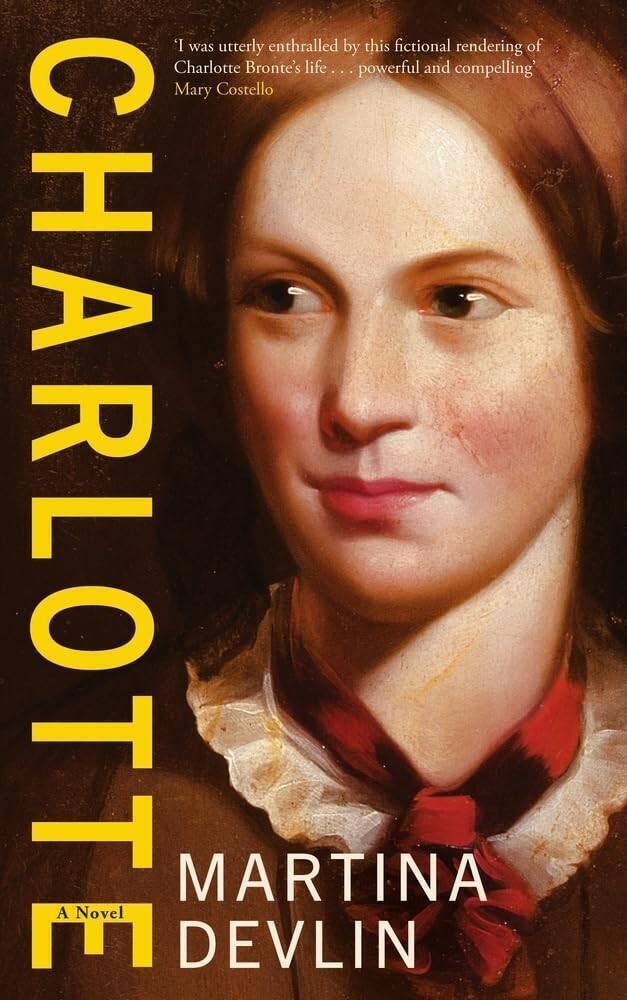
Those bare biographical bones form the spine of Martina Devlin’s engaging historical novel, which does not make the mistake of appointing the essentially unknowable Ms Bronte its narrator. 

That task falls to Mary Anna Bell, Arthur Nicholls’s second wife (and cousin), who as she mentions early and often in Charlotte, was forced to share her marriage with a ghost.

The story opens in 1854, when a delirious Nicholls arrives in Ireland with his new (and by now exceedingly famous) bride. Charlotte Bronte’s second novel Jane Eyre has, as Mary Bell puts it, “caused a sensation”, and Arthur, a decent but prickly man, will have to endure being constantly occluded by his charismatic wife during their progress around the island.

Mary Bell, watching from the sidelines and still unmarried, observes the great writer with a mixture of wonder and envy, and is not initially charmed.

“Her face was plain,” she says bluntly, “an overhanging forehead, a nose like a shoehorn.” 

But once she gets to know Charlotte, Mary discovers a warm, witty and mildly mischievous person, and the pair become friends.

Poor old Charlotte will be dead within the year, and Martina Devlin’s book shoots forward to 1913, and the visit to Mary’s house of English journalists and collectors keen to divest her of the many Bronte heirlooms that have fallen into her possession.

We then drift back and forth between Mary’s serviceable but uninspiring marriage to Arthur, and her brief time with Charlotte, whom she came to dearly love.

Mary’s servant, Hope Porter, is another important character: bustling and decent, reminiscent of Nelly Dean in Emily Bronte’s Wuthering Heights, but a terrible
secret has been kept from Hope that is bound, sooner or later, to emerge. 

Mary’s brother Richard is a cad of the first order, though not a particularly colourful one. 

Mary herself is a far more believable character, by turns petty and generous, with views about ordinary Irish people that neatly reflect the Anglo-Irish prejudices of her time.

The Famine lingers over the book’s early sections like a bad smell, and moves centre stage during an eventful (and imagined) journey north to Co Down so Charlotte can meet her extended family. 

Among them Alice Brunty, a certified loon clearly inspired by mad Mrs Rochester and prone to prostrating herself on a mass grave containing unnamed victims of Black 47.

“You’re the image of Branwell,” Charlotte tells one of the Bruntys, and her anguish at the loss of her three siblings is never far from the surface. 

Charlotte herself will die during a doomed pregnancy in 1855, adding a further gothic twist to an already tragic life. 

And thereafter, having been bullied into marrying Arthur by her mother, Mary Bell will have to watch while her husband kneels in worship before a portrait of Charlotte that becomes a kind of shrine.

After a flighty start, Martina Devlin’s prose settles into a sturdy rhythm: we hear from Charlotte, but not too much, and instead are given frumpy reports from the woman doomed to live in her shadow. 

Only in those scenes among the Bruntys do we get echoes of the high Bronte style, but the book has much to say about the literary industry that grew around three remarkable sisters who did not live to witness the full extent of their success.

BOOKS & MORE

Check out our Books Hub where you will find the latest news, reviews, features, opinions and analysis on all things books from the Irish Examiner's team of specialist writers, columnists and contributors.


More in this section

Scene & Heard

Newsletter

Music, film art, culture, books and more from Munster and beyond.......curated weekly by the Irish Examiner Arts Editor.

Cookie Policy Privacy Policy Brand Safety FAQ Help Contact Us Terms and Conditions

© Examiner Echo Group Limited