Jimmy MacCarthy: Cork music legend rides on for upcoming concerts and re-release of debut album
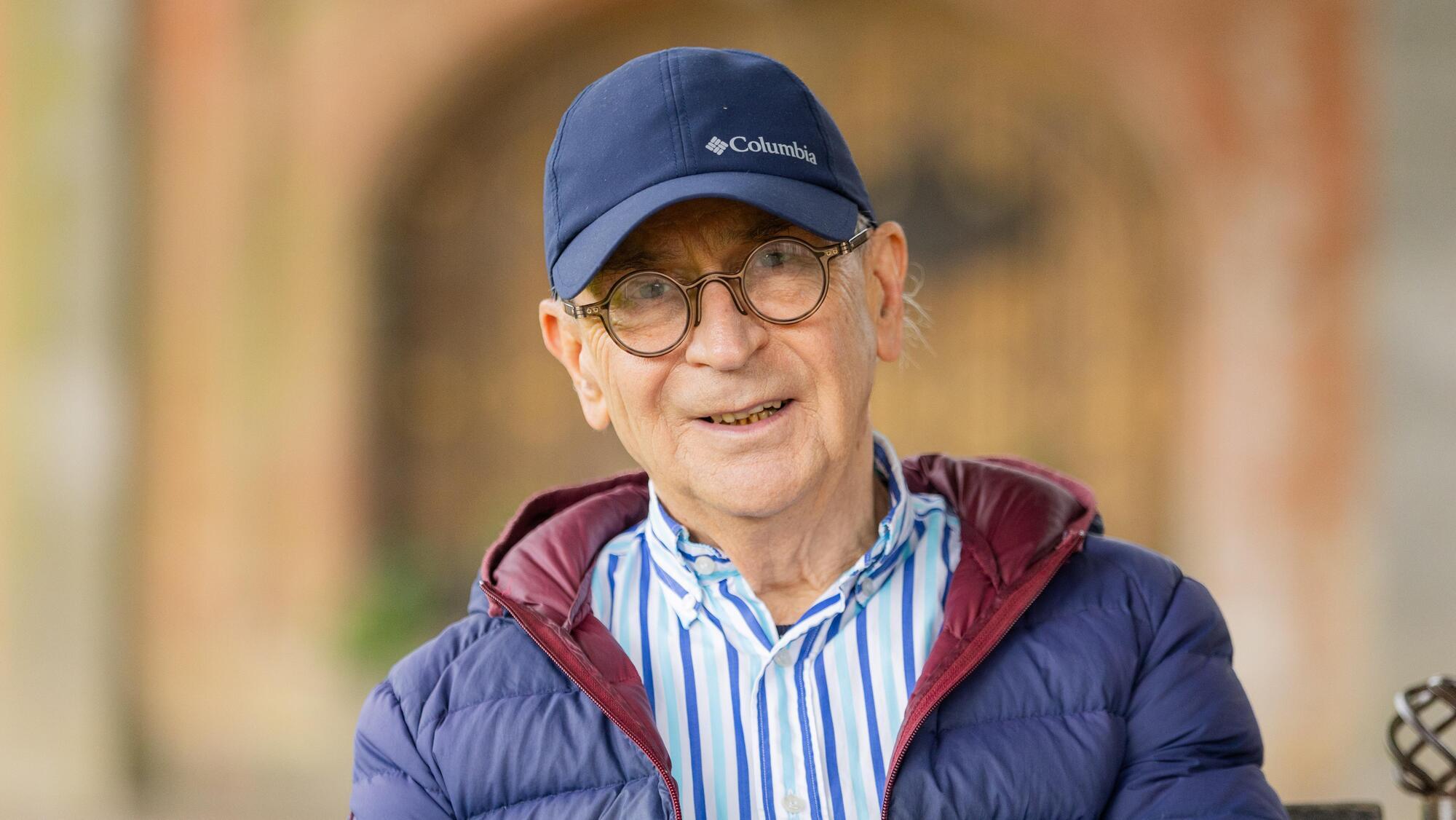
Jimmy MacCarthy is to perform gigs in Cork, Dublin, and Limerick. Picture: Gareth Chaney
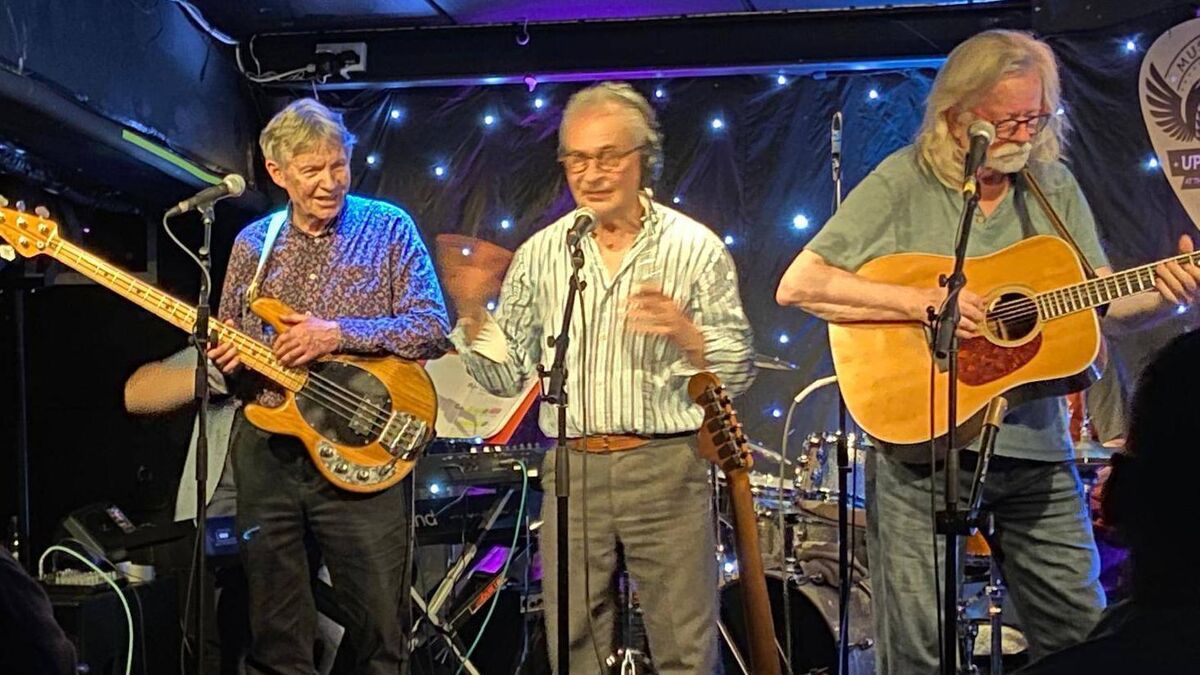
Jimmy MacCarthy is back in the saddle. The Cork singer-songwriter has been doing live gigs again, his first since 2015. Recent outings have included a rousing four-night residency at the White Horse in Ballincollig, performing alongside his long-time collaborator Declan Sinnott and a band of other local music stalwarts.
Several more theatre shows – where he’ll be joined by Steve Cooney and the fiddler Nollaig Casey – are scheduled in Cork, Dublin and Limerick before the turn of the year.
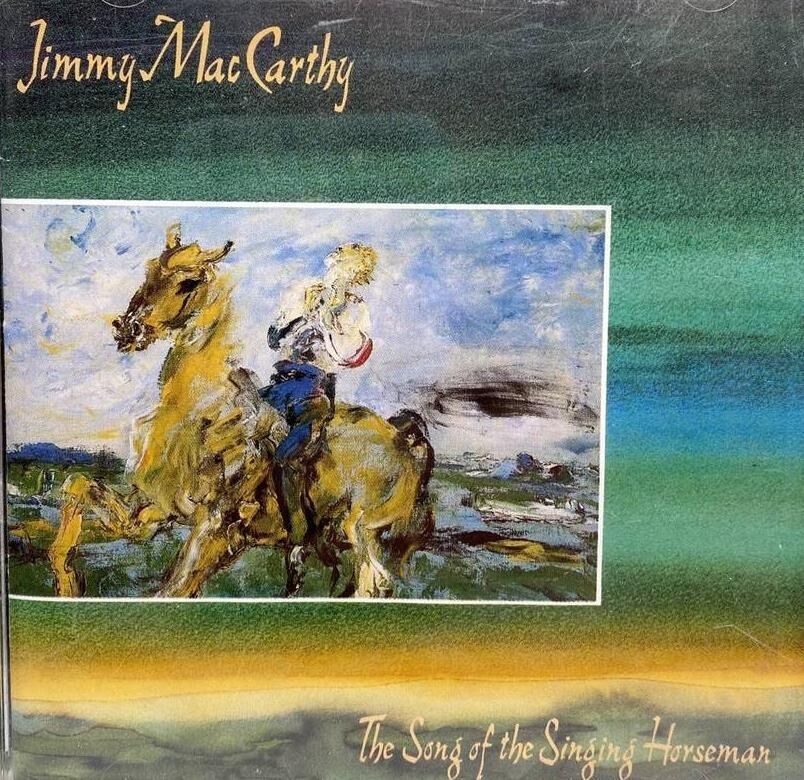
MacCarthy, 73, who is one of Ireland’s most revered songwriters, is also re-releasing his 1991 debut album , which includes his iconic track at the end of September. “Special guests on that album from day one was Kevin Conneff of The Chieftains and the sublime box player Máirtín O'Connor,” says McCarthy.
The original album featured a 1949 Jack B Yeats painting on the cover, depicting a young man singing with abandon while astride a spirited golden-yellow horse. “The horse has no bridle or saddle and is not being directed by the rider using hands or legs. Being an old slave to the metaphor, it spoke to me,” says MacCarthy.
Horses have always been an integral element of MacCarthy’s life, going back to his childhood in Macroom, Co Cork, amongst a family of 12 children.
“As a child, the guitar, horses, ponies and dogs were everything to me,” he says. “That was my whole life. My father loved me. In fact, he loved me so much that my older brother had a pony. I wanted one but I was so small and delicate, he went to the zoo and got the smallest pony in Ireland for me. A pony not much bigger than a large dog. My father spoiled me. I didn't do anything I was told in school.”
Instead, MacCarthy, 73, learned discipline at the feet of Vincent O’Brien, the legendary horse racing trainer from Churchtown, Co Cork. Aged 15, MacCarthy went off to O’Brien’s stables at Ballydoyle, Co Tipperary to apprentice as a jockey. During his stint there, over a period of two and a half to three years, he spent six months sidelined with a broken leg.
“When you go into a racing stable of Vincent O’Brien’s stature, it's like joining the army,” says MacCarthy. “You must be up at 6 o'clock in the morning. You must ride horses to instructions, to the letter. You must look after the horses in your care to perfection. The regime was the greatest education I could have got.
“I found Vincent O'Brien a very fatherly man. How he worked in Ballydoyle, his attention to detail, was something to behold. The man was so focused on what was going on. It was amazing. When you're indentured to somebody like that, he effectively becomes your guardian. [Learning from his standards] was the best thing that ever happened to me in my life.”
Afterwards, MacCarthy returned to work for his father, who ran a transport business. He began filling his nights singing in folk pubs, doing covers of Neil Young, Bob Dylan & Co. This was in the early 1970s. He was getting “a fiver a night and a drink” for gigging, which was more than he’d been earning in the horseracing world. He had regular shifts around Cork, including Bunnyconnellan’s near Myrtleville beach, the Folk House in Kinsale, and the Roundy House in the city.
“I remember going to Ballyshannon, Co Donegal one time to play a gig,” he says. “To get from Cork to Ballyshannon, you've got to take the bus up to Galway and then change at Galway. It took me about nine hours to get up to Ballyshannon. I arrived minutes before the gig.
"I stood in the middle of this pub, Seán Óg’s. There was a small PA set up on a platform around me. From the beginning, they roared and shouted at each other. I played for two hours through this cacophony, this drunken mayhem. I'll never forget it.”
MacCarthy had a triangle that he worked around the mid- to late-1970s, drifting between Cork, Dublin and London. In London, he busked on the Underground; it was where he wrote several of his early, notable songs, including and
“I was living in a squat, just off the Old Brompton Road. It was a big old hospital block for rare tropical diseases. I was there with a bunch of punks who came down from Scotland. It was a huge building behind several buildings, a little world to itself behind high walls with its own microclimate.
“There was a heat wave that year in London. That building was so hot. I was imagining myself in Gougane Barra under an ash tree with water lapping at my feet and a cool breeze blowing in my face when I wrote Miles of Eyes,” he says, referring to his debut single, released in 1981, which many people know for its chorus line, “So bored with the every day”.
He adds: “It was my calling card for a long time. I wrote it on a mattress in the middle of a hospital room floor, with very little around me except a guitar, an enamel bin with a spider plant in it, and an old wooden clothes hanger, that you’d hang coats in a hallway – that was my wardrobe.”
Many young people from Cork and other parts of recession-ravaged Ireland were squatting in Ireland up to the 1980s. “It was quite doable,” explains MacCarthy. “That old hospital for rare tropical diseases was closed down because the British Empire was finished; there was no great need for rare tropical diseases to be looked at anymore. So, me and these punks opened up that squat.
"What you did is break the lock on the door, replace the lock, go inside and nobody will say boo to you after that until maybe a year and a half later they might house you. Existing in London mightn't have been possible otherwise. There were about 15 to 18 in the squat at the time that I was in it. No hot water or electricity, mind you.”
He also recalls his stay at in Arlington Road in Camden. “We had electricity piped up the road from different buildings, giving us light and stuff like that. We had a hose in the back garden where you could stand outside and put cold water down over yourself in your nakedness.
"It was no great hardship. It's easy to find a soft place to lie down in a room. Keep the room tidy. And with a kitchen, it's easy to boil an egg or make toast or whatever.
“If you have a life that is not bound to social norms, which is the kind of life that I've had, and I'm very grateful to have had, you’re free of a lot of [demands]. In the early days of my life, I didn’t have to deal with mortgages or [finding] a place to live because I couch-surfed for many years or squatted.
"I had wonderful women who supported me at different times. In general, I didn't have to worry about what most people do. I was very fortunate. It allowed me to be free enough to experience the things of life, even the struggles of life.”
- Jimmy MacCarthy is re-releasing on September 25. Upcoming concerts include Cork Opera House, Oct 1 & 20; National Concert Hall, Oct 14 & 22; UCH, Limerick, Nov 25. See: www.jimmymaccarthy.org
is one of Ireland’s most beloved songs. It gets under the skin. It’s been covered by the likes of Christy Moore, Mary Coughlan and Coldplay. It’s a huge global hit, what its songwriter Jimmy MacCarthy has referred to as his “pension”. It’s such an integral part of his life that in 2002 he entitled an early volume of his memoirs after the song.
The phrase “ride on” comes from the world of racehorse training – when younger horses were out on the gallops, riding behind older horses, straining to overtake them, the jockeys piloting them would let out a roar: “Ride on!”
Famously, MacCarthy wrote the song’s two verses and chorus while waiting on Cork’s Barrack St for a lift to a gig. It was inspired by a love affair he had with a young activist woman, whose views he disagreed with. Later, they parted ways.
The song became famous in 1984, thanks to a recording by Moore, MacCarthy’s long-time friend.
“I remember I was in Dublin,” says MacCarthy. “I saw this poster going up all across the centre of town. There was a horse running across an otherworldly landscape and it said nothing. About 10 days later, the poster said, ‘New album’. A week later, the poster said, ‘Out now’. Then shortly after that, it had ‘Christy Moore’. That’s how I knew an album was coming. I never heard the album. I left the country.”
The album was Moore’s which also featured and other classic songs from the Kildare man's repertoire.
MacCarthy continues: “When I came back, the album had been a big hit for Christy. was the first time he had a crossover hit. Before that Christy was folk and ‘Don't forget your shovel if you want to go to work’. That was my huge break with Christy recording The idea that somebody would record my songs was a big boost, something that made me feel good. I admired Christy. I still do.”
It's almost cinematic by a guy who writes about the underbelly of urban life. This is about his childhood and some fallow land that they played on as kids with old trees that were hanging down and different things like that. I loved it.
This is my favourite song at the moment. It’s the thing that has moved me most in the last year. It’s on It's about the last days of Cleopatra and Mark Antony. It's from a Greek poem by a Greek poet known as It's the most powerful song of loss and love that I have ever come across.
This goes back to the beginning. He downright attacks somebody on that song. I'd never heard a song like that before. He shifted the goalposts, regarding what you could do in a song.