Author interview: Location for a story is very important to me

Christine Dwyer Hickey has loved the English capital since she spent a brief but formative time there as a young girl; it is an experience that has informed her latest novel 'Our London Lives'
Author interview: Location for a story is very important to me

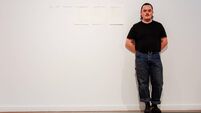
Dublin author Christine Dwyer Hickey wanted to write Our London Lives for years, but felt reluctant. Picture: Bobby Harvey

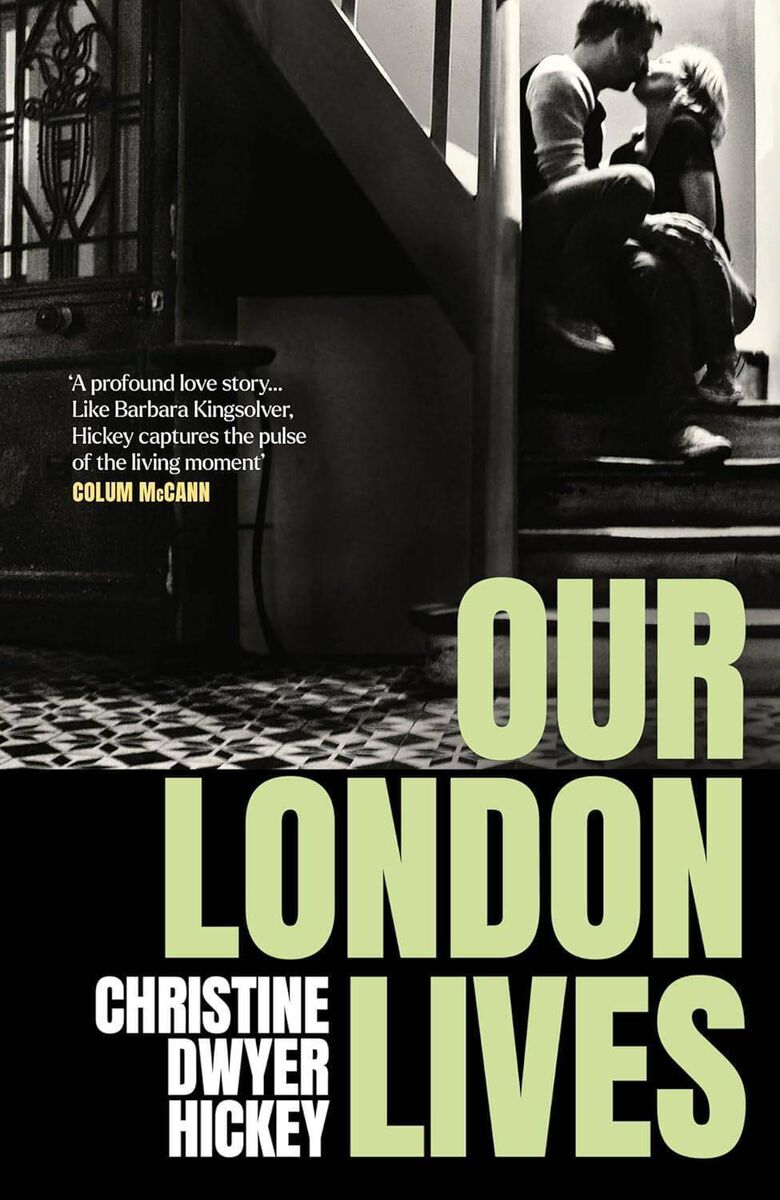
  • Our London Lives
  • Christine Dwyer Hickey 
  • Atlantic Books, ÂŁ20.00

“When a man is tired of London, he is tired of life, for there is in London all that life can afford.” 

The sentiment expressed by Samuel Johnson is echoed by Christine Dwyer Hickey who has loved the English capital since she spent a brief but formative time there as a young girl. 

It is an experience that has informed her latest novel 'Our London Lives', a book which she has wanted to write for many years.

“I wanted to do it for a long time but I was reluctant — when you think of the other writers who lived in London and wrote about it, from Dickens to Martin Amis and all ones in between, it was too daunting.” 

Dwyer Hickey changed her mind after seeing a performance of TS Eliot’s epic London-inspired poem The Wasteland performed by Fiona Shaw at the Abbey Theatre in 2016.

“It was a fantastic experience. And I started thinking while I was watching this, well, Eliot was an American, who lived in England, and he wasn’t there all that long when he wrote The Wasteland, and yet it just captures the whole mood of London. 

“I thought, maybe an outsider is not a bad thing to be — you don’t have to pretend you’re the Artful Dodger or anything.”

Our London Lives is a lyrical and absorbing story told from the perspectives of two Irish people seeking refuge in the capital: Milly, a young and impoverished Protestant girl fleeing and Pip, a young boxer falling under the spell of alcohol. 

Their paths cross and then diverge but the city is a constant in their lives, anchoring them to their past and signposting their future.

It is 1979 when Milly arrives in London and ends up working in a pub owned by the imperious Mrs Oak. The storyline was inspired by Dwyer’s own stint as a barmaid in the capital after leaving school in the late ’70s.

“It was great fun and a brilliant job in lots of ways. But the money was absolutely terrible, you couldn’t survive on it. It was in a pub in the East End which is still there. 

“The exterior is the same but the interior is all changed, and the atmosphere, it’s a sterile neighbourhood now, very gentrified. 

“The little room where I slept, up the top of the pub, is the same; I gave Millie that room. She’s not me, obviously, but I gave her the observations and the things I noticed.”

For the Dublin author, one of the best things about writing a novel is the research, and if that involves travel, all the better — previous books have taken her to Italy [ Last Train from Liguria] and Cape Cod in the US [ The Narrow Land].

“Location is the most important part to me. If I haven’t got somewhere to put the characters, somewhere I know, somewhere I can feel and smell and touch and really believe myself, what’s the point,” she says.

For Our London Lives she went all in, decamping to the English capital with her husband Denis and completely immersing herself in her own London life.

We rented one flat for three months, another one for a month, much to the horror of our grown-up children, who were mad jealous.

“It was just so wonderful to be there. I didn’t want to think about the whole big scale of the city, so I just thought of it village by village. 

“I stuck to the villages around where we were, like Bayswater, Notting Hill, and Little Venice, then Piccadilly and the centre as well, and the parks. 

“And I used it that way. I think there’s three perspectives in this book — those of Millie, Pip, and London.”

Dwyer Hickey expertly captures how the city was experienced by the early Irish diaspora, when London was often a more hostile place to be.

“When I was there in the late ’70s, I had spent a few months in France and Spain with my friend before we got there. 

“When we arrived, we didn’t know anything about the IRA, what was going on, or any of that stuff. It was pre-Internet, and we wouldn’t have been reading the papers or paying attention. 

“They kept making these remarks and you would feel some resentment. One of the things I do remember is that they thought we wanted to go to Mass every minute and we said the rosary every night.”

They’d always presume you were a Catholic, which is one of the reasons I made Millie a Protestant.

The fate of girls and women who fled to England due to unplanned pregnancies, often a result of abuse or rape, is also tackled in the book. 

It was a topic that Dwyer Hickey had covered previously in a short story called ‘Home’ for BBC Radio 4 and one she wanted to revisit.

“I knew people who had been in that situation, and while I was writing the book, there was a lot in the media about the babies that were discovered in Galway and the way those girls were treated. 

“When you tell young girls now about people you knew, or what women went through then, they look at you as if you’re mad.”

There is one powerful and affecting scene where a nun talks a character into giving up her baby against her wishes, which was also inspired by Dwyer Hickey’s own experience.

“I remember when I was in having my first baby in St James’s Hospital, and the nun coming in and putting the curtain around and talking to the girl across from me. 

“And that girl gave up her baby, even though you could see she was mad about the baby, and she wanted to keep it. 

“The nun was saying the baby would go to a good Catholic family, and telling her all the things she couldn’t give the baby, and the girl was crying behind the curtain.”
One of Dwyer Hickey’s previous novels, the critically acclaimed Tatty, also has some autobiographical elements, and is told from the perspective of a young girl whose parents slide into alcoholism. 

The author has previously spoken of her own parents’ issues with alcohol and it is a topic which is also explored in Our London Lives, with a middle-aged Pip leaving rehab at the start of the book.

“This time, with Pip, I wanted to explore alcoholism through the person who has it, rather than the person who is related to the person who has it. 

“I wanted to explore what it was like, this whole idea of recovery, and going to meetings, and I’m glad I did that. It made me more understanding of my parents.”

Dwyer Hickey has had numerous health challenges over the years, including a diagnosis of kidney cancer in 2015 when she was writing her award-winning novel The Narrow Land. She feared she would never write again.

“I thought I wouldn’t live long enough or be healthy enough to write, and that passes. When I do it, it’s great. 

“There is a lovely time when you are in the middle of a book and you know you’ve caught it, you’re in there, the book is starting to develop and you are in your own little world that you have created with these people who are your friends. 

“And that is such a consolation, that is why I write.”

x

More in this section

Scene & Heard

Newsletter

Music, film art, culture, books and more from Munster and beyond.......curated weekly by the Irish Examiner Arts Editor.

Cookie Policy Privacy Policy Brand Safety FAQ Help Contact Us Terms and Conditions

© Examiner Echo Group Limited