Jim's Gems: 1964 — Beatles, Dylan, and Mingus among best albums marking 60-year anniversary  
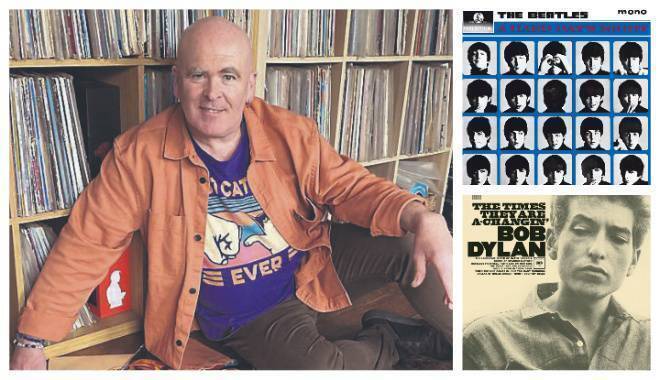
Jim Comet picks the best albums from 1964, a huge year for popular music 
The Beatles and Bob Dylan feature among Jim Comet's 1964 picks.

The Beatles and Bob Dylan feature among Jim Comet's 1964 picks.

1964 was the year when the balance of power really began to shift within popular music. Jazz, which had dominated for almost 40 years was losing its popularity and the manufactured pretty boy singers that had emerged from the dregs of the rock ‘n roll era were disappearing rapidly. 

The Beatles broke the mould by writing by their own songs and a whole new audience wanted more of this. This wave of change was also happening on the other side of the Atlantic, led by a young folk singer. Music would never be the same again.


1: The Beatles, Hard Day’s Night 

I remember the impact this had on me when RTÉ showed it one Christmas when I was about eight-years-old. It absolutely blew me away. The songs remained stuck in my head and I wanted to listen to them forever. 

The impact worldwide was similar, albeit a bit more dramatic, when The Beatles combined with director Richard Lester to make a movie based around their 3rd studio album which was their best collection of songs to date. The world could now see The Beatles on the big screen singing their songs. From Liverpool to Southern California everyone wanted to see them or emulate them. This was a game changer. It also was the first time a pop album was put in the spotlight. An album with a video for every song 17 years before MTV.

2: Bob Dylan, The Times They Are A Changing 

By the time Dylan got to his 3rd album he’d stopped recording other peoples songs, concentrating only on original material. This is the album that probably cemented the Voice Of A Generation tag that he was never comfortable with.

The title track was adopted as a rallying cry for the growing counterculture movement in America and worldwide. Dylan was writing about stuff that a lot of people were increasingly thinking but which no artist had never written about before. Songs were meant to be about cars and girls, not about Hollis Brown and “seven people dead on a South Dakota farm”. The times had indeed changed.

3: Ronettes featuring Veronica presents the fabulous Ronettes

The early 60s girl group phenomena, spearheaded by the Red Bird label had many great acts. The Shirelles, Dixie Cups, Shangri Las to name but a few, but The Ronettes were the cream of the crop. Coming from the Phil Spector stable and fronted by his wife Ronnie they became the main conduit for the famous Wall Of Sound. This is their only proper studio album. 

Produced by Spector with all the usual bells and whistles it features classics such as Walking In The Rain, Baby I Love You and of course the greatest pop song ever written, Be My Baby. While Spectors legacy has been tarnished The Ronettes are rightly recognised as one of the most influential vocal groups of the early 60s, inspiring artists like Blondie, The Ramones and Amy Winehouse.

The Fabulous Ronettes; A Fistful of Dollars

4: Ennio Morricone, A Fistful Of Dollars

Nobody could take an ordinary film and raise it to the status of classic with a soundtrack quite like Ennio. Cinema Paradiso and almost the entire spaghetti western genre spring to mind. This is the first of what would become known as the Dollars Trilogy which follows the adventures of the Man With No Name, played by Clint Eastwood, as he goes about his business. 

The film itself, while no great shakes, is entertaining but the soundtrack seriously elevates it on to a higher plane. The guitars, the trumpets, melodramatic crescendos, big choruses, and the incidental music pieces that highlight every glare and sideways glance will be familiar to those who know. Hugely influential at the time it continues to inspire people like Tarantino and many others today.

5: Charles Mingus, Mingus Mingus Mingus 

By the start of the 60s the hold that jazz had over popular music began to wane largely because younger people were increasingly seeing it as old fashioned. However certain artists within jazz saw this as an opportunity to go deeper take it back to the streets. Bandleader and composer Charles Mingus was one of those opportunists and this is one of two groundbreaking albums he released on the Impulse label at the start of the decade. 

Tracks such as Better Get perfectly capture that fast-paced intensity that’s such a trademark of 60s jazz, while Freedom is an early not to the free jazz movement and the civil rights movement.

Charles Mingus' 'Mingus Mingus Mingus'; Another Side of Bob Dylan

6: Another Side Of Bob Dylan

By album number four Dylan was becoming increasingly frustrated by the artistic limitations that came with one man and his guitar and on a wider scale the whole folk movement, the voice of a generation tag and everything that came with it. The album was a complete solo affair (his last) and it included piano as well as guitar. The songs were deeper and more introspective. He was no longer protesting, and the folk movement were not happy. 

The album is often criticized for being rushed. While it was recorded in one sitting fuelled by serious amounts of wine, it contains songs like My Back Pages, I Don’t Believe You and It Ain’t Me Babe, all now recognised as modern day classics.

7: Jimmy Smith, The Cat

Back in the day when I played in bands, I loved that fast funky Hammond-driven swinging ’60s sound that was so beloved of many film noir of the era. I asked someone who was older where to find this sound and simply replied Jimmy Smith. While I never got close to emulating Smith's greatness it didn’t stop me from digging. The Cat is one of four albums he released in 1964 and for me it ticked every box. You can almost imagine yourself being chased through the back streets of swinging London by David Hemmings, in black & white of course. I was fortunate enough to see him in The Everyman one jazz weekend shortly before he left us.

Jimmy Smith's 'The Cat'; The Beach Boys' 'Shut Down'

8: The Beach Boys, Shut Down Volume 2

Believe me, there’s a whole lot more to the Beach Boys than surfing, cars and girls but in the early 60s that wasn’t really the case. This is their fifth album, their first without David Marks who Murray Wilson chucked out of the band. 

A lot of the tracks like Fun Fun Fun are textbook early Beach Boys, and there are serious hints of the budding genius of Brian Wilson on The Warmth Of The Sun and the excellent Don’t Worry Baby.

9: The Beatles, For Sale

The most ignored of their 13 albums this probably suffered from being stuck in between the 2 vastly superior film albums and from the fact that they were exhausted from touring. Closer inspection reveals slight changes in the songwriting. The tempo is beginning to slow, and the lyrics are starting to feel more personal. They’d obviously been listening to Dylan. 

There was still the odd nod to the mop top era but songs like I’ll Follow The Sun and John's excellent rendition of Mr Moonlight pointed to a change in direction. I Feel Fine and She’s A Woman were also recorded during the sessions but bizarrely didn’t make it on to the album.

The Beatles' 'For Sale'; Lee Morgan's 'The Sidewinder'

10: Lee Morgan, The Sidewinder 

The Blue Note label was my entry point into jazz back in the 90s when the started to reissue most of the back catalogue on vinyl. From a djing point of view it was a godsend, and it still is. The label had a certain sound. It was almost raw funky jazz with lots of hooks with nods to blues, country and gospel. Lee Morgans Sidewinder was one of its most successful records. 

The catchy title track got into the mainstream charts and saved the label from bankruptcy. Morgan himself like many jazz musicians at the time got heavily into heroin at a young age. However, with the help of his wife he cleaned up and had a successful career until he was shot on stage by the aforementioned wife in 1972.

Two that nearly made it 

Muddy Waters, Folk Singer 

Deep haunting delta blues mainly on acoustic guitar. A truly stunning record.

Rolling Stones 

First album, they weren’t quite there yet. Only one original track, Tell Me, but greatness was just around the corner.

x

More in this section

Scene & Heard

Newsletter

From music and film to books and visual art, explore the best of culture in Munster and beyond. Selected by our Arts Editor and delivered weekly.

Cookie Policy Privacy Policy Brand Safety FAQ Help Contact Us Terms and Conditions

© Examiner Echo Group Limited