In shepherding a flock, this farmer and novelist tended to his writing
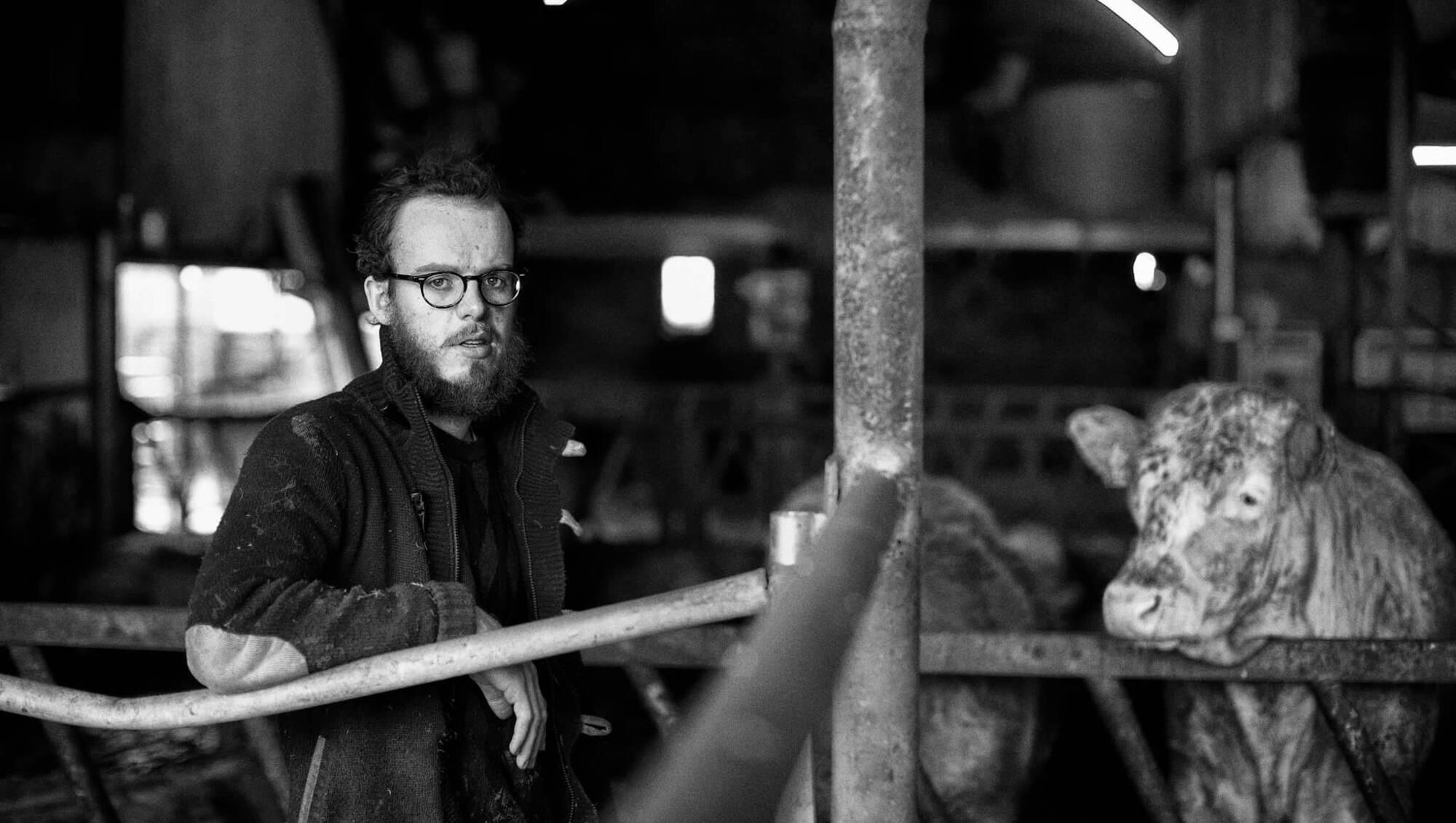
John Connell: 'The project changed me. It motivated me, and the burnout, or soul tiredness, jut lifted. I had a new purpose in life.' Picture: Eamonn Doyle
A few years ago, John Connell experienced burnout. With three bestselling books under his belt, he tried to start several projects: A film; a documentary, and a fourth book, but nothing was working. And then, one day, when he was out on the family farm, taking it easy, inspiration descended.
“I had this idea about sheep,” he says on Zoom from Co Longford, where he lives with his wife and young son. “I thought it would be nice to get some sheep, and then, I thought, I’d be able to write about that. It all came together.”
Shortly afterwards, Connell walked the Camino. Looking for answers, he wondered if, instead, he should return to college to study divinity, something he had long thought about. On the walk, there were metaphorical signs indicating what he should do.
“I started seeing sheep in the first couple of days and kept seeing them,” he says. “And as I was walking into Compostela, I saw a whole field of lambs. I thought, if I need a lighthouse signal, this is it.”
In , Connell tells us how he bought 12 sheep from his parents, and, surveying them in the shed, contemplated the work the next year would bring. He writes of that year, as he reflects on his life, and what it all means.
“The project changed me,” Connell says. “It motivated me, and the burnout, or soul tiredness, jut lifted. I had a new purpose in life.”
Divided into 12 essays — or life lessons — the book is a gorgeous read, personal, philosophical, and profound. I loved it, and adored talking to its author, who radiates wisdom, and a happy calm.
Writing it, though, did not come easily.
“I spent more than three years writing and rewriting it,” Connell says.
Before we spoke, he had been running, and, once home, had meditated.
“I run 10k a day,” he says. “I try and make each day count and always make time for myself.”
He has had to learn patience. He powered through the first draft and thought the book was done, but his editor said he had to work on it again. That was hard.
“I wrote in about eight weeks. It poured out. And the others took a summer or a year.
“I realised I hadn’t been as patient as I should have been with my writing life,” Connell says, recalling a meeting with the writer Colin Barrett. “I remember him saying to me, ‘Editing is where the writing comes alive,’ and I thought, ‘Wow! You are so wise’.
“This time, I sat with the work. I knew there was something special there, but I had to learn to trust the process. To say, ‘OK, we have something, but it’s not polished yet’. It changed the way I write. I was in a race, really, from 2009 to now to keep publishing books. And I finally learned that there is no rush: The race is with yourself.”
Connell’s busy and varied career started at Dublin City University, where he studied journalism. From there, he went to UTS in Melbourne, Australia, on a student exchange for six months. There was a health and human-rights crisis at the time: The intervention. The government was going into deepest Australia to take over the indigenous communities.
The head of the journalism school suggested he make a documentary about it. He lived in the desert for six months, writing a radio documentary that went on to win the highly prestigious Walkley Award for excellence in journalism.
“It changed my whole life. I ended up meeting my wife, Vivian. We’ve been married for six years. She’s my rock. She has seen the good and the bad.” He laughs. “There are no surprises.”
In the first, homesick few months in Sydney, Connell had written a short story about a calving, and a father and son. It was published in the student magazine and was picked up and republished by Granta.
“A reviewer said, ‘Someone should give John Connell a book deal,’ and I got a call a few weeks later. When we launched in America, we were walking across Times Square to Central Park, and I was holding Viv’s hand and I said, ‘Wow! I can’t believe we are here’.
“My name was actually picked out of a hat, to go to Australia,” he muses. “If that hadn’t happened … It’s funny how life can be on the head of a pin.”
Connell is still passionate about human rights. Before covid he went to America to interview migrant workers.
What he learned of their preventable deaths, their appalling treatment and deprivation, left an indelible mark.
“I had dreams about those people after I did that trip,” Connell said. “I still think about them, and I said to myself, ‘I have to tell their stories’. When I came off that trip, I stayed with a friend, Ross. I was really antsy, and he said, ‘What’s wrong with you?’
"It was only a month later I realised I was just decompressing all the stuff I had heard: Of people dying and being poisoned or blinded by pesticides.”
In the past year, Connell’s priorities have changed, with the birth of his son, Ted.
“He has opened me up to so much. I would have put work first, but now I have Ted, family is first. He has made me realise so many things, one being all that my parents did for me. It’s made me see them in a new light, and it’s made me slow down.”
It’s also made him hyper-aware about the environment.
“In the last three or four years I was on a research trip to document salmon numbers in Asturias, Spain. And the salmon are all pretty much gone. That changed how I saw things and made me appreciate the river I canoed down for my last book, , and the lovely brown trout in it. I said to myself, ‘I want to make sure those trout are there when Ted is my age’.
"It made me think about the world Ted will inherit. We have a job to make sure it is a good, healthy, safe world.”
Since Connell returned to Ireland, he’s been through periods of depression, and restlessness. But he’s now feeling settled, and loves being part of the rural community. He’s made friends with other creatives, and, along with co-director Ronan O’Toole, has made Granard into a book town.
The second Granard Booktown Festival takes place on the weekend of April 19. Last year, the Australian palaeontologist and environmentalist Tim Flannery headlined.
“When I was a student in Australia, I read Tim Flannery’s books, and I thought, ‘I’d love to meet him one day’. And I remember seeing Tim walk up the main street of Granard to go to the pub, where he was mixing with the locals, having a drink and a chat.
I thought, ‘I can’t believe this moment has happened’. I read those books in Sydney when I was 21, and now he is here!”
- ‘Twelve Sheep’, by John Connell. Allen and Unwin