Book Interview: Examining America's presence in the Middle East - and what's next
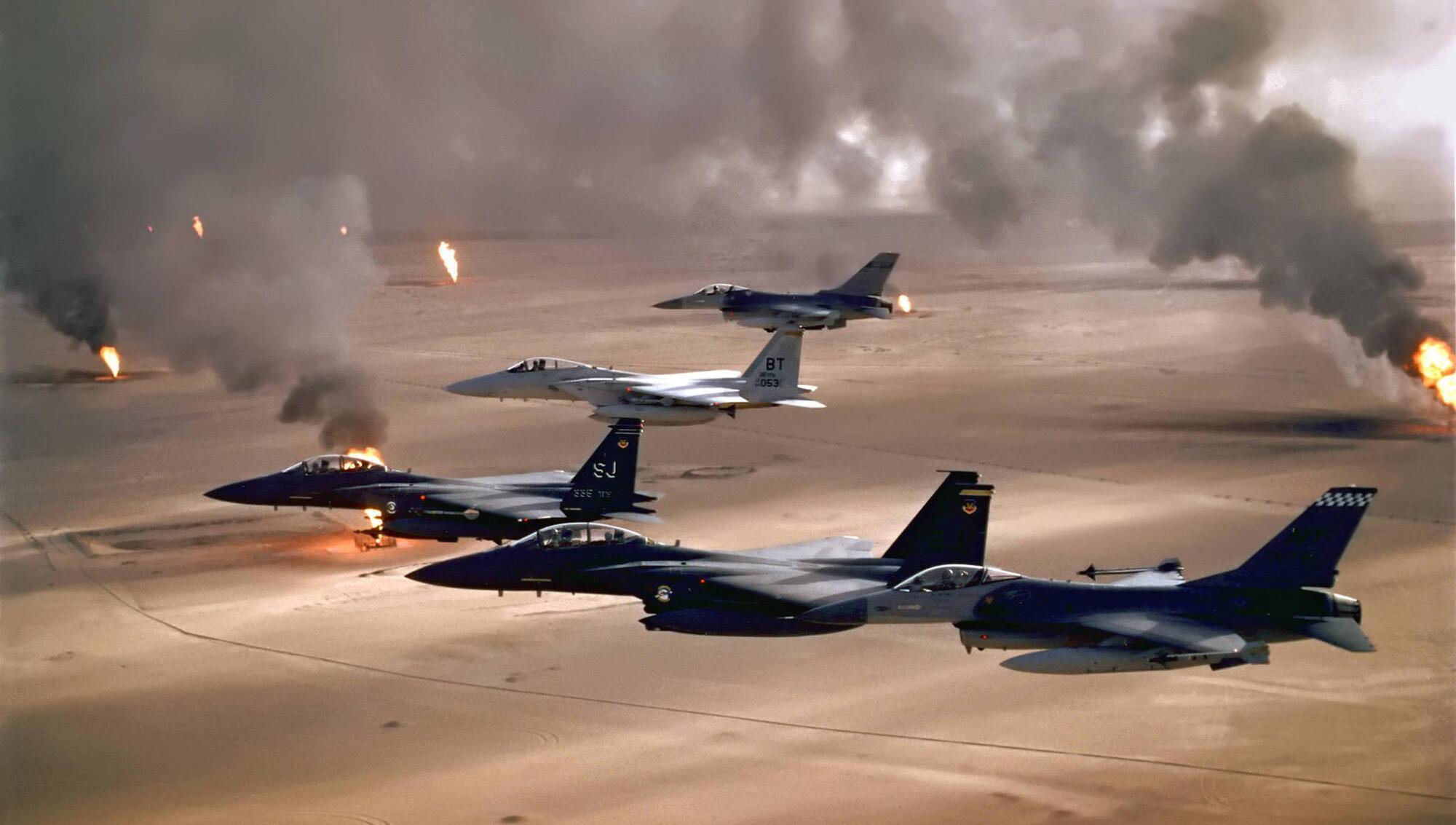
USAF aircraft of the 4th Fighter Wing (F-16, F-15C and F-15E) fly over Kuwaiti oil fires, set by the retreating Iraqi army during Operation Desert Storm in 1991.
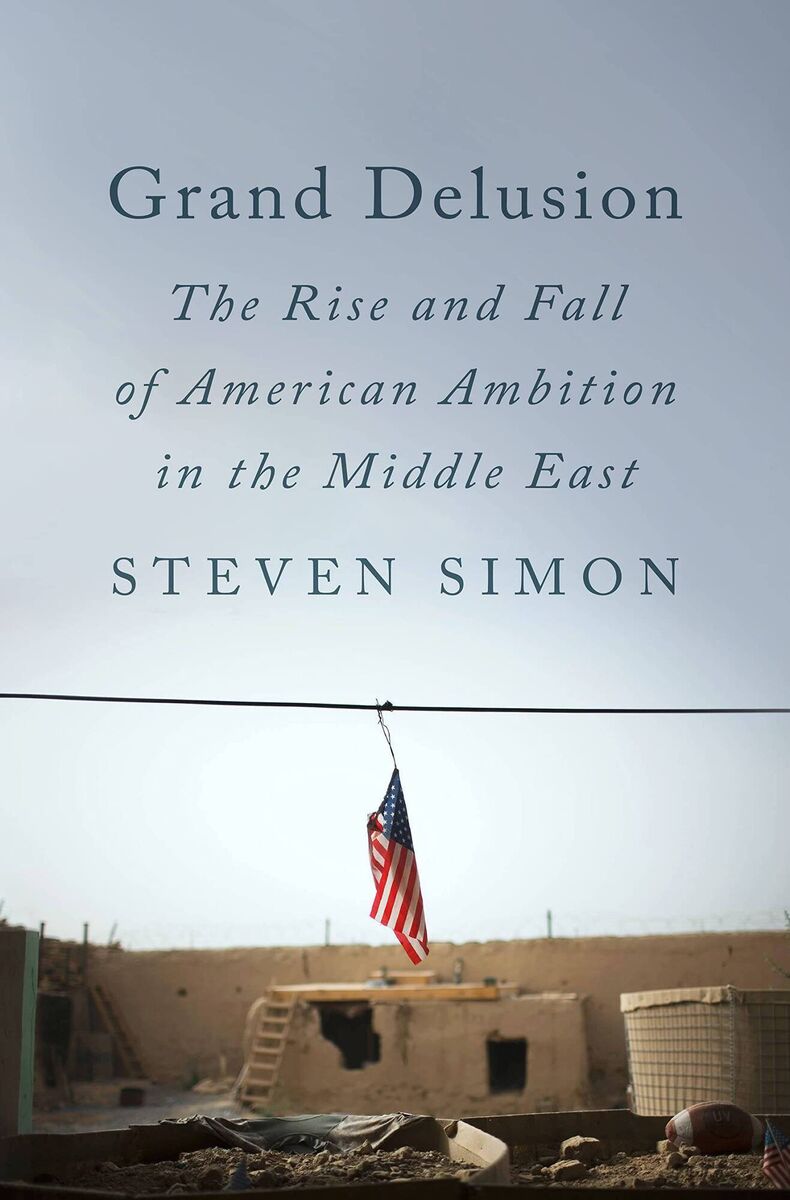
- Grand Delusion: The Rise and Fall of American Ambition in the Middle East
- Steven Simon
- Penguin Press, €25.99
Steven Simon was in a London taxi when he heard the news that a plane had crashed into the north tower of the World Trade Center in Lower Manhattan on September 11, 2001. “My first reaction was to shout, He did it! He fucking did it!” Simon explains from his home in Virginia, in the United States.
He had been expecting the news for some time. “Waking up in the year 2000, some may have decided that Washington had hyped the prospect of an attack by Osama bin Laden and his allies beyond reason, but that conclusion is wrong,” Simon explained in an article he co-wrote with Daniel Benjamin for on January 4, 2000.
“The CIA had been trying to get the White House to pay attention that an attack was imminent, but they failed,” says Simon, who served as the National Security Council senior director for counterterrorism in the Clinton White House and for the Middle East and North Africa in the Obama White House.
Simon then cites a story from a prominent Washington politico, who told him several years ago that on balance, 9/11 had represented a good deal: forty years of cheap oil for 3,000 killed on one day in 2001. “That is one chilling, repulsive perspective,” the former foreign policy planner writes in .
The book notes that by the time the George W Bush administration had reassembled for an NSC meeting in the Situation Room four days after the 9/11 attacks, then deputy secretary of defense, Paul Wolfowitz, was quick to speculate on Iraqi complicity. “Wolfowitz said: It’s Iraq, we have to go after Iraq,” Simon recalls.
“There was a solid argument for Saddam’s willingness to use terror to achieve his goals. There just wasn’t any evidence that he had consorted with al-Qaeda to attack the World Trade Center, the Pentagon, the White House, or the Capitol,” says Simon. “Al Qaeda did have state support. But it was from Saudi Arabia, not Iraq.”
Simon began his career in Washington during the 1980s, working at the State Department, where he developed a diplomatic strategy to facilitate the Reagan administration’s plans for military operations in the Middle East, which began in Lebanon. His latest book examines the rise and fall of American engagement in the Middle East over the last four decades.
The narrative begins in 1979. That year, Saddam Hussein became president of Iraq. Meanwhile, Iraq’s neighbour, Iran, disposed of its monarchy and became an Islamic Republic, led by Shia cleric, Ayatollah Ruhollah Khomeini. Iraq invaded Iran one year later. A million perished on both sides in a brutal conflict that dragged on for eight years.
The Reagan administration had asserted neutrality in the Iran-Iraq War, but gradually tilted toward Iraq, while hedging its bets by secretly transferring desperately needed weapons to Iran. But following the election of George HW Bush as president in November 1988, the United States sought to improve its relations with Iraq. This meant looking the other way, as the brutal Iraqi regime killed tens of thousands of Kurds, using chemical weapons in the north of the country.
Simon also explores how reconstruction of Iraq, after the Iran-Iraq war, meant contracts for major US infrastructure companies — including Brown and Root, Halliburton, and the Bechtel Group. Indeed, the general view in Washington at the time was “that the United States needed export markets, and Iraq [was] a potential market”, he explains.
Then when Saddam launched Iraq’s invasion of Kuwait on August 2, 1990, Washington’s relations with Baghdad went south. “The George HW Bush administration decided it would force Saddam out of Kuwait militarily, and without a whole lot of serious thought as to what would happen after that,” Simon explains.
He believes that with the First Gulf War (from August 1990 to February 1991) George HW Bush made a grave mistake: thinking that victory in Iraq would be swift and decisive. In the short term it was. “But the war ended by leaving Saddam in power. It also withdrew US military power from the region,” Simon stresses. “This meant enforcing draconian sanctions, which were responsible for the deaths of hundreds of thousands of Iraqi children, while still hoping and planning for regime change in Iraq.”
During Clinton’s two terms in the decade that followed, most conversations on Iraq tended to focus on “looking for Weapons of Mass Destruction (WMD) that weren’t there”, as Simon puts it. He notes that Saddam certainly had ambitions to develop nuclear weapons; in 1981 Iraq had lost its brand-new nuclear reactor to an Israeli air strike for this very reason. Simon also points out, however, that between 1991 and 1998, the United Nations Special Commission (UNSCOM) “uncovered and destroyed all of Iraq’s chemical and biological warfare stocks and completely dismantled the vast production system that had been built over the years by Saddam to research, develop, and fabricate these lethal weapons”.
As Bush launched the so-called war on terror after 9/11, however, Washington was plagued by mass paranoia. This was especially true of Dick Cheney. The then US vice president peddled a belief that Saddam was close to a nuclear weapons capability and was preparing to unleash other weapons of mass destruction (WMD) on the west. The idea seems to have had no basis in US intelligence analysis, says Simon.
“The only large-scale coordinated intelligence assessment of Iraq’s weapons of mass destruction programme was completed in 2002 at the request of Congress, not the White House, or any other executive branch department. George W Bush himself never read it.
“The Bush administration needed an [argument] it could bring to the United Nations,” says Simon, “and WMD was always going to have to be used as a justification to invade Iraq.”
Tony Blair bought into the idea. In March 2003, the then-British prime minister told the House of Commons: “We are now seriously asked to accept that in the last few years, contrary to all history, contrary to all intelligence, Saddam decided unilaterally to destroy the weapons. Such a claim is palpably absurd.”
Blair mentioned WMD at a meeting Simon attended at 10 Downing Street, in November 2002 with Blair, his foreign secretary Jack Straw, and chief of staff, Jonathan Powell. Blair also asked Simon and his Washington cohorts would Iraqis be better off with Saddam or without him? They informed him that removing Saddam could possibly unleash severe intercommunal violence in a politically unstable country like Iraq. Pursuing regime change, therefore, would not be a good idea, they added.
“Blair’s response was simply to repeat the question, it was a perverse situation,” Simon recalls. “Anything that would call into question the feasibility of the proposed war was simply not welcome.”
This past March marked the 20th anniversary of the 2003 US-led invasion of Iraq. The Brown University Cost of War Project claims the Iraq war is responsible for the deaths of 300,000 individuals. The nonpartisan research team also estimate that up to 4.6m people have been killed in post-9/11 conflicts in Afghanistan, Pakistan, Iraq, Syria, and Yemen.
Simon’s book concludes with the “net assessment that the United States would have been better off today had it not been so eager to intervene in the Middle East”.
However moral honesty or integrity doesn’t count for much in the slippery world of geopolitics, says Simon. “Foreign policy is largely about saying you are going to do one thing, and then doing another,” Simon concludes. “I cannot think of a single government on earth whose foreign policy is not hypocritical. That just comes with the territory.”