Book Interview: The wandering, pondering seer who relished life in flux
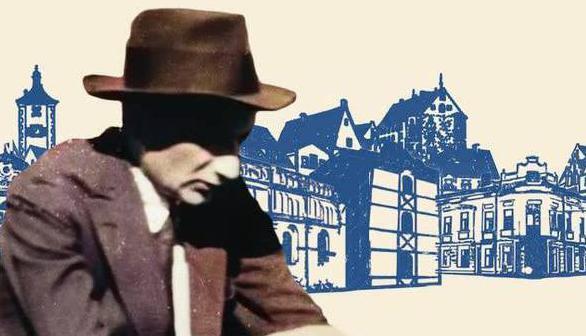
Endless Flight: The Life of Joseph Roth.
- Endless Flight: The Life of Joseph Roth
- Keiron Pim
- Granta, €29.99
Franz Joseph became Emperor of Austria in 1848, and King of Hungary in 1867 — remaining in power until his death in 1916. The multi-national cosmopolitan empire he ruled with benevolent tolerance officially recognised 14 languages and aimed to find a harmonious balance between the various interests of the competing nationalities who lived cheek by jowl. This suited most of the Jews who resided within the empire’s borders. They were given unique opportunities for self-definition and were known to be the emperor’s most fervently loyal subjects.
Joseph Roth was among them. The Jewish author was born in September 1894, in Brody. Today, it’s part of western Ukraine. But in the late 19th century the small town was part of the Kingdom of Galicia — which had been established by the Habsburg monarchy in 1772, following the first partition of Poland. By the 1880s, Galicia was the poorest of the Austrian crownlands, with the lowest life expectancy levels of all the ex-polish territories.
During Roth’s childhood, most of Brody’s impoverished population spoke Yiddish, which was then the lingua franca of Jewish Europe, and 72% of the town were Jewish.
“The town became known as the Polish Jerusalem and three times a day, three-quarters of Brody’s population turned to face the real Jerusalem and pray,” Keiron Pim writes in .
The book explores Roth’s remarkable life story. A journalist by profession, Roth’s work took him across the European continent. He lived in Lviv, Vienna, Berlin, Amsterdam, and Paris among other places. Mostly in expensive hotels he could ill afford. Roth wrote in German and prided himself on the fact that he never really lay down solid roots in any one place for very long.
Nostalgia for a more compassionate and steadier world — which he believed the Habsburg Empire offered to a multi-ethnic central east Europe — lies at the core of Roth’s literary oeuvre, which contains 17 novels and novellas, including , , , , and .
“The collapse of the Habsburg Empire [in 1918] was the defining trauma of Roth’s life,” Pim explains from his home in Norwich. “Roth felt it tied together a great stretch of central-east Europe in a way that was perhaps less than ideal, but which was far better than the ethnonationalism that followed.”
In 1925 Roth was appointed Paris correspondent of , the leading liberal daily in Europe at that time. In an article dated January 11, 1926, Roth wrote: “[It’s] the gaps in the news that are the interesting bits.”
Roth’s lyrical and poetic journalism was usually found in a part of the newspaper that was then known as the feuilleton. It had its roots in Paris in the early 19th century, evolved in Vienna not long afterwards, and became an important component of many newspapers across Europe in early 20th century. Urbane, sophisticated, witty, and terse, the amusing reports and criticism of the feuilleton section featured on the lower half of the paper’s first page and were written to a length that accommodated the busy urban reader’s attention span.
Roth wrote these small reports in a third person narration style that often had the feel of a literary novel. It also gave Roth the opportunity to play the role of the wandering metropolitan Flâneur.
“The feuilleton was a form that really suited Roth’s knack of wandering around cities and noticing fleeting moments that had universal implications,” says Pim .“Roth was not great when it came to journalistic accuracy, but his reporting was more like poetry because he had this incredible insight into human nature.”
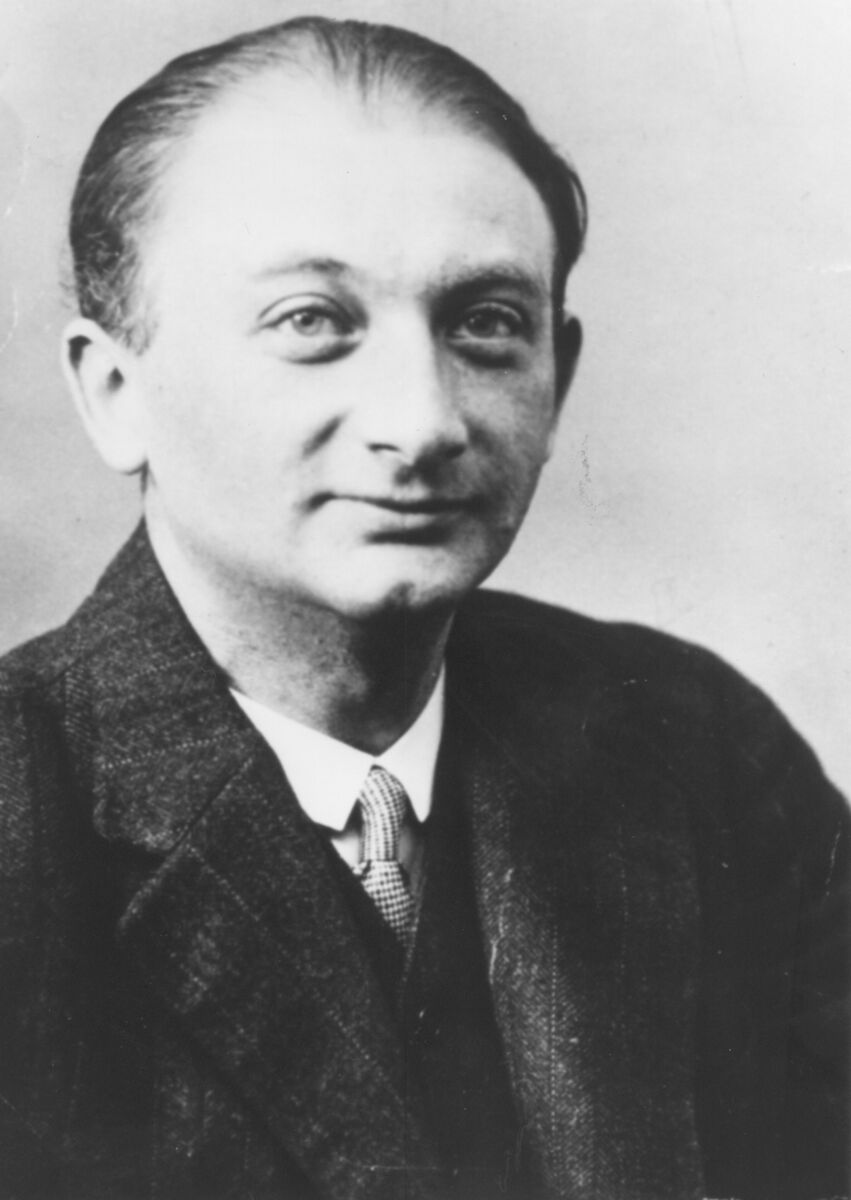
Politically savvy, Roth also kept his attentive eye and pen on the wider historical narrative that was unfolding in his own lifetime too. He witnessed the disastrous consequences of the newly formed centrally planned economy in the Soviet Union, when he travelled there as reporter in the 1920s. The following decade he observed how the rise of fascism was transforming Germany into a dangerous xenophobic, super nationalistic state.
Roth was extremely suspicious of all forms of nationalism, including the Zionist project for a homeland for the Jews in Palestine, which was still a pipe dream in Roth’s lifetime. He reflected on these ideas in a letter dated October 1932, describing the First World War and the collapse of the Dual Monarchy as “the most powerful experience of my life and the end of my fatherland, the only one I have ever had”.
The paternalistic metaphor was not coincidental. Roth never met his own father, Nachum Roth. He was, apparently, committed to a sanatorium before he even knew he had a son. Roth’s wife, Friedl Reichler, met a similar fate, spending the 1930s in psychiatric asylums in Germany and Austria. She was killed in the Nazi euthanasia programme in 1940.
“Friedl was [diagnosed] as a schizophrenic around 1928, and was institutionalised permanently from 1930 onwards, so it fell on Roth to cover the costs of her care and that just crippled him,” Pim explains.
The biographer notes how Roth brought a great deal of chaos and uncertainty into his wife’s life. Friedl craved stability, which Roth could not give her. Roth was paid well for his writing, but he never owned a bank account, couldn’t manage money, and lived hand to mouth, mostly criss-crossing Europe on trains.
“Roth found this life in constant flux liberating and exciting,” says Pim. “But it only exacerbated Friedl’s instinctive anxiety and drove her over the edge. And, of course, Roth’s excessive drinking didn’t help the situation either.”
Roth died in January 1939, aged 45. The official cause of death was pneumonia. But the poor health Roth suffered due to his chronic alcoholism meant he never stood a chance of recovering.
Roth had been warning his Jewish friends across the continent the fate that lay in store for them as early as 1933, when Hitler became Chancellor of Germany. That year, after he took a one-way train from Berlin to Paris, Roth wrote a letter to his good friend, patron, and fellow Jewish writer, Stefan Zweig. “Do not deceive yourself. Hell reigns,” Roth explained.
Roth was referring to the antisemitism the Jews of Germany faced as Hitler ideas of an expanding Reich were being set in motion. Roth died nine months before Hitler invaded Poland. Nevertheless, his stern warnings were extremely prescient.
Brody, his hometown had been incorporated into the Second Polish Republic — it was declared in 1918 but its borders were formally established and secured following The Treaty of Riga, in March 1921, which concluded the Russo-Polish War of 1919–20.
Pim notes how nearly all of Brody’s Jewish population perished in the Holocaust. Most were deported in 1943 from the Nazi-built Brody Jewish ghetto to the Belzec death camp where they were exterminated.
Pim says Roth’s journalism and novels feel strangely relevant to read in the present moment, when the borderlands where Roth was born are once again being contested.
“In a time when ugly reductive nationalisms threaten to overpower liberal aspirations, Roth speaks to us urgency and power,” the biographer explains.
“Roth would not have been surprised by [the Russian aggression] we are witnessing today in Ukraine,” the author concludes. “Because he grew up in that part of east-central Europe where ethnic tensions were always bubbling away. The tolerance, internationalism, and humanity of his writing is something we should really cherish and hold onto.”