Book interview: Shane Dunphy’s 22nd book is a taut psychological drama
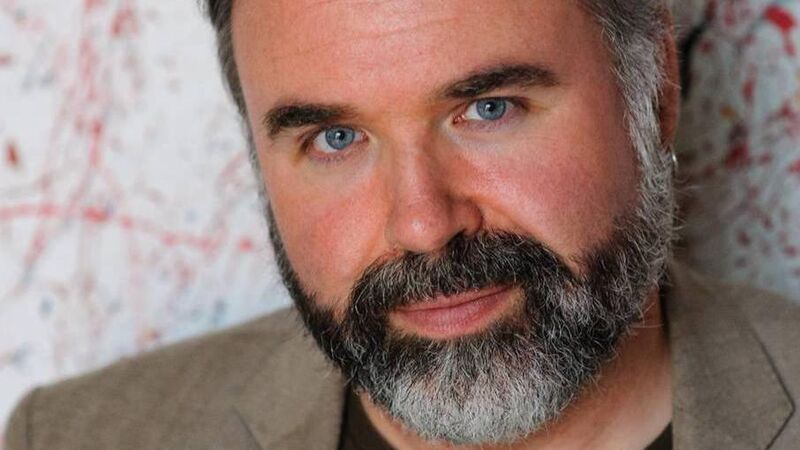
Author Shane Dunphy maintains an astonishing work rate which also includes teaching and occasional journalism along with his multiple books.
- The Helpdesk
- Shane Dunphy
- Hachette Ireland, €15.77; Kindle, €0.99
Before I start reading a novel, I turn to the page of ‘Acknowledgments’. You can learn a lot from them. Can the writer form a good sentence? Is he/she over fond of exclamation marks? Are they generous in thanking all those who have helped them out with their research?
If not, have they done any research? Do they randomly thank pretty much everyone they’ve ever known, or are they brief, only mentioning their editor, publisher and their agent?
Reading Shane Dunphy’s acknowledgments for his 22nd book, The Helpdesk, I learned a lot more than usual.
He takes us through the process of writing it, from the moment, in 2019, that he and his editor Ciara Doorley first hatched their plan for a new crime series, through the unwieldy process of writing it, when the characters simply refused to keep to the original plot.
I loved that honesty, but when I mention it to Shane, over lunch in Co Wicklow, he seems nonplussed.
“It never occurred to me not to be,” he says. “If a reader comes to the end and is still interested, It’s good to tell them what went into writing the book.”
The book centres on James, a corporate lawyer at a successful City firm, who loses a vital file, and contacts a help desk.
Charlotte solves his problem, getting into his computer, but from that night things start to go wrong for James.
And that includes his marriage to Bella, a psychologist who has abandoned her thesis, and now teaches in a private school for privileged boys.
“James was supposed to be a guy getting stalked, and Charlotte was to be the baddie, but when I started writing, Bella stepped to the fore, and I realised that Charlotte would be a mere catalyst for what happened. It’s much more interesting and layered, and was the only book I could write.”
He did try to rejig it and get back to the plot he’d been commissioned to write, but it didn’t fit the characters. And he was nervous when he sent his first draft to Doorley.
“Ciara was incredibly tolerant,” he says.
“She contacted me and said, ‘this is not the book I asked for, but I like it’.”
I loved all the different directions where Shane took it and most especially a sub-plot he gives to Bella, who is molested by some students but is then blamed for seducing them. Where did that idea come from?
“I knew she had a story to tell. She’s a dark character and would have done something in her past. She’s from a neglected background, and maybe that has led her into risky behaviour.
“I read an article about a teacher who had been accused of having a relationship with one of her students, and that interested me.
“I put her in a posh school with entitled young men. She is beautiful, and although she doesn’t intend it, people pick up on her sensuality.
“And these hormonal, spotty, over entitled young men are going to be drawn to that. I wanted to see how she would cope in that situation.”
We talk about the abundance of pornography, and of how it can lead teenagers into thinking that sexual violence is almost mainstream.
“They’re not necessarily bad kids, but they’ve been brought up to believe that, if they want something, they can have it.”
Shane structures the book beautifully, using the three characters as first person, rather unreliable narrators. And the pages are interspersed with excerpts from Bella’s aborted PhD thesis. The action ramps up beautifully, with many a twist before the satisfying end.
This was quite a departure for Shane, but it’s not the first time he’s changed direction, and made a success of it.
When we first met, in 2006, he’d just written Wednesday’s Child, a non-fiction book telling of his time as a childcare worker. Still involved, he was also teaching in Waterford, but told me he was interested in doing some journalism.
He asked my advice, and, sensing his determined resolve, I gave him the name and number of one editor, and within weeks, he’d become the go-to commentator on child protection issues across the media.
“For five or six years I wrote for the Irish Examiner, Irish Independent, Star and Daily Mail, and I was still writing books and teaching full-time as well. It probably wasn’t healthy,” he admits, “but I was passionate about child protection — I still am — and nobody else was really talking about it. It was exciting and very satisfying, but in the end I burnt myself out.”
The last straw came when he had a call at 6am, telling him about a murder-suicide involving someone he had encountered.
“It was awful, realising I was one of the people who was called when something like that happened. I didn’t want to bring that into my home, and realised that, maybe, it was time to take a step back. I decided to focus on the books.”
At this time, his books became more crime based — kind of mystery with a crime edge. And then, Ciara Doorley from Hachette Ireland asked him if he’d be interested in writing a crime series. And that’s when his series starring David Dunnegan started.
“I enjoyed writing those, but at the same time I went back to non-fiction and wrote an audible-only series which did extremely well.”
The start of 2020 saw Shane at his most optimistic.
“My agent, Ivan Mulcahy, and I had a load of deals on the table. It was going to be our big year. Then lockdown happened and everything went pear shaped.”
He was starting to despair, when the call first came from Ciara Doorley — planting the idea for The Helpdesk.
“We had already been batting around the idea for a series based on the things that go wrong in our lives,” he says. “But she said she’d had this specific idea, and would I be interested in writing it to kick off the series.
“I can remember the exact moment she rang,” he says. “I was in Tayto Park with my kids, my grandson, my niece and my nephew. I was so relieved that someone wanted to publish a book and that I had some work to do that year, that I immediately said, ‘Great’.”
This year promises to be a good one. He has two books coming out with the publisher, Book Couture — one in June, the other in July.
“And I’m working on a new detective series set in Ireland,” he says. “It’s a detective team that’s been set up by the police to concentrate on cases involving children. So they’re combining child protection with crime. I’ve written one and the second is half written.”
He’s excited about the upcoming film adaptation of one of his books, and of a TV series which is currently in development.
Given he is still teaching, as well as doing occasional journalism, how does he fit it all in?
“I try to write every day,” he says. “The days I’m teaching, I stay in the office late and, on my writing days, I write until lunchtime, take a break for a walk, and go back until 5pm. And if I have a ridiculous deadline, I go back in the evenings.”
He immerses himself in one book at a time.
“I surround myself with research, post it around the place and have a specific soundtrack to listen to. And when it gets done, I know it will be back for an edit, but until it is, I focus on the next job.”