Cate Blanchett on playing her most complex character yet in Tár  
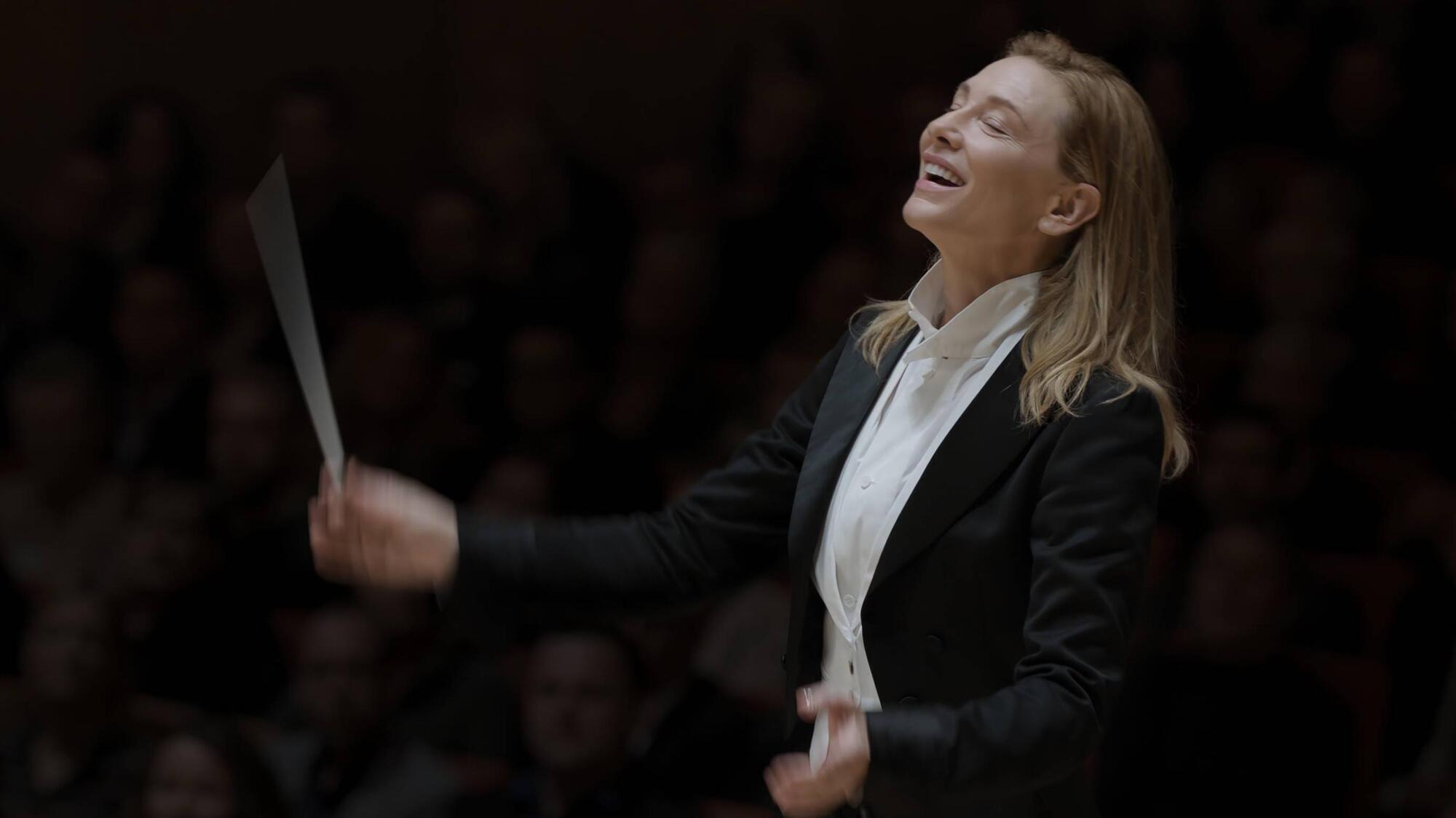
Just because she's a ground-breaking female conductor, it didn't mean the film had to portray Tár as a nice person 
Cate Blanchett on playing her most complex character yet in Tár  

Cate Blanchett stars as Lydia Tár. 

There aren’t many actors who could open a film with a scene depicting a full interview with a New Yorker journalist and have it be an utterly engrossing introduction to a character, but the inimitable Cate Blanchett does just that.

Playing the titular role in Todd Field’s Tár, a character study exploring the reputational downfall of the fictional first female chief conductor of the Berlin Philharmonic orchestra, Blanchett is omnipresent throughout the film, in almost every shot, never mind every scene.


“I’ve never encountered a character as elusive and as complex as Lydia Tár,” says the 53-year-old star, describing how she embodied the character. “I’m very language focused, and, of course, the first quarter of the film is very top-heavy with language, but then that sort of peters out into silence. In a way, I started with what she loved. I started with the music, I started with this thing that had kept her alive and kept her sane, and that she was risking losing because of the events that unfold in the film."

In keeping Tár such a ubiquitous figure in the film by making Blanchett’s performance the focal point of the entire narrative, Field makes it abundantly clear just how influential and powerful the character is.

We see her behind the podium, commanding her players; in meetings where she is deftly holding her own among her white, male musical contemporaries; at home with her adopted daughter Petra, where she stands up to playground bullies with biting words that are enough to threaten an adult into servitude; and crucially with her young, attractive female players and assistants who clearly hold more than a professional admiration for the conductor.

“There were very simple rules for the film,” says writer and director Todd Field when asked why he wanted to make Tár such an intense character study.

“Trying to understand why is this happening — this character got into whatever she did, like all of us, because she had a great love for something, she had a love for music, it was going to transform her and change her. And it did. And now she’s sitting atop this power structure, and she’s bifurcated."

Despite conducting being a “hierarchical, white male-dominated canon”, as Blanchett describes it, the fictional Tár has ascended the industry’s ranks.

She has worked in all of the ‘Big Five’ American orchestras while developing her own compositions and earned her spot on the coveted and short list of so-called EGOTs — those who have won all four major awards of Emmy, Grammy, Oscar and Tony.

Now at the height of her career, she holds the prestigious position of chief conductor for the Berlin Philharmonic orchestra, and is preparing for both a book launch and a much-anticipated live performance of Mahler’s Fifth Symphony.

Cate Blanchett in a scene from Tár. 

She also runs a mentoring scholarship programme for women — rumoured to be a source of young women with whom she has affairs — and attempts to maintain her domestic life with her partner Sharon, played by Nina Hoss, and their daughter Petra, that is until dark secrets come to light and threaten to make Lydia’s house of cards come tumbling down.

“It is a fairy tale, in a way,” says Blanchett. “Even though there are some extraordinary female conductors, there always have been, they just haven’t been provided the opportunity.

“As a woman stepping up onto the podium, 70% of their energy is having to push the politics of that step up outside, so they’re considered to be the extraordinary musicians that they are. But the film’s not about that,” adds the star.

“The fact that they’re in a same sex relationship, the fact that they’re women in a very hierarchical, white male dominated canon. It’s a texture to the film, but it’s not the narrative.” Instead, Field is more interested in the dynamics of power — how it corrupts and how it is facilitated by others.

The reverence those around Tár have for her becomes, as we discover, rather insidious for the maestro, as we watch her life unravel in a distinctly modern way as those wrapped up in her autocracy begin to stand up against it.

“The main idea is that we wanted to build this sort of thing where you could walk around and really examine: How does power work? Who benefits? Who doesn’t? How omnidirectional it is, and how complicit it is,” says the Oscar-nominated director, 58, who also helmed 2006’s Little Children and 2001’s In the Bedroom.

“Everybody is complicit with her. She’s not sitting up there alone, she’s there because she’s allowed, because there’s a benefit to other people. But I think that we see so much, and we have seen so much historically, and it’s always patriarchal. There’s a very good reason for that – men have held power. And I think we all have a very quick and efficient reaction when we hear about men who abuse their positions of power.

“So it was important that this character not be a man, because it afforded, hopefully, an opportunity to actually look at how power actually corrupts individuals. That it’s genderless. It’s a phenomenon – if you touch it, it’s going to contaminate you.” 

  • Tár is in cinemas now

More in this section

Scene & Heard

Newsletter

Music, film art, culture, books and more from Munster and beyond.......curated weekly by the Irish Examiner Arts Editor.

Cookie Policy Privacy Policy Brand Safety FAQ Help Contact Us Terms and Conditions

© Examiner Echo Group Limited