Book Review: A few let-down chapters, but Show Your Work is a collection worth picking up
"A significant portion of the essays come from writers born in the eighties and nineties, writers who came to maturity as Ireland underwent enormous social and economic change."
Book Review: A few let-down chapters, but Show Your Work is a collection worth picking up

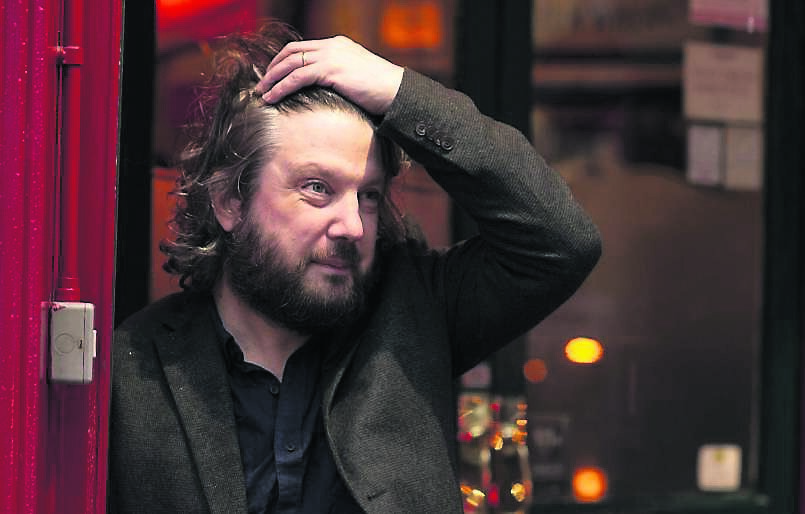
Patrick Freyne’s ‘Brain Fever’ is a compelling, often funny unpacking of the phrase ‘not all there’ (used by the author about himself). Picture: Chris Maddaloni

  • Show Your Work: Essays from The Dublin Review
  • Edited by Brendan Barrington
  • Dublin Review Books, €20

Creating a collection of essays can’t be easy. The well of the reader’s appreciation or patience can be fatally poisoned with only a few pieces that stray too far from their circle of interest and sympathies.


My guess is that Show Your Work, a collection of 24 recent-ish essays from The Dublin Review, will get the balance right for many readers.

Eoin Butler’s reportage on life on the road with Irish truckers travelling to and from France gets the collection crackling to life, but not in a pleasant way. These men continuously erupt with foul-mouthed abuse, whether targeted at Calais migrants, or Eastern European lorry drivers, or the UK.

They seem to be the angriest men in Ireland (though, of course, they are not in Ireland a lot of the time), but Butler reveals enough of their personal hinterland to slow the rush to judgement.

Colm TĂłibĂ­n contributes a superb account of the time when, as editor of Magill in the early 1980s, he delved into the workings and the personalities of the Supreme Court. Anyone with the remotest interest in the Ireland of that period should read it.

Meanwhile, from 2014, Susan Mackay provides a distressing but still finely judged piece on life and death (so often by suicide) in the Ardoyne.

Deirdre Mask’s essay on the payment of legal costs in medical negligence cases, which opens with a story from 1902 of a Galway boy injured by an early X-ray machine, is exemplary in its thoughtfulness and concision and makes the case for the American system being superior to ours. Molly McCloskey’s ‘These Are My Floods’ also criss-crosses the Atlantic: A meditation on feeling at home, or sometimes not, in Ireland and America. It strikes a near-perfect balance between thought and emotion; and de Valera’s address on “the Ireland that we dreamed of” appears in the middle of it as if through a portal from a different place and time.

A significant portion of the essays come from writers born in the eighties and nineties, writers who came to maturity as Ireland underwent enormous social and economic change.

Many of these pieces come with a curious sense of drifting — whether across the cities of Europe or academia; across the internet, sexual partners, or drugs of choice; across memories and personal neuroses.

Patrick Freyne’s ‘Brain Fever’ is a compelling, often funny unpacking of the phrase “not all there” (used by the author about himself). ‘The Purge’ by Darragh McCausland and Roisin Kiberd’s ‘The Night Gym’, in very different ways, supply insights into disorders concerning food and body image that are unsettling and hard to forget. Along with Damson Yang’s diary of an abortion in Berlin and Arnold Thomas Fanning’s account of rough sleeping and severe mental illness in London, these pieces typify a collection in which several writers lay bare some of their bleakest hours.

However, some of the younger writers do also point the searchlight far from themselves and their own milieu. Caelainn Hogan recalls a figure from her childhood: A slightly wild, pugnacious but well-liked bachelor trawlerman from west Cork. Doireann ní Ghríofa, ponders her great-grandfather who escaped the Black and Tans by dressing as a woman to leave the church where he was attending Mass. Of her relative and the congregation that day, she writes: “Together and alone, they aged. Theirs were the eyes that met his in worship, on feast days, at funerals and baptisms, on the day he escaped from the Crown forces, and on his wedding day.” Not much drifting there.

Other good things await in Show Your Work. Though there are some disappointments too, it’s a collection well worth investigating.

More in this section

Scene & Heard

Newsletter

Music, film art, culture, books and more from Munster and beyond.......curated weekly by the Irish Examiner Arts Editor.

Cookie Policy Privacy Policy Brand Safety FAQ Help Contact Us Terms and Conditions

© Examiner Echo Group Limited