Book Review: The State is still failing victims of institutional neglect
"No criminal prosecution has been taken against anyone who abused residents of the Magdalene laundries, mother and baby homes, or other institutions or against those who carried out or facilitated illegal adoptions, apart from one minor prosecution of a midwife in 1965, who continued to run an adoption agency for years afterwards."
Book Review: The State is still failing victims of institutional neglect

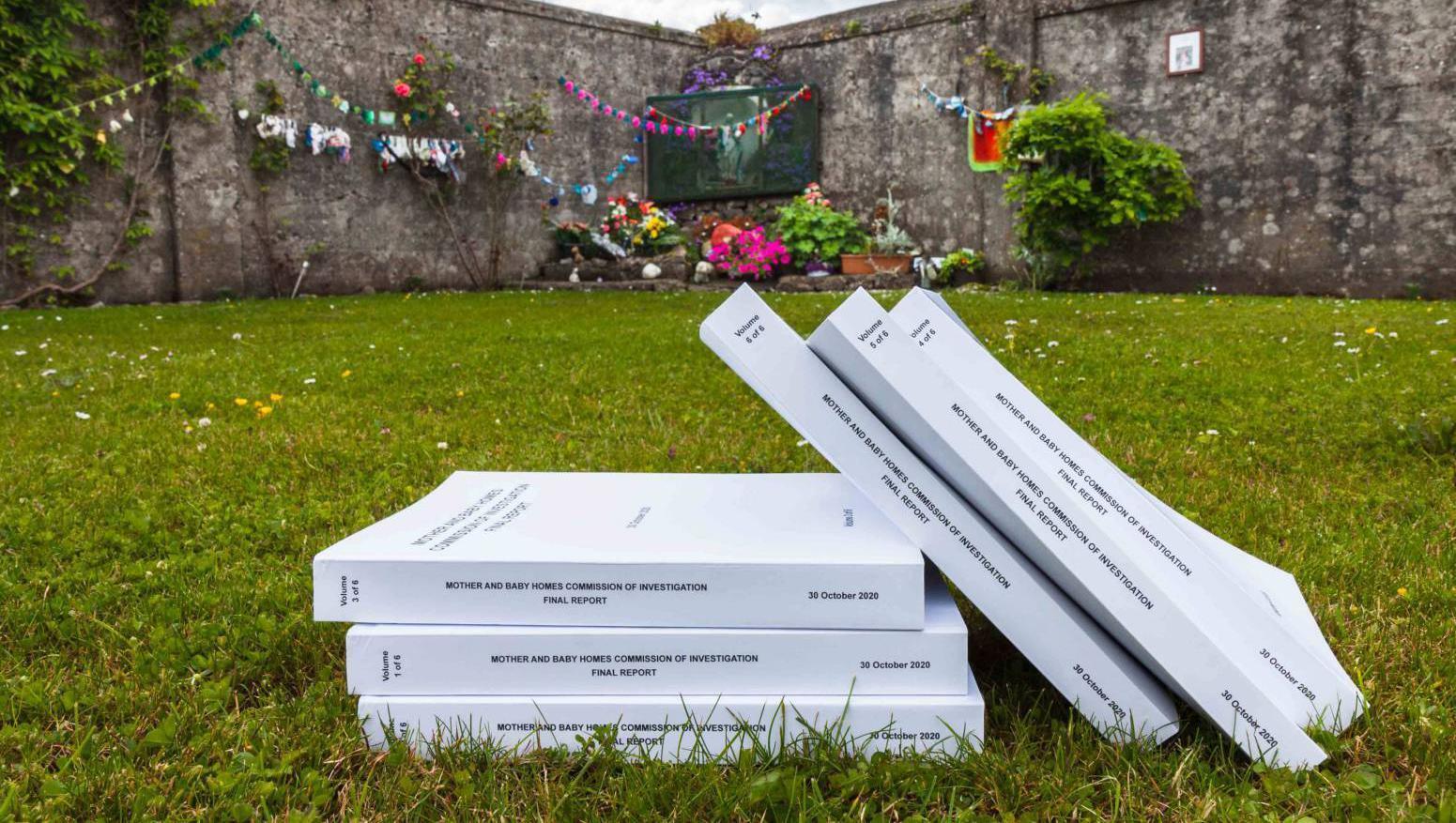
The Mother and baby homes Commission of Investigation final report volumes one to six at the Tuam site in Co Galway. Many survivors were angered at how how survivor testimony was used, and how the members of the Commission refused to appear before an Oireachtas committee to answer questions. Picture: Andy Newman

  • Redress: Ireland’s Institutions and Transitional Justice
  • Edited by Katherine O’Donnell, Maeve O’Rourke and James M Smith
  • UCD Press, €25

THIS is an important book. It explores how those who suffered in Magdalene laundries, mother and baby homes, other residential institutions, and in a closed and secretive adoption system over the last 100 years, have been treated by both jurisdictions on the island of Ireland. It also offers many suggestions to remedy shortcomings, and draws on similar experiences in Canada, Britain, and Australia.

The idea for this collection emerged from an international conference at Boston College in 2018 entitled Towards Transitional Justice: Recognition, Truth-telling, and Institutional Abuse in Ireland; followed by a special issue of Éire-Ireland: An Interdisciplinary Journal of Irish Studies in 2020 which included essays by conference participants. Thirteen of those essays, together with seven others also by participants are joined by four long-form pieces of journalism.

The editors are academics and members of the Justice for Magdalenes Research (JFMR) advocacy group, which places survivors’ motto, ‘nothing about us, without us’, at the centre of their work. In their introduction they question what is justice and ‘how might democracy evolve if survivors’ experiences and expertise were allowed to lead?’.

First we need to understand the meaning of ‘transitional justice’. In her contribution, Claire McGettrick draws on the UN’s definition and argues that it involves, “four core principles: the right to know the truth about historic abuses and the fate of the disappeared; the state’s obligation to investigate and prosecute human-rights abuses; the right to reparations; and, finally, the state’s obligation to prevent the recurrence of human rights abuses in the future.’

Does Ireland live up to those principles? Since 2009 and the publication of the Ryan Report on The Commission to Inquire into Child Abuse, we have had inquiries into the Magdalene Laundries ( McAleese Report, 2013), the Symphysiotomy Inquiry ( Harding Clark Report, 2016) and in 2020 the Commission of Investigation into Mother and Baby Homes published its Final Report.

The state has apologised for its legacy of institutional abuse but, as many of the essays here argue, it continues to exert power over survivors, adoptees and their relatives, in the ways it uses their testimonies, administers redress and controls the remains of those who have died and how these abuses should be remembered.

Central to the criticisms of the Republic’s investigations is how survivor testimony is collected and treated. In her essay entitled Antigone in Galway: Anne Enright on the Dishonoured Dead, the author argues that the women’s testimony to Martin McAleese is ‘turned into a kind of chorus in the report” while testimony from Dr Coughlan who worked at the Galway Laundry is given far more space. Also, records from the congregations are anonymised and the originals returned to them.

No criminal prosecution has been taken against anyone who abused residents of the Magdalene laundries, mother and baby homes, or other institutions or against those who carried out or facilitated illegal adoptions, apart from one minor prosecution of a midwife in 1965, who continued to run an adoption agency for years afterwards.

Readers may recall how many survivors reacted to the publication of the report on the investigation into Mother and Baby Homes two years ago. What angered them most was how survivor testimony was used, and how the members of the Commission refused to appear before an Oireachtas committee to answer questions. In April 2021 the Garda Commissioner announced that, because the Commission’s findings were anonymised, it means that “there is insufficient detail in the report” to start an investigation. The Garda Commissioner, according to Maeve O’Rourke’s essay, “did not mention that his police force is statutorily barred from accessing the entire archive of records gathered by the Mother and Baby Homes Commission of Investigation, pursuant to the inquiry’s underpinning legislation”.

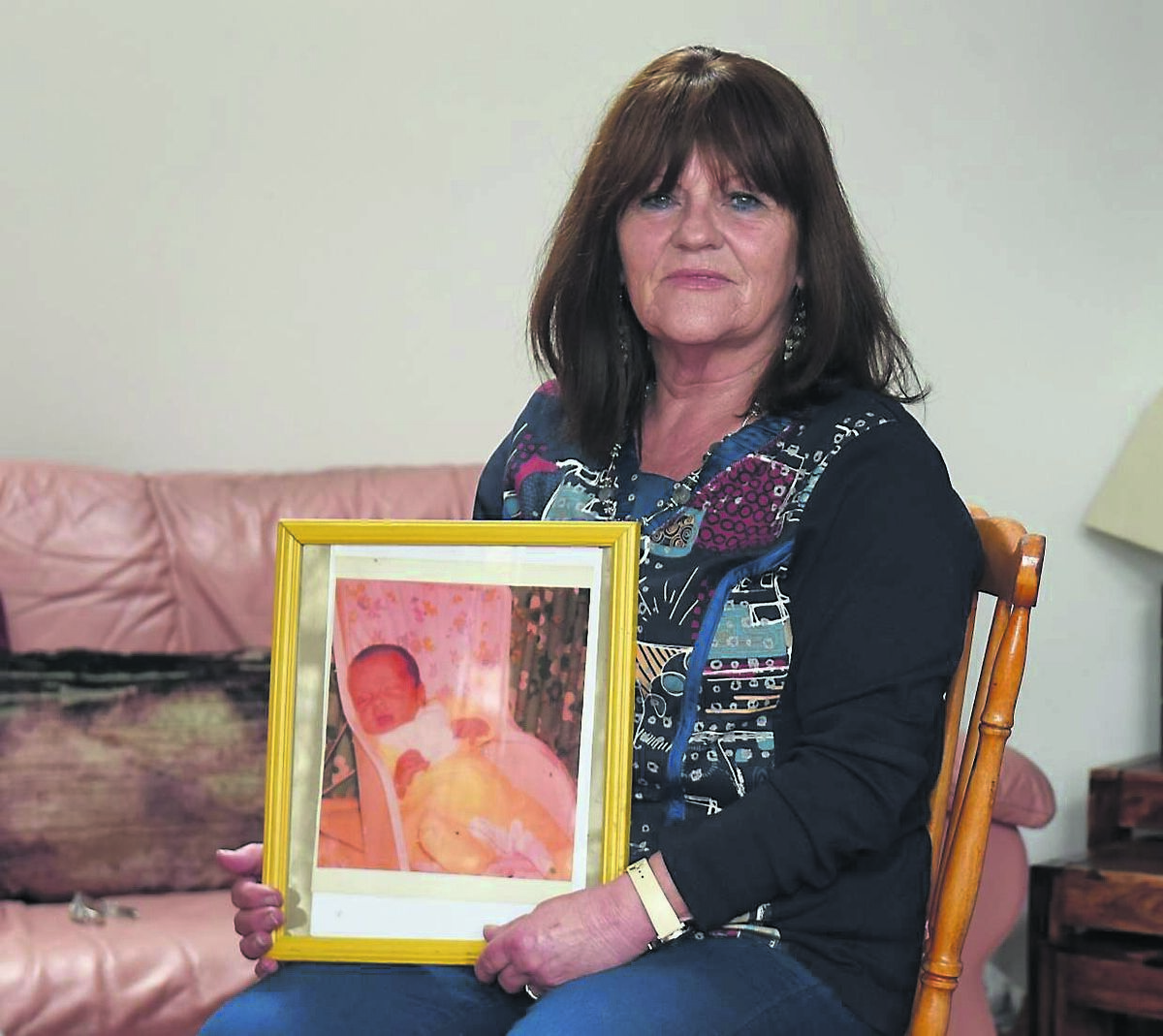
Terri Harrison holding the only photograph she has of her first born son, Niall, who was born in St Patrick’s mother and baby home on Dublin’s Navan Road in Oct 1973. Baby Niall was taken away from Terri a number of weeks later for adoption without her consent. 	Picture: Moya Nolan
Terri Harrison holding the only photograph she has of her first born son, Niall, who was born in St Patrick’s mother and baby home on Dublin’s Navan Road in Oct 1973. Baby Niall was taken away from Terri a number of weeks later for adoption without her consent. Picture: Moya Nolan

It seems that the state does not want to learn from how its previous investigations and reports have been received by victims. Máiréad Enright and Sinéad Ring write about the Commission to Inquire into Child Abuse which produced the Ryan Report in 2009: “Pseudonyms were granted to everyone accused of abuse, regardless of whether they had been convicted or not. Evidence gathered during the process was not permitted to be used in criminal prosecutions. This cloak of anonymity and effective immunity created a partial history and left many victim-survivors feeling exposed and ignored by the state.”

They examine the activities of the Residential Institutions Redress Board, set up in 2002, and an agency established in 2013 to support victim-survivors with their health, education and housing. Survivors had to appear before a board, and that experience was described by many as retraumatis

ing. They had to endure being cross-examined about evidence given by the religious orders, though the orders did not have to give oral evidence. According to Enright and Ring: “Efforts to provide redress … have focussed on limiting the exposure of the state and the religious orders to compensation claims.”

The state continues to treat the religious orders with deference, indemnifying them from legal liability and, despite the agreement reached back in 2002 which envisaged a 50-50 split, they have only contributed 16% of the costs of redress.

The State’s Reaction is to Deny, Delay and to Buy Silence, according to Conall Ó Fátharta, formerly of the Irish Examiner, who has written extensively about the subjects covered in this collection. He argues that by listing mother and baby homes, Magdalene laundries, illegal adoptions and so on as separate scandals, as Leo Varadkar and other leaders have done, it ignores “how unmarried and vulnerable women were treated in a sprawling network of interlinking institutions, private agencies and state authorities”.

He adds: “They are one story; one scandal which, when seen in its totality, tell us about the fundamental character of the Irish State —right from its very foundation.”

In her lecture, Ruth Rubio Marín describes it as “a policy that sought to encourage prolific Catholic marriages … a joint venture between the Catholic Church and the Irish Republic since its very inception and lasting to some extent until the 1990s.” She goes on to describe it as “gender violence justified in the name of Catholic morality turned into State ideology … which failed … to live up to basic liberal democratic standards promising women full and equal citizenship.”

Paul Michael Garrett examines how attitudes to unmarried mothers were influenced by figures such as Fr Richard Stanislaus Devane, a prominent Jesuit, in the early years of the Free State who few of us have heard of before. He was among those who gave testimony to the Commission on the Relief of the Sick and Destitute Poor in 1927 and was “committed to a particular form of Catholic Irishness” — threatened by young people expanding their “circle of their enjoyments” including jazz which he describes as a “dance menace”.

These are just some of the interesting mixture of contributions; while some are from academics, others are testimonies from those who have experienced the hurts caused, for instance by the long-term effects on unmarried mothers.

Among the latter is Catriona Palmer whose memoir An Affair With My Mother documented the sad reality that her mother kept her existence secret, and lives a “bifurcated, haunted life”. Terri Harrison describes herself as a ‘pariah mother’ whose son was abducted at six weeks old.

Redress should be read by anyone who cares about the vulnerable, and those who can influence how they are treated today.

More in this section

Scene & Heard

Newsletter

Music, film art, culture, books and more from Munster and beyond.......curated weekly by the Irish Examiner Arts Editor.

Cookie Policy Privacy Policy Brand Safety FAQ Help Contact Us Terms and Conditions

© Examiner Echo Group Limited