Colm Tóibín on his new poetry book, and the upcoming Brooklyn sequel
At 66, the Co Wexford author is publishing his first collection of poetry. He has also penned an opera and a sequel to his New York-set novel  
Colm Tóibín on his new poetry book, and the upcoming Brooklyn sequel

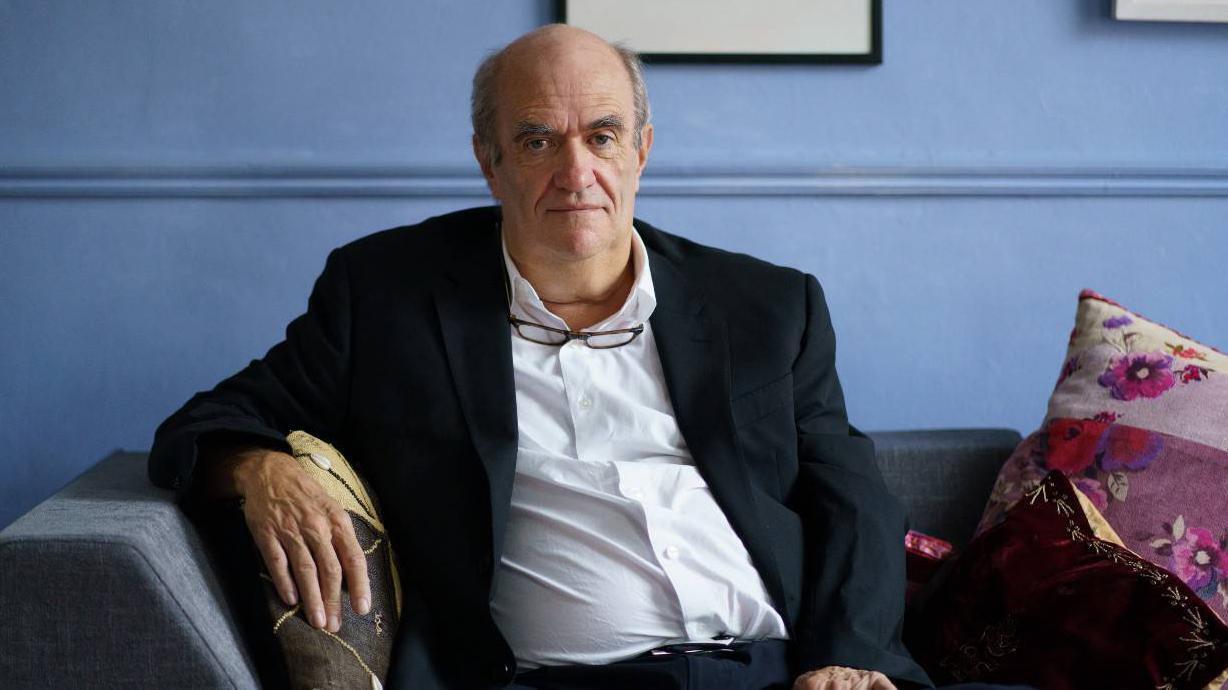
Colm Tóibín is about to publish 'Vinegar Hill', his first collection of poetry.  Picture: Barry Cronin

In a career spanning many decades, Colm Tóibín has built a reputation as one of Ireland’s greatest living writers. 

Now he is going back to the beginning, breaking new ground as he publishes his first poetry collection. 

It’s a development which gives him great amusement; Chatting on Zoom from New York, where he lectures at Columbia University, he chuckles at the thought of being described as an emerging poet.

“It is absolutely marvellous. I will be 67 at the end of May … I am expecting loads of sympathy and people thinking, ‘well, isn’t he wonderful?’.”

Tóibín’s debut collection, Vinegar Hill, takes its title from the site of one of the bloodiest battles in the 1798 Irish rebellion against British rule, which overlooks his hometown of Enniscorthy. 

It was as an adolescent in the Wexford town that he began to write poetry. 

“I wrote poetry regularly and seriously between the ages of 12 and 20.” 

Then I just stopped, it was sad but it was no great loss to humankind. There were enough poets really. 

Tóibín returned to writing poetry after he had finished his acclaimed novel The Master, based on the life of Henry James, and slowly and steadily began to accumulate more pieces.

“That was in 2004, at that stage I was nearly 50. I got out one or two a year. I was like a Japanese poet, writing four lines every year or something.”

A turn of adverse events, in the shape of a cancer diagnosis and the pandemic, gave him more time to concentrate on writing poetry. 

When he was undergoing treatment for cancer in 2018, he found it was all that he was able to write. 

“I was on steroids and I would get about an hour of pure clarity in the day, and in that period of clarity, I got two more poems.”

After those poems were published in Poetry Ireland Review, Tóibín was contacted by poet John McAuliffe, an editor at Carcanet Press, who expressed an interest in seeing more of his work.

“He was very encouraging, which no-one had ever been before. We talked about the possibility of writing some more." 

Then the pandemic began and I was in Los Angeles. Normal life just stopped, we were afraid to even go to the supermarket. 

"Out of the blue, every evening, around 7pm, something would occur to me, some memory, some thought, and it would come in lines, I would see it. 

"I would write it down. Whatever way it was going, I would follow it.” 

Tóibín’s position in Irish literature is well-cemented yet there is trepidation about how his poetry will be received in a country with such a strong and established tradition in the art form. He recalls the awe in which poets were held in his youth.

“Yes, I am nervous. I have been devouring [poet] Thomas McCarthy’s journals. The book is filled with the names of poets, the readings they were giving, and that whole culture. 

"If you got 20 people at a reading in Ireland, that was good, unless you were Seamus Heaney — Tom is very good on all of that. I’m adding my name to that list of Irish poets. 

"I am going to do a few readings. When I was growing up, a poet would come to do a reading, they would roll their own cigarettes and wear leather jackets.

"I remember Eiléan Ní Chuilleanáin reading, and Eavan Boland, they were so glamorous and different to us.” 

Tóibín's teenage compositions

Tóibín was recently reminded of his own teenage compositions and how his secret scribblings were rumbled. 

“There was a magazine called Eirigh run by the Capuchin Order and it had a section in the middle for poetry. 

"I started to send them poems and they took a few. They even sent me a small postal order. No-one at home knew anything about it and I didn’t tell anybody. 

"Unfortunately, there was a club in Enniscorthy called the Athenaeum where people would go in and read the newspapers and play billiards.

"My uncle was in there one day, and he found Eirigh and saw my name and poem. He brought it up and everyone gathered around and read it. 

"The funny thing is I got a letter a while ago from the Capuchins to say they had the entire archive of poems sent to Eirigh, including all of mine. 

"Somewhere in the Capuchin archive are all these terrible efforts made by this teenager,” he laughs.

Some of the poems featured in Vinegar Hill are poignant excavations of childhood memories. A painting of the landmark by his late mother Bríd features on the book’s cover.

The cover of Vinegar Hill features a painting of the landmark by Colm Tóibín's late mother, Bríd.

“She didn’t paint for long and she didn’t paint much but I always thought that painting was very good. She had been working away at doing Vinegar Hill and it is that extraordinary idea that one day you get it right. 

"I think she would be very surprised and delighted that one of the paintings she made would be on the cover of a book.”

 Earlier this year, Tóibín was appointed laureate for Irish fiction, his theme for which is the Art of Reading. 

In this vein, he will select a book for discussion each month; he began with Claire Keegan’s Small Things Like These, set in his home county of Wexford.

“It begins as an honour and then you start to think, ‘well I’ve got to do something’. So I thought that what I mainly do is read and I’m always going on about books." 

I thought I would do something every month in partnership with the libraries and the Arts Council and we would select a book. 

"People want to talk about books they are reading. No one wants to be the only person who reads a book. 

"The next one is going to be a novel which I love but a lot of people haven’t read, Esther Waters by George Moore. It was published in the 1890s.” 

Tóibín is also making a foray into opera, writing a libretto for his novel The Master with Italian composer Alberto Caruso, which will be performed at Wexford Festival Opera later this year. 

He is also working on a sequel to his hugely successful novel, Brooklyn, which was made into an award-winning film directed by Corkman John Crowley, starring Saoirse Ronan.

“There is a pressure on. It had better be good. There is no reason to write a sequel if the sequel is not necessary. 

"It has to have its own rhythms, its own impetus, rather than just being a sequel. 

"And so I got an idea. It is a sequel with all the same characters but something else. I had better finish it, stop talking about it,” he says. 

As for another film, he is less than certain that the same alchemy can be achieved twice. 

Colm Tóibín is also working on a sequel to his hugely successful novel, Brooklyn, which was made into an award-winning film directed by Corkman John Crowley, above, starring Domhnall Gleeson and Saoirse Ronan.

“We were so lucky the first time around. You would want to be careful with that. 

"It would be unlikely you would get that luck a second time, an actress like that, a director like that, a producer like that, everything coming right, and indeed, Nick Hornby doing the screenplay. Everything came right, which is unusual.” 

Given his debut poetry collection, the libretto, his work as laureate, and another book in the offing, as well as lecturing, it strikes me as strange that Tóibín has previously described himself as ‘lazy’.

He laughs. “I often think I should be up earlier in the morning. A lot of people have to go to work, they get up at six or seven, well I don’t do that and I think maybe I should.”

 Does he think it is good old Catholic guilt at work? “I do. I am usually up by 8.30 or 9. People here [in New York] are in the gym at 6am and in work at 7.30am. 

"I remember Leo Varadkar talking about people who get up early in the morning and I wanted to write to him and say, ‘Leo, what about people who get up and go back to bed? Do you represent me as well?’.” 

  • Vinegar Hill by Colm Tóibín, published by Carcanet Press, is out on March 31

More in this section

Scene & Heard

Newsletter

Music, film art, culture, books and more from Munster and beyond.......curated weekly by the Irish Examiner Arts Editor.

Cookie Policy Privacy Policy Brand Safety FAQ Help Contact Us Terms and Conditions

© Examiner Echo Group Limited