Book review: On Bloody Sunday is a powerful tribute to those who were murdered
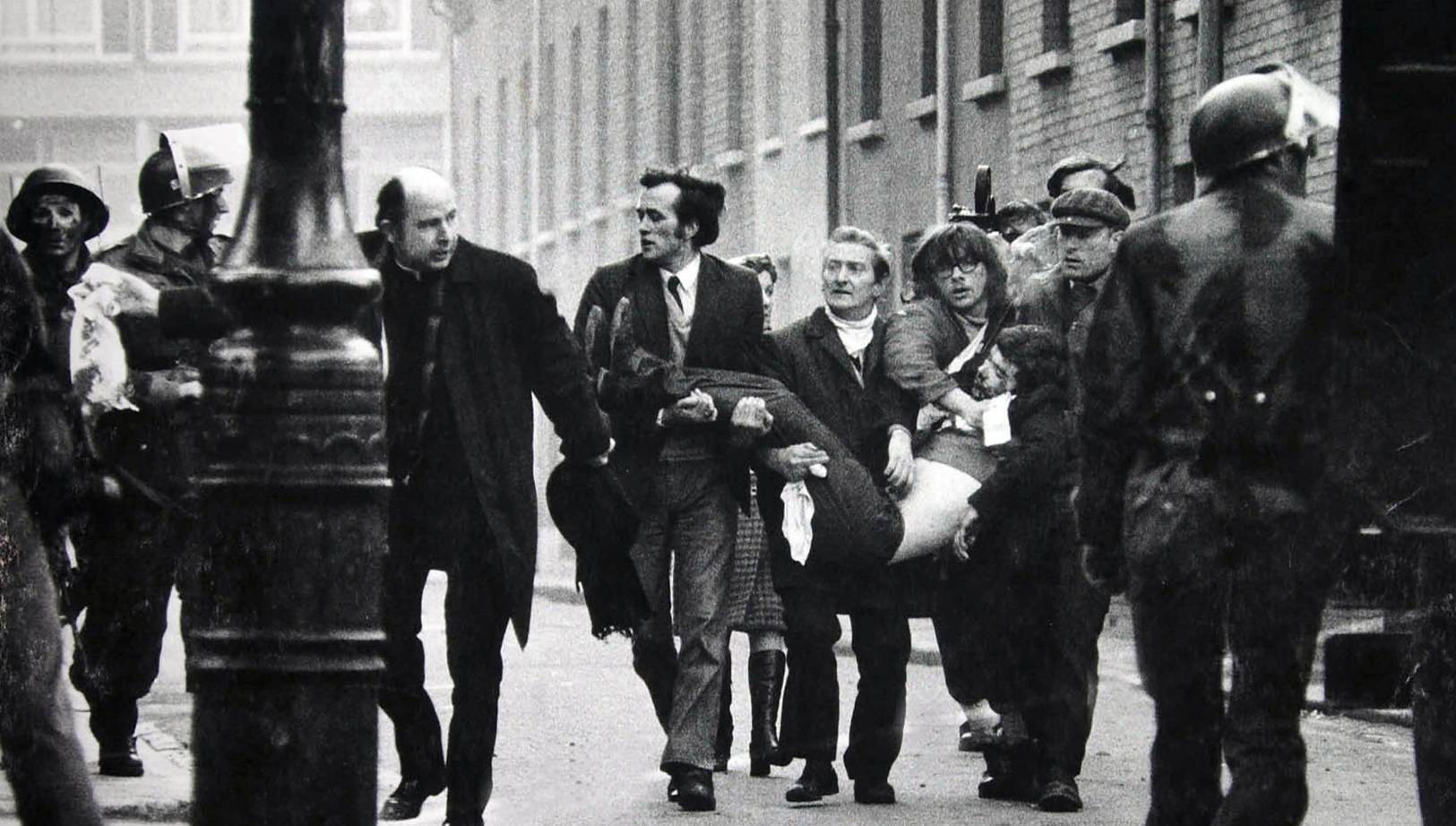
Bishop Edward Daly runs down the street with an injured man in Derry on Bloody Sunday — January 30, 1972.
Today marks the 50th anniversary of one of the darkest days in modern Irish history. This was the day when a peaceful civil rights march in Derry ended in a massacre. Troops from Britain’s 1st Battalion Parachute Regiment opened fire on unarmed marchers, leaving 13 dead and 18 wounded.
On Bloody Sunday does not attempt to either explain or over-analyse the events of the day and the years that followed. Instead, it provides a complete and compelling oral history straight out of the mouths of those who witnessed the atrocity. It includes interviews, access to rare tapes, and material published for the first time.

In common with To a Dark Place by Ken Wharton, which looks at the 30 years of the Troubles, it is one of the first books to concentrate on the survivors and the loved ones of the lost, giving them a voice and allowing them to share their poignant and often tragic stories directly with the reader.

Butcher’s Dozen (meaning 13) was a poetic response to the slaughter written by Thomas Kinsella, who died just before Christmas. In fact, the heavily armed soldiers killed 14 in all, as one further victim died later.
The poem was written in the immediate aftermath of the notorious report by Lord Widgery, which whitewashed the atrocities and concluded that the soldiers were fired upon first.
The publication of the poem came at great personal cost to Kinsella, who recalled later: “There was a considerable loss of readership — a permanent chill in the atmosphere from readers of my work, and from friends. I received a letter from one friend who simply put an end to our friendship. They signed off, ‘No British person would behave in such a way’.”
This continued even after total vindication in the Saville report, which found that it was the soldiers who were the terrorists, not the marchers, and the apology from prime minister David Cameronin the House of Commons, who declared that the killings were “unjustified and unjustifiable”.
The notion that ‘no British person would behave in such a way’ (as to shoot unarmed civilians) was the prevalent attitude among the British establishment at the time. Neither was it considered remotely possible that British police officers would force confessions and then lie about it.

This was exemplified in a controversial judgment in the case of the Birmingham Six in 1979. Lord Denning, the most celebrated English judge of the 20th century, said: “If the six men win, it will mean that the police are guilty of perjury, that they are guilty of violence and threats, that the confessions were invented and improperly admitted in evidence and the convictions were erroneous... This is such an appalling vista that every sensible person in the land would say that it cannot be right that these actions should go any further.”
The men’s convictions were overturned in 1991 after it was shown that the police had indeed done all the things described.
For author Julieann Campbell, chronicling the experiences of the victims and their families must have been a personally painful as well as a necessary journey. Her 17-year-old uncle, Jackie Duddy, was the first person to be killed on January 30, 1972. For more than a decade, she has helped to document and archive the collective experiences of that day.
Campbell’s book is a heartbreaking and powerful tribute to those who were murdered and serves as a poignant lament for the young lives lost on Bloody Sunday, seven of whom were teenage boys.
As Thomas Kinsella put it:
- On Bloody Sunday: A New History Of The Day And Its Aftermath By Those Who Were There by Julieann Campbell
- Monoray, £16.99