Cork In 50 Artworks, No 23: Portrait of Elizabeth Bowen, by Patrick Hennessy
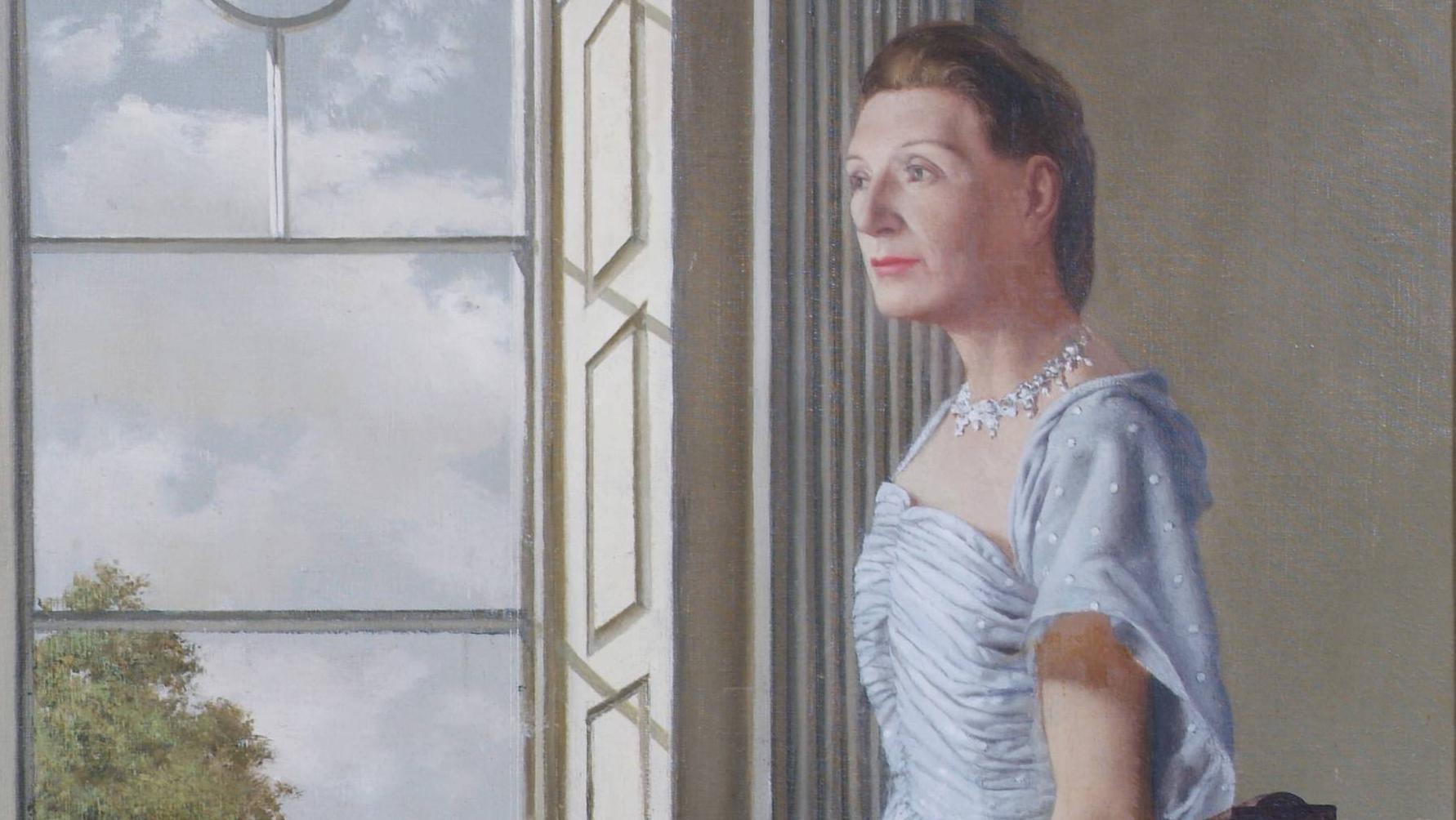
A detail from the portrait of Elizabeth Bowen, by Patrick Hennessy, at Crawford Gallery of Art.
Patrick Hennessy’s Portrait of Elizabeth Bowen depicts the celebrated author on the staircase of Bowen’s Court, her ancestral home near Kildorrery in North Cork, in front of a Palladian window that looks north towards the Ballyhoura Mountains. The painting is dated 1957, though it seems likely that Hennessy had begun work on it a few years earlier.
“Bowen probably commissioned the portrait, though she had very little money at the time,” says Dr Michael Waldron, Assistant Curator of Collections & Special Projects at the Crawford Gallery in Cork, where the painting is part of the permanent collection.
“She was the first woman to inherit Bowen’s Court, but the roof tax was huge, and she was widowed and finding it hard to make ends meet. I think she had an eye on posterity. She didn’t have children, or an heir, so a painting of her in the house must have been important to her.”
Bowen and Hennessy were friends, but their backgrounds could hardly have been more disparate. Bowen came from old Anglo-Irish Protestant stock, and moved comfortably between Dublin, where she was born in 1899, and London, where she mingled with the Bloomsbury set and published acclaimed works of fiction such as the short story collection, Encounters, and the novel, The Last September.
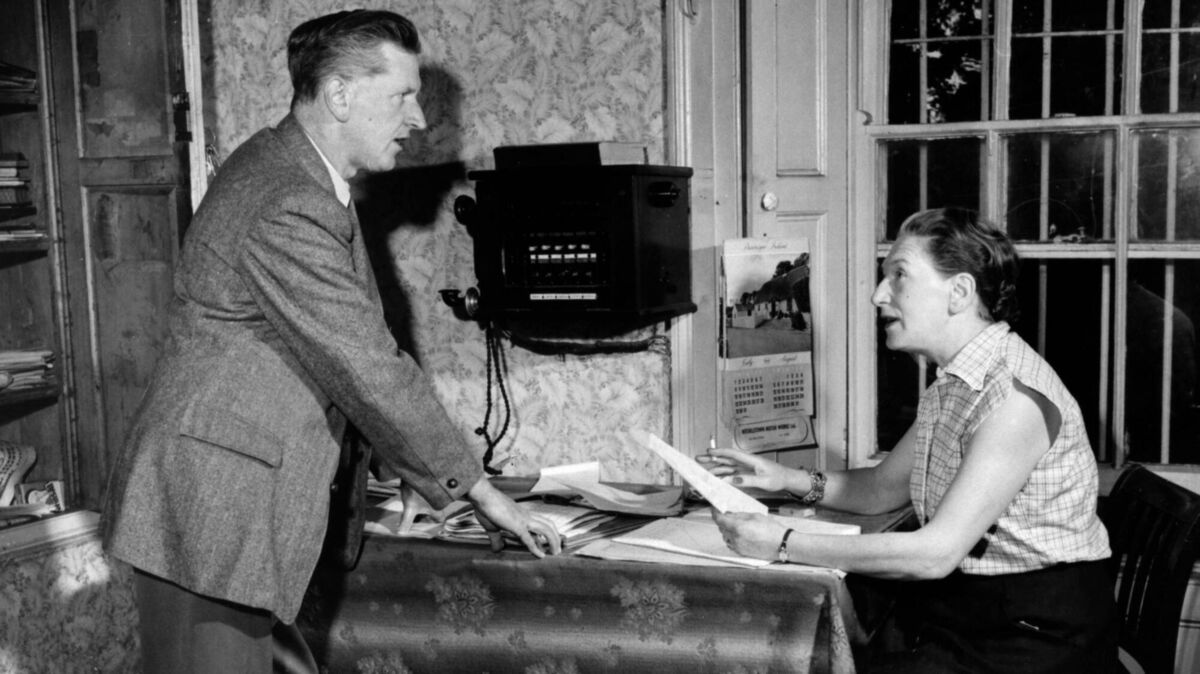
Hennessy, by contrast, had humble beginnings. He was born the youngest of six children, on 28th August 1915 at No 2 Shandon Street, Cork. His mother Bridget Ring was from Fermoy, while his father John was from Listowel, Co Kerry. John Hennessy was a sergeant major in the 2nd Leinster Regiment of the British Army, and died at the Battle of Passchendaele, Belgium in 1917.
Four years later, Bridget remarried, to a Scottish RIC man named John Duncan, and the family moved to Scotland, where Hennessy would attend the Dundee School of Art, graduating with a First Class Distinction in 1937.
Around the same time, he won a Travelling Scholarship, which allowed him to study further in France and Italy. But then, with the outbreak of war, he moved back to Ireland. The country was in dire straits economically, but he somehow prospered as an artist. Within months, he had his first solo exhibition in Dublin, and thereafter, he exhibited regularly with the Society of Dublin Painters and the Royal Hibernian Academy.
“Hennessy was always good at associating with people who would pay him for his work,” says Waldron. “In Dublin, he painted portraits of the children of the German Envoy, Dr Eduard Hempel, and in Cork, he did a number of portraits for the solicitor, JJ Horgan.”
Hennessy was gay, and while a student in Dundee, he had met Harry Robertson Craig. The two reconnected after the war, and set up home together, initially in Crosshaven, and later in Cobh, before buying a property in Raglan Lane, Dublin.
“It’s quite interesting that they could live together at that time,” says Waldron. “They seem to have found a very well-heeled part of society that could accommodate them being a couple, though they were probably more often described as ‘companions’.”
Prominent among their circle were Major Stephen and Lady Ursula Vernon, who kept a Victorian summer home named Fairyfield in Kinsale. Hennessy and Craig were frequent visitors, as was Bowen, and they were soon invited to Bowen’s Court.
Posing for her portrait. Bowen wore a pale blue party dress and a very distinctive necklace. “It’s probably just costume jewellery, but she wore it again during a BBC interview in the 1960s, so it was something she held on to.”
There is, Waldon observes, a lot of tension in Bowen’s stance. “It’s very much like her writing. There’s that sense that something dramatic and unexpected might happen.”
And so it did. Within a few years, Bowen’s circumstances became so reduced that she was forced to sell Bowen’s Court, and the developer who bought it levelled the property in 1960. “I went out there a few years ago. The trees in the painting are gone, and even the foundations of the house were bulldozed over. Bowen said it herself, it was almost as if there had been no house there at all. It was a clean end.”
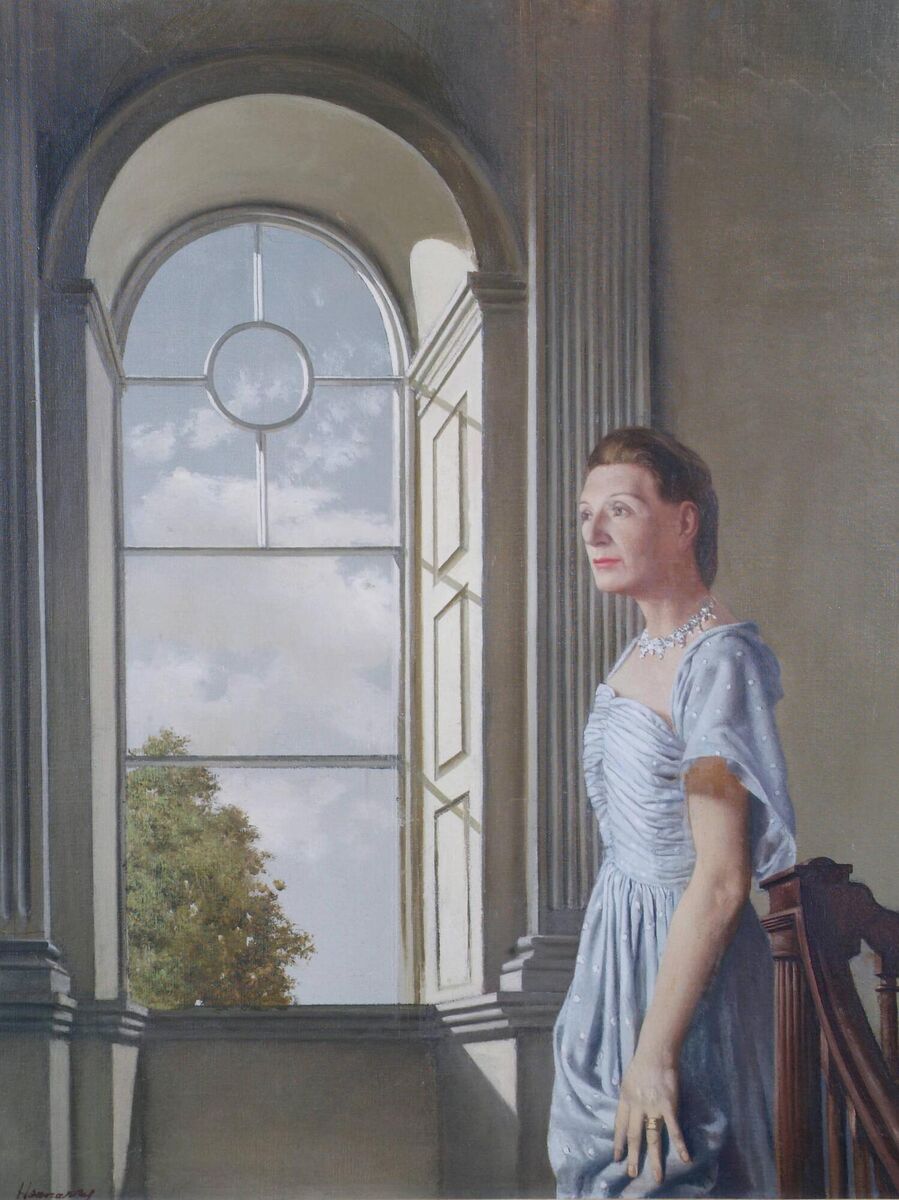
Bowen died in 1973 and is buried in Farahy cemetery, near the old family estate. Hennessy’s portrait of her passed to the Vernons, who later donated it to the Crawford Art Gallery. The painting has featured in several exhibitions at the gallery, and is currently on loan to Doneraile Court.
Hennessy was a heavy smoker, and suffered from pulmonary problems throughout his life. From the early 1960s, he also suffered bouts of pleurisy. He and Craig began spending their winters in Morocco, and eventually moved there. Towards the end of Hennessy’s life, they moved again, to the Algarve in Portugal, but he developed cancer, and died in London in 1980.
Hennessy left his estate to Craig, with the proviso that on his death it should pass to the Royal Hibernian Academy. Their joint legacy has funded the biennial Hennessy Craig Scholarship, an award of €20,000 to an emerging artist under the age of 35.
“The scholarship has been going for nearly 40 years now,” says Waldron. “It supports a whole new cohort of artists. How many painters could leave a legacy like that?”