Taking up the baton
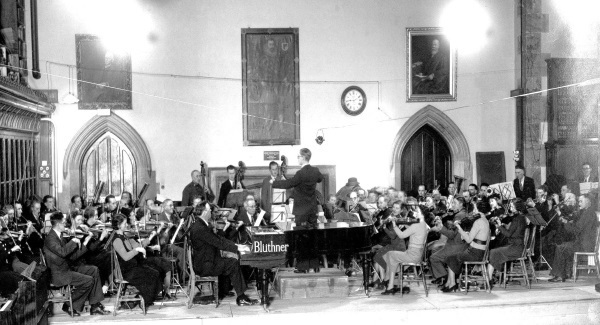
As Cork Orchestral Society marks 80 years of concerts, looks back on the early days of an organisation that’s done so much for music on Leeside.
The Cork Orchestral Society celebrates 80 years of concert experiences in Cork In 1938, as Europe teetered on the brink of World War II, there were shifts in the cultural and political landscape in Cork.
In a year that saw Douglas Hyde elected as the first president of Ireland, the British government handed back control of the military base at Spike Island and a new musical society was founded that was to have a lasting impact on the cultural life of the city.
The new society announced its lofty ambitions in this notice in the Cork Examiner of November 14 1938.
“Music lovers will be greatly interested to learn that a new society has been established for the special purpose of organising a series of symphony and chamber music concerts in Cork each season.
"Under the name Cork Orchestral Society, the concerts produced under its auspices will bring soloists of international reputation to Cork in association with local artists.”
The review of the first concert at City Hall appeared in a March edition under the headline “Big attendance at fine concert”. The tenor, Heddle Nash — “well known and loved in Cork” — was the soloist.
The unamed reviewer tells us that “in each of the songs, Mr Nash was perfect in tonal quality articulation and volume Even at the very end of the hall and under the balcony every word was heard perfectly”.
The reviewer also paid tribute to the conductor Aloys Fleischmann, the driving force behind the new society.
FOUNDING FATHER
Fleischmann’s daughter Ruth is well versed in the early history of the Cork Orchestral Society.
“The first thing my father did when he became Professor of Music at UCC was found a university orchestra. Four years later he set up the Cork Orchestral Society and renamed the orchestra as the Cork Symphony Orchestra. The idea was that there should be a closer link between town and gown and that the music department should serve the city.”
Professor Fleischmann went on to conduct 600 concerts over the near six decades of his stewardship of the CSO earning him a place in the Guinness Book of Records as the world’s most durable conductor.
The European dimension of his vision got a major boost when Sean Lemass initiated the An Tostal series of festivals in 1953 making funds available for cultural events.
Ruth explains: “ In 1953 the society set up links with institutions on the continent which was an anticipation of those that were to come when Ireland joined the EEC.”
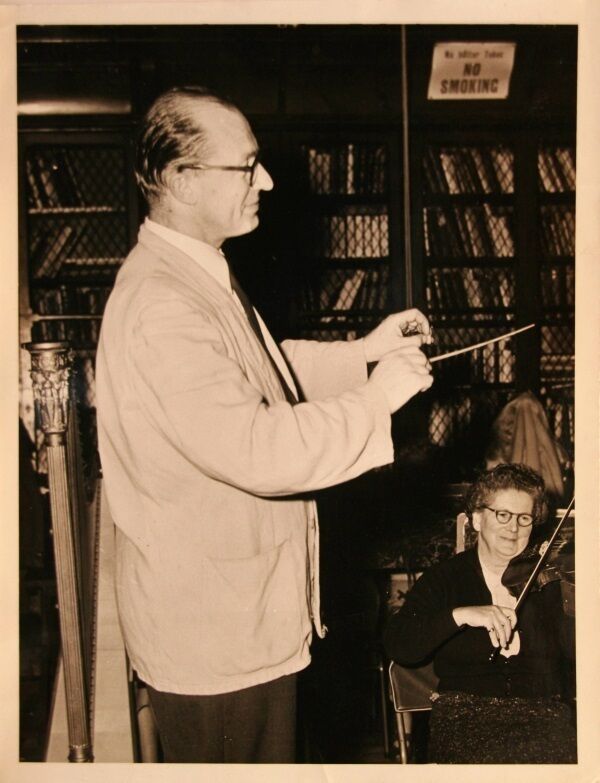
It was a heydey that saw a dozen major international orchestras visit Cork. The Hallé with Sir John Barbirolli, the Vienna Phil, the Boston Symphony along with soloists like Yehudi Menuhin.
“That really was the highlight of the society’s existence. It was quite exceptional,” she recalls.
From the start, the society undertook major campaigns to improve musical infrastruture in Cork. The Cork Symphony Orchestra repeated their concerts for a daytime audience of schoolchildren.
Later, in 1975, the society initiated a campaign to provide a Steinway piano for Cork.
With an abundance of Steinways now housed in the city’s School of Music, it is difficult to believe that as late as 1975, a piano had to be hired from Dublin for concerts.
A thousand subscribers paid an extra pound at five concerts and the following year, a new piano was unveiled at a gala concert at the Opera House showcasing three Cork soloists, Charles Lynch, Darina Gibson and Jan Cap.
The biggest battle the society undertook was the campaign to get a professional radio orchestra for Cork. Despite the support of 42 civic bodies over a campaign that lasted six years, the society did not succeed in its goal.
However, in 1959 as a sort of consolation prize, Radio Éireann appointed a string quartet to reside in the city. Cork enjoyed the benefits of RTE patronage with the Academica and the Vanbrugh Quartets taking on the mantle until the Galway based Contempo Quartet won the tender in 2013.
CHAMBER MUSIC
In addition to symphony orchestra concerts, the society supported chamber music recitals. In April 1939 the Cork Examiner carried a notice of a recital featuring the Kutcher String Quartet at Clarence Hall at the Imperial Hotel.
Also on the bill was Tilly Fleischmann who joined the quartet to premiere a quintet by her son Aloys.
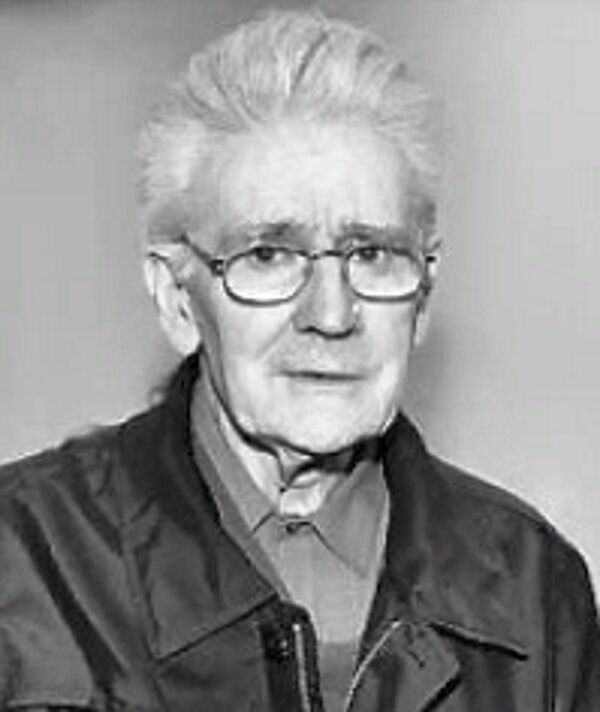
One of the longest standing members of the Cork Orchestral Society is Larry Poland, an electrical engineer who served on the first sub- committee dedicated to promoting chamber music recitals for the Cork Orchestral Society.
Poland broadened the range of programming to include jazz. Looking back over a lifetime of concert going both as a promoter and a punter, he recalls many outstanding events including the inaugural recital of the RTE Academica String Quartet.
“Everyone was in raptures. It was a fantastic concert. They had such a dramatic presence. Even the silences were exciting!”
Pressed for his desert island highlight of a lifetime of concert activity, Poland recalls the series of two dozen lunchtime concerts featuring young artists from each European state at the Crawford Gallery as part of the European Capital of Culture in 2005 as being his pick for outstanding highlight.
What might have society founder Prof Fleischmann made of the cultural scene in Cork 80 years later? His daughter Ruth says he’d have been delighted.
“He would feel it had all been worthwhile.”
CONNECT WITH US TODAY



Be the first to know the latest news and updates

















