Vigilance key for parents as children are most likely to drown in summer
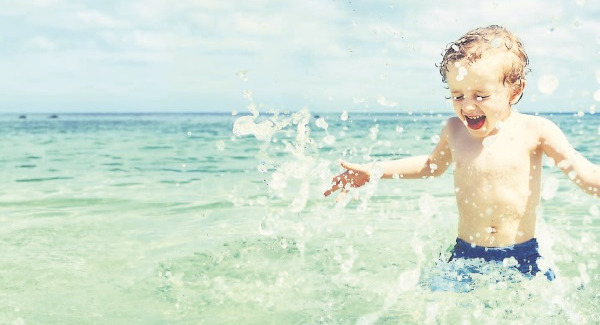
PARENTS need to be extra-vigilant with children around water in summer, whether it’s a paddling pool in the garden, a trip to the beach, or splashing in the swimming pool on a holiday abroad.
According to a report produced by the World Health Organisation in 2014, drowning is the third leading cause of unintentional injury death worldwide, accounting for 7% of all injury-related deaths.
Boys are twice as likely to drown than girls and the most vulnerable are children aged one to four years. Parents should educate themselves and their children about the dangers of water.
Parents need to be as attentive at the poolside as they would be if their child were swimming in the sea.
“Drowning can happen silently, in seconds, and in as little as two centimetres of water”, says Dagny Moor, swimming instructor with Waterbabies Swim School, Cork.
“Accidental drowning results in more than 150 deaths in Ireland each year. Learning to get to the side, hold on, get out or swim, could save your child’s life one day, so we teach vital safety techniques from birth”.
Moor recommends that a child learn to swim as early as possible.
“It’s never too early to learn to swim. Swimming is great for a baby’s and small child’s physical and mental health. It is an activity that can continue into adulthood, to enhance well-being. But, above all, it is the first necessary step to ensure safety in the water,” Moor says.
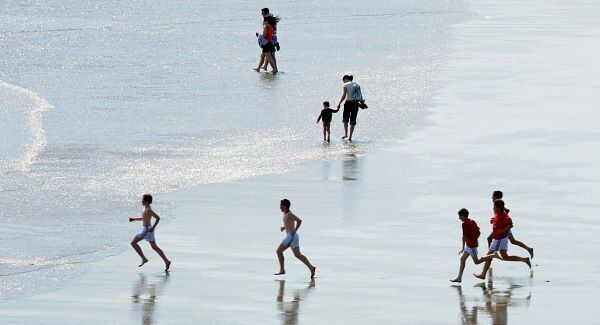
Summer holidays mean days out to the seaside. While we all want to have fun, where there is water there is a potential for danger and risk of injury. Irish Water Safety educate people to prevent drowning and water-related accidents.
When visiting the beach, chairperson of Cork Water Safety, Siobhan Bradley, says it’s important to read the signs. “Check the flags. Never swim where a sign says not to, or when the red flag is flying. If it is safe to swim, only swim between the red and yellow flags. The black-and-white checkered flag means it is safe to surf. Talk to the lifeguard, to know the safe places to swim. Certain beaches have rip tides and some don’t”.
It is important to understand the ebb and flow of the sea. For example, as waves travel from deep to shallow water, they will break near the shoreline. Where waves break strongly in some locations and weakly in others, rip currents are formed.
These currents are narrow, fast-moving belts of water that travel offshore. To identify these types of current, look out for a channel of churning or choppy water, an area of water that is a different colour, a line of foam, seaweed or debris moving steadily seaward, or a break in the incoming wave pattern.
If caught in a rip current, do not fight it. If you cannot escape to swim to shore, float or thread water. If you need help, call for assistance.

Bradley explains the international signal for calling assistance: “If you think you are getting into trouble, make a fist with one hand and put your fist straight into the air. This signals you are in trouble to the lifeguards on the beach, anywhere in the world”.
Young children should not be allowed swim alone and older children should be supervised at all times. Bradley stresses the importance of calling for assistance, if you see a child or adult struggling in the water, and that, where possible, simple rescues are encouraged, so that the rescuer does not get into danger.
Jumping into the water is a last resort and you should only jump in if simple rescue methods fail, or if a baby or toddler is in distress. If you see someone in trouble, the first thing to do is get help.
“Calmness can help anyone panicking in the water, simply talking them towards you. Simple rescues are the best — reaching towards the person, while you lie flat on the edge near the water, throwing a ring buoy, throwing a rope or a piece of clothing, using a branch to pull someone in, throwing a floatable bag to the person, so they can hold on to it, while you wait for assistance. If the incident is more serious, but you have called for help, the lifeguard should have arrived by that time”.
One of the Irish Water Safety campaigns is ‘A stolen ring buoy, a stolen life’. “When you get to the beach, look to see where the ring buoy is. If you find the ring buoy is damaged or missing, email Irish Water Safety or Cork Water Safety and we will contact the council to replace it. You can also visit www.ringbuoys.ie to report missing or found ring buoys,” says Bradley.
Ground rules need to be established from the outset, says Moor.
Young children need to be reminded they are not to get into the water without a parent or adult present. It is important that parents reinforce water rules with their children, before going to the pool or the beach
Irish Water Safety has created an educational resource for primary schools, called PAWS (Primary Aquatics Water Safety). PAWS outline lifesaving guidelines for children of all ages.
Visit www.iws.ie/education for information about teaching aquatics in your local school or to arrange a visit from a trained lifeguard or water-safety instructor.
Four PDF lesson books, PAWS 1 to 4, are available to download, which parents can use to explain the importance of water safety to their children.
PAWS 1 is a learning aid for children in junior and senior infants, and progresses to PAWS 4, which teaches children in fifth and sixth classes about water safety.
Cork Water Safety runs a range of water-safety courses for children and adults in the summer and winter. Instruction takes place in the sea, for the most part, with some classes held in pools. Cork Water Safety also runs a winter week programme, which begins in September.
Water safety tips
1. Never let a child swim alone.
2. Do not allow children to engage in boisterous behaviour that might result in injury or drowning.
3. Do not allow children to dive into water unless someone has already tested how deep it is and checked for any underwater hazards.
4. Do not swim where there are large waves, a powerful undertow or no lifeguard. Always check signs and flags and swim in areas patrolled by lifeguards.
5. Stay sober near water. Alcohol can impair your supervision and swimming skills.
6. Floatation devices on holidays are not a replacement for you, the parent. Close supervision is necessary. Ensure that floatation devices are the correct size for your child and that it is fitted correctly. It is preferable to use a float jacket, woggle or fin, rather than armbands, as they can easily pop off or be pulled off. Practise using devices before use in a pool or at the beach.
7. After a meal, wait at least an hour before swimming in a pool or in the sea. When you do swim in the sea, swim within your depth and swim parallel to the shore.
8. Learn basic life support so that you know what to do in the event of an emergency. Call 999 or 112. Confirm the service you require. Answer the questions. Do not hang up. Do not panic.
CONNECT WITH US TODAY



Be the first to know the latest news and updates

















