How parenting expert Dr Karp is helping new-borns to nod off by themselves
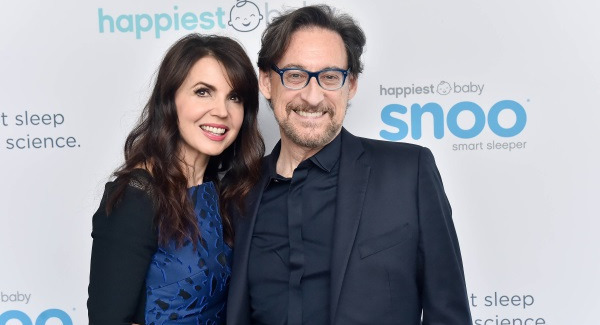
Harvey Karp, the pediatrician, parenting expert and inventor-slash- entrepreneur, cuts an unimposing figure. Lean and agile, with wispy dark hair, blue-rimmed glasses and a bounce in his step, Karp hugs like the Angeleno he has become and deadpans like the New Yorker he once was.
Gray has infiltrated his beard and his eyes are a little hooded, but he still makes for a young 66. He used to dress only in blue button-up shirts with matching sweater vests and bulbous ties in a seemingly self- conscious take on the Nutty Professor, but he has graduated to a darker navy, with slim-fitting jeans, an occasional blazer and a pair of Converse or laceless Vans: his transformation into a hip West Coast chief executive — Prius included — complete.
Karp is the author of The Happiest Baby on the Block, the 2002 book on newborn sleeping and soothing techniques that has sold more than a million copies and remains on Amazon’s 10 best- selling parenting books — a “category killer,” in the words of its publisher. An accompanying DVD, released the following year, is the most watched child-rearing DVD ever.
These days, Karp, who no longer practices medicine, is hoping to capitalize on the trust he has won from parents and sell them on his new product: a $1,160 robotic bassinet called SNOO that he invented with his wife, Nina Montée, and for which they have raised $30 million in two rounds of funding. One Saturday afternoon last summer, Karp found himself riding an empty elevator to the 10th story of a boxy high- rise on Manhattan’s East Side, on a speaking tour to promote the four-figure bed that he is convinced could prevent postpartum depression by improving babies’ — and parents’ — sleep.
The elevator doors opened, and Karp stepped into the Motherhood Center, where women who have postpartum depression and anxiety can take their babies for support groups that cost $25 a session and for full-day therapy treatment. The floor-through space had parquet floors, plush nursing chairs and industrial-size windows.
Karp treats baby sleep like hard science. He argues that babies have an innate ability to be calmed — a reflex, as he sees it. There at birth and universal, it disappears after about four months. Just as with the knee-jerk reflex, “you have to hit the knee hard enough in the right place, or else nothing happens,” he told me.
People have accused me of saying that there’s only one way to calm a crying baby. That you have to do it Karp’s way, or it doesn’t work. It’s not ‘Karp’s way.’ This is physiology.
“The thing with pediatrics is that, for years, we used to say there’s nothing you can do to get babies trained to sleep better,” Karp said. “That you just have to wait three, four months and let them cry it out.” “And?” Catherine Birndorf, a reproductive psychiatrist and co-founder of the center, stopped and turned to him. “Is that true?” “No, it’s not,” Karp replied.
A barely perceptible frown creased his brows, a fleeting look that seemed to convey, I can’t believe I still have to say this. “It turns out that in the womb, babies have cues,” he said.
So what calms babies down? Bouncing them, rocking them, shushing them, enveloping them, letting them suck. These are all imitative of their experience in the womb.
Birndorf told Karp that a pediatrician had recently visited the center and suggested that babies not be put to sleep on nursing pillows or on bouncing chairs — a reversal of previous pediatric guidelines. The advice of parenting experts — many but not all of whom are doctors — kept changing, she complained.
Karp nodded at Birndorf sympathetically. That he is one of those experts, peddling parenting products, didn’t seem to discomfit him.
Karp doesn’t try to defend the parenting industry, or himself. Unlike other parenting books, Karp’s doesn’t feel preachy or berating. His tips can be applied just as easily by fathers as by mothers, and his pragmatic advice and suggested baby schedules don’t feel like more than what they are: suggestions. But as I trailed him on his rounds, his suggestions invariably seemed to crescendo toward a pitch.
“Well,” he told Birndorf, “this is where they would use a SNOO.”
Karp grew up in Queens with two older sisters in a family he describes as Jewish but not Orthodox, Democratic but not political. By his second year at the Albert Einstein College of Medicine, Karp knew that he wanted to care for children, whom he considered more “optimistic and resilient” than adults.
In the early 1980s, he began working at UCLA hospital’s child-abuse team. He watched as babies were wheeled into the hospital in the middle of the night because their parents didn’t know how to soothe them or had badly shaken them when they screamed uncontrollably. This issue of infant colic — of otherwise healthy babies who cry for more than three hours a day, at least three days a week, in the first three months of life — gnawed at him, and he immersed himself in books on evolution and anthropology.
Karp developed his concept of the “missing fourth trimester”. Human babies are born about three months prematurely, the theory goes, because their heads, which grow rapidly, need to be able to fit through the birth canal. Karp insists that this explains why during the first months of life, babies can be lulled back into a womblike “trance” through the use of certain cues that Karp calls the 5 S’s: a combination of swaddling, shushing, placing the baby on her side or stomach, swinging her and letting her suck. He noticed that for each baby the “symphony of sensations” was slightly different — some babies needed extra movement, others a light jiggle — though all the infants responded well to swaddling, even if they seemed resistant at first.
By the early 1990s, Karp was running his own clinic, with a playground out back, and eventually he hired four pediatricians to work with him. He became famous for what were then unconventional methods for bonding with infants. Deena Goldstone, the mother of one of Karp’s first patients, remembers Karp suggesting that she swaddle her newborn at night, “which I thought made no sense,” she told me. Karp also advised Goldstone’s husband to hold their baby against his bare chest, in what doctors now tout as the importance of skin-to- skin contact. As his reputation grew, Hollywood celebrities took their children to see him — he treated the kids of Madonna, Michelle Pfeiffer and Larry David.
He also had a new family. He and Montée met at a party in Hollywood in 1991, when he was 40, divorced with no children. She was 11 years younger, with a seven-year-old daughter, Lexi, from a previous marriage.
Karp appeared to her so unassuming that when he told her that he took care of the hosts’ son, “I thought, Oh, he’s their ‘manny’, ” Montée told me.
In 2000, a famous actress brought in her young son to see Karp. She was accompanied by her baby nurse, a British woman named Tracy Hogg. Karp demonstrated his methods for soothing babies, including swaddling and his theory about the calming reflex. About six months later, he says, he heard that Hogg was working on a manuscript about how to calm a baby. That book, called Secrets of the Baby Whisperer, went on to become a best seller later that year: “You have to re-create the womb,” it advises, before going on to recommend swaddling infants tightly. “It had nothing to do with my stuff,” Karp said diplomatically. “But it got publishers interested.” Karp got to work on his own book, wanting to document his techniques for calming crying while promoting a more lenient approach. He visited his patients at home in order to test out his theories.
“I needed to understand, When does it not work?” he said. “I needed to see it in the wild.”
Karp ended up securing a $1.1 million advance for The Happiest Baby on the Block, along with a sequel for toddlers. A segment on Good Morning America in 2002 helped cement Karp’s success, and Montée had the idea of bringing the book’s testimonial sections to life by recording Karp’s interactions with his patients on DVD. Their timing couldn’t have been better. The Happiest Baby on the Block came out just as parenting literature was undergoing a transition of its own.
The issue of baby sleep was particularly contentious. In 1985, Dr Richard Ferber, who founded what is now known as the Sleep Center at Boston Children’s Hospital, published a sleep manual so popular that his name became a verb. To “Ferberize” is now synonymous with letting a child cry it out (even though his book doesn’t quite advocate that).
The soaring popularity of sleep guides may have been propelled by an observable, objective deterioration in baby sleep, which can be traced back to a single year, 1992, when the American Academy of Pediatrics, upon reviewing research on sudden infant death syndrome, or SIDS, came out with the recommendation that parents put babies to sleep exclusively on their backs in the first year of life.
Champions of “hard” advice became known as parent-centered. They inveighed against the 1993 Baby Book — the bible of child-centered parents, written by William and Martha Sears, a pediatrician-and- nurse couple and parents of eight children.
Karp’s manual represented a welcome middle ground. “I try to be an omnivore and just reflect on each issue and judge it on its own merit or lack of merit, but I’m much closer to the Dr Sears approach,” he said.
He includes sections in his books on weaning — from swaddling, pacifiers, rocking — even as he dismisses professionals who warn that children could become addicted to these crutches. (“Are we ‘addicted’ to sleeping on a bed with a pillow?” he retorts.)
Karp’s manner is open, engaging, empathetic, inviting confession; ask him about his work, though, and he changes.
“Nobody else noticed this stuff in the whole world!” he told me at the end of dinner one evening when we talked about the 5 S’s. “No one knew about swaddling. Nobody knew about sleep.” As The Happiest Baby on the Block began to take off, Karp left his pediatric practice and with Montée turned the “Happiest Baby” into a franchise that now includes three books, two DVDs, a line of swaddles and white noises for purchase on iTunes, as well as SNOO, which rocks and plays white noise continuously and has sensors that respond to a baby’s cry by changing intensities; it keeps the baby swaddled and fastened inside the crib and can be controlled from afar on a smartphone.
Karp earnestly compares the $1,200 bassinet to the advent of penicillin — “I’m not here to promote a product, but I am saying if someone developed penicillin, wouldn’t it be important to tell people about it?” — and insists that it can save lives by stopping babies from rolling into an unsafe position in their sleep.
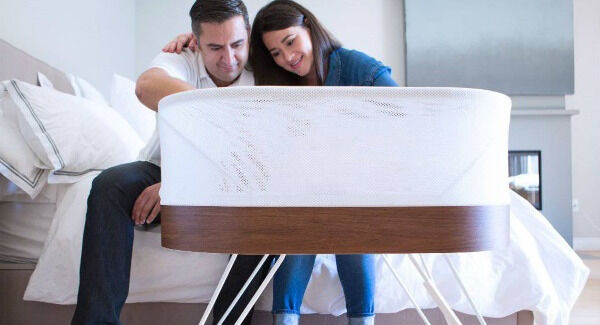
So far, 30,000 beds have gone into production, and of those, some were given free or at a steep markdown to social “influencers” — a far cry from Karp’s days of working with abused children. Karp says he hopes to take SNOO beyond the gated precincts of Los Angeles and Silicon Valley: “Once we get medical studies, we can get insurance companies and employers to subsidize this. It will be like breast pumps ultimately. That’s the goal.” Other “Happiest Baby” innovations can be viewed as truly helpful or slightly ominous, depending on your level of credulity.
“Hey, love!” Karp called out to Montée as we walked through their house on a recent weekend afternoon. Part of the appeal of Karp’s methods for calming babies was that they didn’t require anything fancy, not even the pre-made swaddles that are sold today — any old blanket would do. As he himself noted in his book, “For thousands of years, the most skilled parents have used the 5 S’s to soothe their babies.” Now he was suggesting that, actually, the best way to improve your baby’s sleep required splurging on a sensory bed. Effective as his invention may be, its forbidding price reflects an old-fashioned idea: that child rearing is inherently tied to social status, that you have to spend in order to care.
As the sun began to set over the ocean, the light glinting on the water like sequins, Karp and Montée still had a long night of work ahead. “We can stay up more than any youngsters and do — how do you say? Overnighters?” Montée said.
In the coming months, they would launch SNOO in China, and Karp would go on the Home Shopping Network to advertise it. For him, though, that was just the beginning. He mused about Gutenberg’s invention of movable type and how his contemporaries had been alarmed that people wouldn’t memorize anything anymore because of it. He chuckled. “You can’t get in the way of progress,” he said. Then, standing by the patio with his hands in his pockets, he put it differently: “The idea is that I could be in every nursery in America.”

CONNECT WITH US TODAY



Be the first to know the latest news and updates

















