The poster art used to promote early Irish tourism
Ireland, mid-1960s, poster art in tourism went into a decline.
The move toward colour photographs and television advertising dominated the industry in which the commissioning of artists declined.
This move sounded the end of the high quality pictorial poster used to promote Ireland in the early days of our tourism sector.
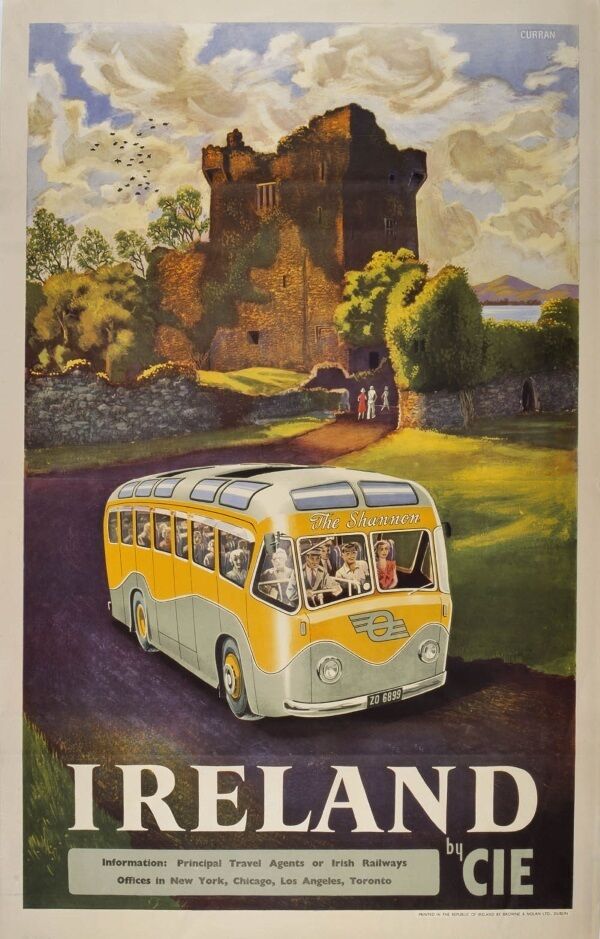
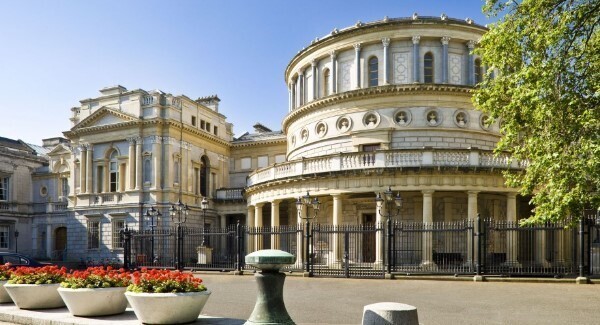
The National Museum of Ireland - Country Life has made a fascinating collection of these early travel and tourism posters.
The collection is available to view online for the first time.
The posters which form part of the National Folklife Collection were previously displayed in the exhibition Come Back to Erin: Irish Travel Posters of the 20th Century, which was curated by the late Dr Séamas Mac Philib, at the National Museum of Ireland.
A number of the posters feature images which were promote throughout the 1900s and have become iconic representations of a romantic Ireland.
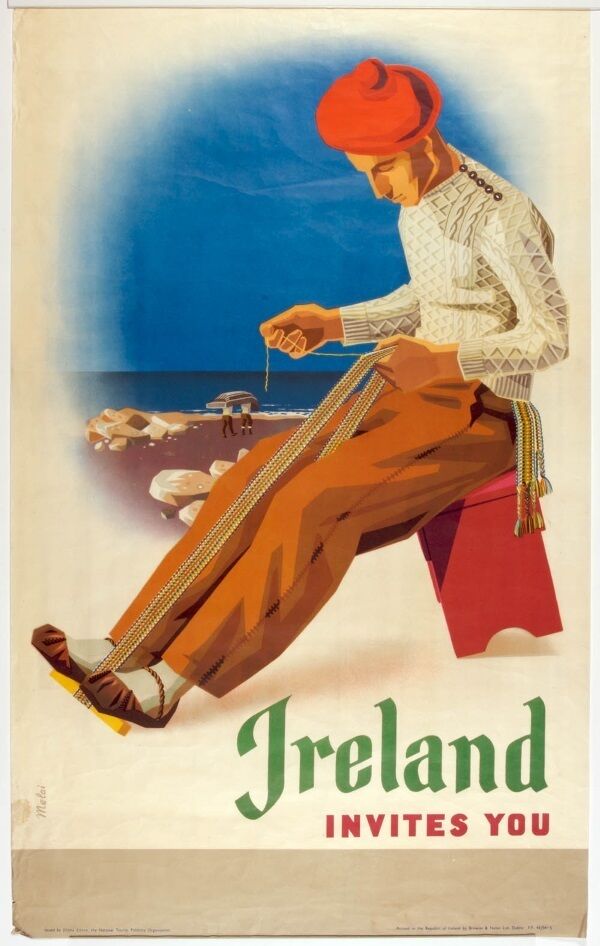
The National Museum of Ireland collected the posters to help inform the story of Irish folk culture from 1850 to 1950.
Part of the museum’s display addresses the question of why Irish life in the 19th and 20th century is romanticised rather than representative of the reality of what life encountered in Ireland at that time.
Some tourism companies commissioned well-known artists of the day to create images for their pictorial posters.
Belfast artist Paul Henry’s poster scenes became iconic, well-known images of Ireland.
View of Connemara (1926) and Lough Derg (1927) became best sellers and gave Paul Henry a popular name within the industry.
The largest Irish railway company, Great Southern Railways, was quick to commission well-executed posters in the 1920s also.
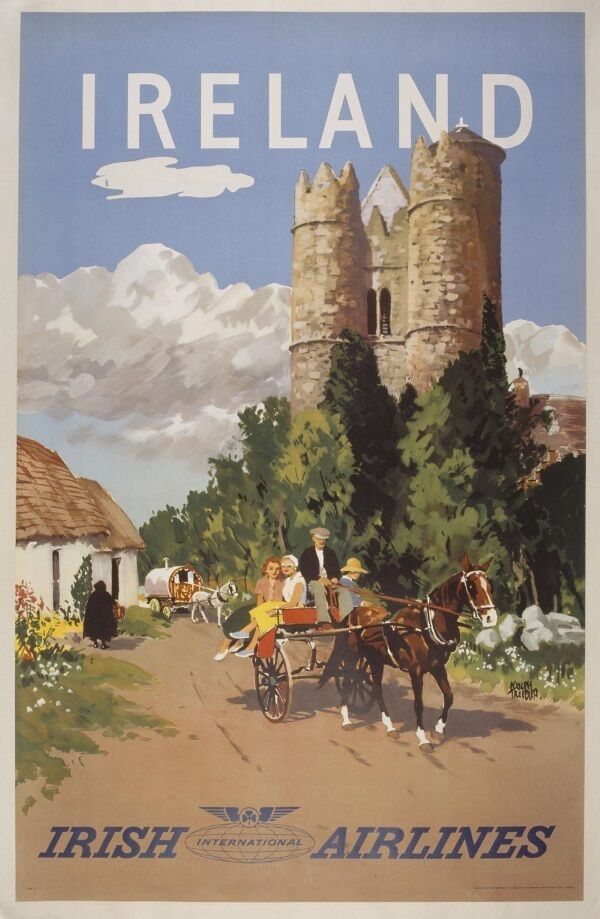
Its main artist was Walter Till and several of the GSR posters were of renowned tourist locations, such as Glendalough, Killarney, Connemara and Killiney in County Dublin.
The images are similar in many cases, featuring upland well-proportioned landscapes, skies, lakes and coastlines.
The undeveloped nature of society that existed in Ireland during this time period which had serious economic implications, failed to represent an Irish Arcadia - the idea being to create an attractive marketing image.
Noel Campbell, Assistant Keeper at the National Museum said:
“While obviously beautiful in terms of their artwork, these travel posters demonstrate that independent Ireland was partly responsible for fostering an idyllic and simplistic image of Irish life which we know was far from accurate for many.
“These posters will no doubt be of interest to our home market but also to the Irish diaspora, many of whom left Ireland during the period covered by the posters, and so it was important to make them available for viewing online.”
The collection of posters is available to view online here.
CONNECT WITH US TODAY



Be the first to know the latest news and updates

















