Ageing with attitude: How a breast cancer diagnosis turned a journalling hobby into a lifeline
How do you go through all the “stuff” that life throws up for you? Do you talk? Do you walk? Do you draw? Do you pray? Do you look for a book? Do you journal?
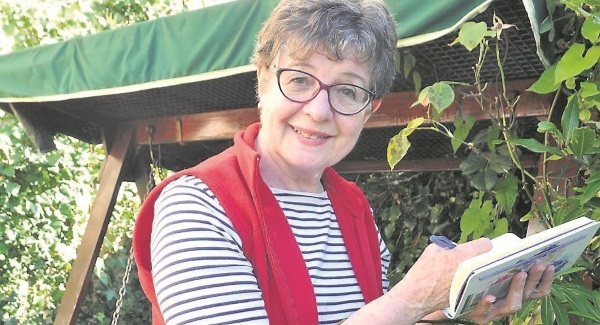
When 71-year-old Anne Alcock was diagnosed with breast cancer, she engaged with all of those things, but it was the journalling, which she has been doing since the age of 12, that has led to her new book, Cancer, A Circle of Seasons: A Way to journal and pray through life’s challenges.
The beautifully written reflective account of that recent journey includes sharing many personal moments with us, such as when she first notices her bra strap irritating her, to diagnosis: “With a thud of stunning truth in my chest, I feel instantly conveyed into a huge human sisterhood. So, it is breast cancer.”
Those early incidents are in spring and we travel through the cycle of the four seasons with Anne, as each honest revelation unfolds. In the practical telling of a day’s experience, such as in the appropriately named The Mammogram Squeeze (a title which most women would smile at in recognition), she tells how when she once tried to describe the procedure to a friend “he visibly winced”, which was “a most appropriate response”.
Plenty has been written and some studies done, on the benefits of journalling, including freeing the writer up to tap into and release emotional expression, in sickness and in health.
A US study published in 2008, by Nancy Morgan, at Georgetown Lombardi Comprehensive Cancer Centre, in Washington DC, found that even one 20-minute writing session may be sufficient to change instantly the way people with cancer think and feel about their disease, and that this still had a beneficial effect on the person’s quality of life three weeks later.
For Cork-based Anne who is a spiritual adviser and psychotherapist, writing has helped her keep a record of her own life since she first encountered The Diary of Anne Frank, at the age of 12.
“I started “proper” journalling then and have kept a diary every year since,” she says. “Do I have them all? Sadly at 19 I went for the cull and threw away all my teenage jottings; likewise at age 40. So perhaps every 20 years I start afresh so to speak!”
In the earlier years, it was more about a recounting of the daily doings. “But when I entered midlife and it became about “being” as well as doing, there were spaces between entries. I wrote in little clusters of days, then a gap, but always at least twice within a week.”
Journalling therefore, was already interwoven into Anne’s everyday life when the extraordinary struck; the shock of her breast cancer diagnosis. Like an old friend writing offered support: “It allowed me to stand back, breathe and observe — a bit Zen, if you like. I was able to see more of the process, the context, other people, the curious and the humorous.”
It’s that standing back — her storytelling ability, which combines her being the participant and the clear observer, that will undoubtedly speak to those who have had cancer in their lives, but will also offer unique tender and clinical insights, to those who have not.

In the book, at the end of each little personal story, she invites readers to journal themselves, beginning with the entreaty: “Just one word or sentence might be the one that opens the way for your own journey, inwards and onwards.”
She clarifies that further by saying: “The journalling questions are always basically: Where are you? Where have you come from? Where are you going?”
Her own spirituality is represented too, in each personal prayer complementing the various topics, such as in relation to the story ‘My Hair’s Gone’: “Lord, I have given my hair a bad press all my life. Too curly, too thick, when I wanted straight and sleek. Well, it’s all gone now. I believe it will return. I trust it will return. How? Will I have turned grey? I am finally engaging with loving my hair, however and whenever it returns, and meanwhile also loving my not-a-peanut head.”
In a broader sense, the prayers represent that journey inwards that journalling embraces. “I believe we do all have it in us to turn to an inner wisdom within ourselves which can bring insight, truth, and peace — whatever we term it,” says Anne.
She mentions the famous quote by Holocaust survivor Viktor Fränkel. “There is one freedom, the last of the human freedoms — to choose one’s attitude in any given set of circumstances, to choose one’s own way.”
Journalling can be one route to explore and channel our responses, especially when a major life challenge erupts. This book proves the point, while still inviting the reader to embark on her/ his own unique inner journey.
- Royalties from Cancer A Circle of Seasons: A Way to journal and pray through life’s challenges, €12.99, published by Curragh/ Columba Press, go to the Irish Cancer Society; Kerry-Cork Cancer Healthcare Bus; Recovery Haven, Tralee and Breakthrough Ireland Cancer research, Cork.
CONNECT WITH US TODAY



Be the first to know the latest news and updates














