Mater Private: Every minute counts after heart attack
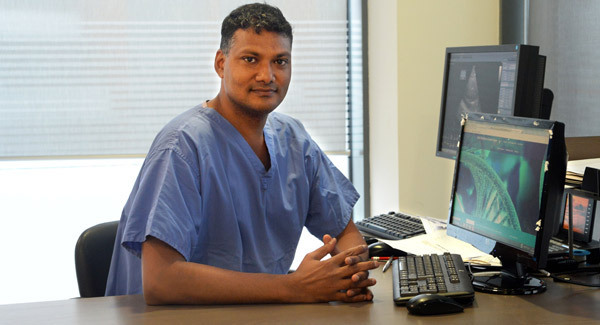
Dr Mahesh Pauriah is one of five consultant cardiologists at Mater Private Hospital, Cork. He and his colleagues understand the serious impact of heart disease on those affected and their families.
In Ireland more than 5,000 people die from cardiac arrest every year, as many as 15 people per day.

Some 70%-80% of cardiac arrests are witnessed by friends, family, and colleagues, which can be a traumatic experience. However, witnessed cardiac arrest allows for the potential to save a life.
Cardiac arrest is where the heart suddenly stops beating due to disease of its blood vessels (coronary artery disease) and other conditions, including inherited abnormalities.
Last year, just 7% of people in Ireland survived an out-of-hospital cardiac arrest. In contrast, there are parts of the US where as many as 40% survive.
Ireland is a predominantly rural community with many living significant distances from hospital and access to emergency paramedical help.

Ambulance and paramedic assistance may be more than 30 minutes away once the call for help has been made. The result is a poor survival rate.
In emergency terms, we talk about the ‘chain of survival’ where every minute counts and early treatment can save a life.
In cardiac arrest, the three major steps to survival are early access, early resuscitation, and early defibrillation.
Every minute that passes, the chance of survival from cardiac arrest drops by 10%.
Dr Pauriah says that if you witness a cardiac arrest don’t delay, call for help, phone an ambulance, or get someone to do it for you — the earlier you get access to professional help the better the chance of survival.
Early resuscitation will buy precious time and increase the affected person’s possibility of recovery. Resuscitation involves opening the airway and pressing hard and fast on the chest to pump blood to the major organs and in particular the brain.
Everybody should learn the techniques of chest compression and CPR (cardio-pulmonary resuscitation), although we hope we will never need to use it, it makes all the difference.

Early defibrillation in a significant proportion of cases will save a life.
Many out-of-hospital cardiac arrests involve the heart suddenly developing an abnormal rhythm — we call this fibrillation, and when it affects the main pumping chamber of the heart, no blood is pumped around the body, rather the muscle is in a cramp-like state and does not create blood pressure necessary to sustain life.
A defibrillator works by giving a pulse of electricity to attempt to correct the abnormal rhythm and return the electrical wiring of the heart to a normal organised state. In the community, the device used to do this is called an AED, automated external defibrillator.
In Ireland, groups of people have got together and developed ‘first responder’ teams.
They comprise unsung volunteers living in our communities, our neighbours and friends who have undertaken training in basic life support and use of AED.
When you witness a cardiac arrest and dial 999 or 112 for help, a trained first responder may be the first person to arrive and they will have the skills to make a difference.
We have a long way to go to reach the survival rates in America but every year with the support of the HSE and the Pre-Hospital Emergency Care Council, more and more people are signing up and getting training in these lifesaving skills.
Around our rural communities, AEDs are appearing at easily accessible points and on sports grounds so the responders can collect them promptly.
If you want to join a network of first responders in your community or don’t have one and want to set one up visit Community First Respond network’s website — www.cfr.ie — and start the process.
Make a difference: Learn basic life skills and how to use an AED because when minutes count these are the skills that will make the difference.
- www.materprivate.ie/cork












