Book review: Crime or Compassion?
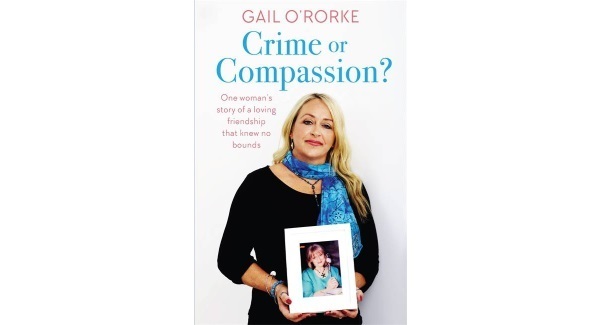
ON June 5, 2011, Gail O’Rorke and her husband Barry checked into the River Court Hotel in Kilkenny. They were upgraded to the Earl of Ormond suite thanks to a call that her friend since 1998, Bernadette Forde, had made to the hotel.
After going for a walk around town, they had dinner at the hotel restaurant before heading back upstairs and watching The King’s Speech. Gail knew she wouldn’t sleep well that night, and after tossing and turning from 4am, she woke at 8am.
On June 6, 2011, Gail got a call from Bernadette’s neighbour that she had died. It did not come as a shock.
“At last she was free; she had escaped the body she had grown to hate so much,” Gail writes in her memoir Crime or Compassion? “She had achieved her ultimate goal: To die with dignity.”
On November 19, 2013, Gail O’Rorke became the first person in the State to be charged with the crime of assisting a suicide.
Gail was born on May 14, 1971, and over the first two chapters of this powerful book, tells us of her “monster” father, a master of mind manipulation, and a mother of whom “a huge part of me actually looked forward to a life without”.
She fell for Barry and about 13 months later, they had a baby. Barry went to tell Gail’s mother the good news, but she didn’t congratulate him — instead she dug out old love letters that Gail’s ex had sent her while in Lebanon and forced Barry to sit while she reads them out.
“It really showed us how dark her mind was.” Gail worked as a cleaner and one of her clients was Bernadette Forde, a HR manager at Guinness, and 12 years her senior. Their ensuing friendship shines off the page.
Gail writes in a plain yet affecting prose, describing how Bernadette’s illness, primary progressive multiple sclerosis, forced her to retire from the job she loved, which broke her heart.
Bernadette is wiser and worldlier than Gail, a great giver of advice and support.
Around late 2006, early 2007, Bernadette, a practical, matter-of-fact person, told Gail about Dignitas in Switzerland, where people can go to avail of an assisted suicide, and of her intention to one day use its services.
On February 11, 2008, Bernadette, still well enough to drive her Toyota Yaris around Dublin, decided to take Gail for lunch.
“It all happened so quickly that there was very little time to react”: Bernadette slumped forward with her foot on the accelerator and they crashed into a concrete wall of the carpark.
Gail suffered a litany of injuries and had to undergo surgery while Bernadette, whose right leg had been stuck straight out and had taken most of the impact, fell into a coma. After recovering, she was told she must use a wheelchair and Gail decided to become her carer. She dropped from a size 26 to a 12, and talked more frequently about Dignitas, upsetting some of her sisters, though her brother took it better. Bernadette said she just wants them to “put me down and post me home”.
As her health deteriorates, she feared she wouldn’t be able to drink the lethal dose at the Swiss clinic, so they hatched their plan, the resourceful Bernadette making a file of paperwork in a folder titled ‘for the gardaí’ — she wanted to make it clear that taking her life was her choice and hers alone — and recorded a ‘suicide note’ with a dictaphone.
They book the trip with a travel agent, but when Gail went to collect their tickets, she was met and questioned by the gardaí. Gail had told the agent what the purpose of the trip was, and fearing legal ramifications, the agent had told the gardaí.
Bernadette was distraught that her plan has fallen apart but contacted Tom Curran, a prominent campaigner for assisted suicide to be legalised. She ordered Nembutal, a substance that is banned in Ireland. When it arrived, after Bernadette had planned her
own funeral and the three songs she wants played (‘Living Doll’ by Cliff Richard, ‘My Favourite Waste of Time’ by Owen Paul, and ‘Take it Easy’ by The Eagles), she hugs the box and cries.
Gail writes: “It was the calmest and happiest I’d seen her since that devastating day when Dignitas was cancelled.
“I had witnessed the daily struggle, the fear, the discomfort, and the relentless pain she had to endure. I watched this beautiful, energetic, vibrant woman as she was crushed by what she described as her ‘tortured shell of a body’.”
Gail and her husband made their plan to travel to Kilkenny for the night of June 5, 2011, so there would be no question of their involvement in the case.
There was a sense of relief for all concerned as Bernadette Forde, aged 59, achieved her goal of dying.
After months and years of ensuing interviews with gardaí, one of the detectives who has been questioning her called and told her: “Gail, I’m so sorry. They have charged you.”
Such reluctance is replicated across the prosecution’s subsequent case. She faced three counts: Booking the travel tickets to Dignitas; ordering the Nambutal; and the making of Bernadette’s funeral arrangements. From here, Crime or Compassion? details the hardships of a defendant, from selecting her legal team to hearing that Bernadette’s sister, a devout Catholic, had written a scathing personal assessment of the carer, though it was later retracted.
We read about the literal trials of people every day, but we rarely hear of their other tribulations: The trial is delayed and adjourned, Gail running the gauntlet of the press photographers, having a brief aside with one Sean FitzPatrick.
Gail recalls her family getting used to the courtroom and the long days of testimony.
The judge has to tell Gail’s sister-in-law: “You there, put your knitting away. Where do you think you are? You are in a court of law, not at the base of a guillotine.”
Diarmuid, one of Gail’s legal team, reassures his client that if the jury finds her guilty, then he’s going to go to Dignitas himself. There is relief, joy, and tears when Gail is cleared.
Irish Examiner journalist Michael Clifford, in his analysis of the court’s decision in this newspaper, wrote: “The case must surely ratchet up pressure on the legislature to deal with the matter. Issues of conscience, like this, have long brought out the most cowardly aspect of the body politic. Action is consistently avoided, lest some small but vocal section of the electorate kicks up blue murder.”
Almost two years on, however, the situation has not changed all that much. Euthanasia and assisted suicide are still illegal under Irish law.
Independent TD John Halligan is still seeking to have his right-to-die bill adopted by the Government.
Crime or Compassion? Is not a particularly political book. It details the travails endured by a woman, in her right mind but an ailing body, suffering from a disease that was only going to become more debilitating. It tells of a friend who just wants to help.
The title of Gail O’Rorke’s memoir is a rhetorical question — the answer is obvious.

CONNECT WITH US TODAY



Be the first to know the latest news and updates

















