Meet some of Ireland's homegrown heroes
While we are low on cattle-ranchers to lasso thieves we have no shortage of homegrown heroes, writes Rita de Brún
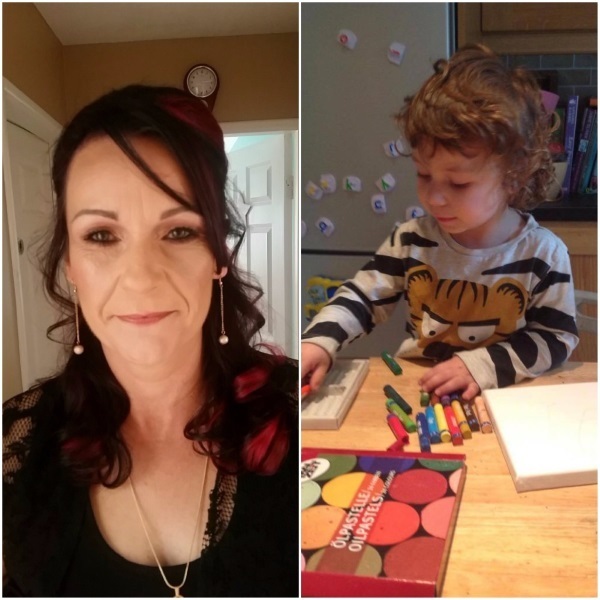
Cobh mother-of-13, Maria Foley, aged 44, who rescued three-year-old Caleb Watters when he fell into the River Lee near Brian Boru Bridge in Cork City last year

When going to the rescue of strangers, Good Samaritans don’t usually morph into modern day urban cowboys. But that’s what happened at a Walmart parking lot in June. A bike had been stolen and the owner, having chased the thief, was watching him getting away. Unwilling to watch and do nothing, a cattle-rancher jumped from his van, led a horse from his trailer and went galloping — Indiana Jones style — after the rogue.

The thunderous clatter of fast approaching hooves on cement and the terrifying whirr of a rotating lasso slicing menacingly through the air, alerted the hapless crook that his getaway was about to be terminated. When the Oregon cops arrived, the feet of the thief were bound neatly with the rescuer’s rope.

While we’re low on cattle-ranchers here in Ireland, we’ve no shortage of heroes. In May 2016, Cobh woman, Maria Foley, jumped 20 feet into the River Lee and saved the life of a three-year-old child who had fallen into the water. In March, Donegal man, Davitt Walsh, swam to a sinking car off Buncrana pier and rescued the baby girl thrust into his arms by another hero — her father. According to Walsh, Sean McGrotty could have saved himself but on delivering his youngest to safety, opted instead to return to the sinking car in which other family members were trapped.

We’d all like to think that like these brave individuals, we’d have the will and the gumption to come up trumps for others in their time of need, but the odds are low of us ever finding out whether we have what it takes or not.

Sometimes coming to the rescue of others is an obligation, not an option. Irish courts have implied a duty to act in cases where a ‘special relationship’ exists between the parties. Some of those for whom failure to intervenemight leave then open to liability, include parents in regard to their minor children, employers and their employees, land owners and those on their land, transport carriers and their passengers and hotels and their guests.

For the most part, individuals break no laws in Ireland if they choose to look the other way when a stranger is in trouble. Author of Principles of Irish Torts, John Healy SC, explains the Irish legal situation: “In common law countries such as the UK and Ireland, the law is generally slow to impose enforceable legal duties as between complete strangers; even in cases of emergencies in public. This has always been justified by the view that though strangers may owe each other moral duties, they do not owe each other legal duties to intervene in each other’s affairs.

“The approach has also been justified by the view that, where a stranger decides to intervene, he is no longer a ‘stranger’ in the eyes of the law but becomes an intervenor who owes a legal duty to be careful in the course of his intervention and who may therefore be sued if his intervention accidentally causes further injury. The Civil Law (Miscellaneous Provisions) Act 2011 confines the potential liability of such intervenors to cases where they cause injury by intervening in bad faith or with gross negligence.” While most common law countries don’t recognise liability for deciding not to act to rescue a stranger, John Healy says the situation is different in many civil law jurisdictions, such as Quebec in Canada and much of the rest of the EU. “There, legal duties to intervene are indeed imposed by the law, in cases of medical emergency.”

When intervening we should be aware that if we advise in advance that we have skills — medical or otherwise — that could be relied upon, a court might decide that the duty of care we owe to those relying on our skills is higher than it might otherwise be.

When it comes to the traits typical of those who carry out heroic deeds, research indicates that sex and social status play a role, with men being more likely to rescue strangers than women, and males in low-status occupations more likely to carry out heroic acts than those with more highfalutin jobs.

Research also indicates that men tend to engage in impulsive and risky behaviour more frequently than women. The wisdom of taking such stereotypical conclusions at face value is questionable, given the fact that most impulsive and risky behaviour conducted globally, outside of laboratories, is unlikely to be either reported or documented.

For that reason it’s great when the brave are publicly acknowledged. This happened recently when Cork sales professional Mike Brooks, 50, was hailed at an RNLI award ceremony as being ‘the backbone of Youghal lifeboat’.

Given his obvious value to the team why then has this veteran hero decided to stand down from his position as helm and sit instead at the back of the boat? “So as to make space for new crew; so they can move up the ranks,” he replies. In doing so, he unwittingly offers a glimpse of the selflessness and altruism that has driven him for more than 20 years to conduct search-and-rescue missions in ferocious conditions in perilous seas on a purely voluntary basis.

There’s no denying it must be daunting to find you’re the only one around when someone needs help. Given that the consequences of hesitating or declining to act might be fatal, it makes sense to learn first-aid.

“I would love to see CPR and basic first-aid taught in all schools around the country,” says Commander John Wright, national director of the Order of Malta Ireland Ambulance Corps.

He has a point. In July of this year a 10-year-old English girl saved the life of her choking mother just days after she learned the Heimlich procedure in school.

Dr Henry Heimlich — after which the procedure is named — was living proof that age is no boundary when it comes to our capacity to save the lives of others. In May of last year, just seven months before his death on December 17, the 97-year-old retired surgeon used the technique he invented to save the life of an elderly lady who was choking on a hamburger in Ohio.

National Bravery Awards

The National Bravery Awards are given to people from all walks of life and all sections of the community who saved a human life which involved a personal risk to them. An award can be made once the act of bravery took place:

(a) in the State (b) at sea by a member of a crew of a ship registered in the State (c) outside the State by a person giving assistance to a member of the crew of, or a passenger in, an aircraft or a ship registered in the State.

Awards cannot be made to members of the Defence Forces for a deed of bravery that was performed while on active service.

Anyone can make a nomination by completing the nomination form and sending it to: Secretary, National Bravery Awards 51 St Stephen’s Green Dublin 2 Source: www.bravery.ie

More in this section

Cookie Policy Privacy Policy Brand Safety FAQ Help Contact Us Terms and Conditions

© Examiner Echo Group Limited










