Book review: 'The Wonder' by Emma Donoghue
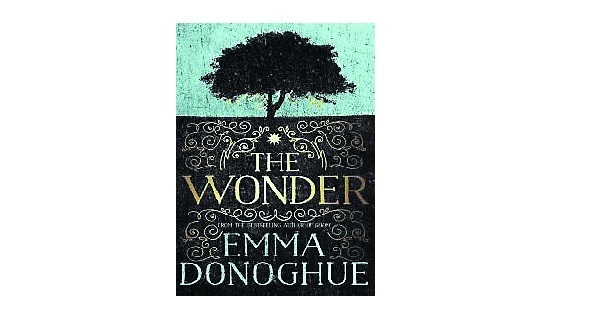
The young girl at the centre of Emma Donoghue’s new novel The Wonder hasn’t eaten for four months. Eleven-year- old Anna O’Donnell spends her days in bed in a tiny cottage in the Irish midlands, wilfully starving herself for some higher religious purpose.
The vivid descriptions of the effects of her mission hit home in Donoghue’s crystal clear prose: “The simian fuzz on the cheeks had thickened, and it was coming in on the neck. A cluster of brown marks around the collarbone, scaly.”
These symptoms are noted with forensic accuracy by an English nurse, Lib Wright, a former Nightingale who has been dispatched to Ireland to determine whether Anna is a fraud or a marvel.
Initially acting as watchman, Lib comes to care for her patient and works furiously in the book’s final quarter to see if she can save her. Along the way, there are perhaps too many leading questions and explaining of Anna’s behaviour, but given Lib’s role they are forgivable.
What makes Donoghue’s novel so compelling is not just the skilfully paced mystery, but the choice of post-Famine Ireland as a backdrop. Set seven years after the Great Hunger, Anna’s actions take on historical significance. Fans of the Irish-Canadian author will not be surprised by this.
With a PhD in history from Cambridge, much of Donoghue’s back catalogue is in the historical fiction genre. In The Wonder she depicts a country barely back on its feet after years of death and starvation.
This comes to life through Lib’s overt prejudice: “Clearly the Irish Midlands were a depression where wet pooled, the little circle in a saucer.” She is equally cutting on Catholicism, noting of her fellow sentry Sister Michael, “Strange how they took the names of male saints, as if giving up womanhood itself”.
Other Irish customs are also scrutinised, from the resigned disposition of the people to the conviction that the fairies are behind Anna’s behaviour.
While Lib’s condescension could grate with readers in the hands of a lesser author, Donoghue gives us a likeable and no-nonsense narrator whose past has left her ruthless but not heartless.
The novel is as much about Lib’s journey as it is about Anna’s decline. A romantic subplot with Dublin journalist William Byrne brings overtones of Austen — and a similarly neat ending — as Lib comes to realise she is the only one who can save Anna from the “wonder” of her calling.
With much of the novel unfolding in a confined space as an adult watches over a child, comparisons have been made to Donoghue’s Booker shortlisted novel Room. Thematically there are parallels but the main difference with this story is that no-one is keeping Anna captive except herself.
A far more complex character than Jack, Anna is physically a child but mentally an adult, and a very 19th century Irish one at that, in her warped understanding of sacrifice and penance.
As the mystery unravels, Lib realises the real question is “not how a child might commit such a fraud, but why”. Crucially, she also comes to understand how her surveillance is contributing to Anna’s decline The sketchy members of Anna’s family and the community can no longer abet the situation once Lib is in situ.
“In childhood, Lib remembered, family seemed as necessary and inescapable as a ring of mountains.” In The Wonder, it becomes the nurse’s duty to help her ward make that escape.





