An au pair is not an employee
The au pair ruling misreads the typical relationship between an au pair and the family they are living with, writes Ellie O’Byrne.

An au pair is not an employee

Every year on my daughter’s birthday, Facebook messages and cards arrive from far-flung places. It’s our former au pairs with well-wishes; I jokingly call them “the fairy godmothers”.

For 20,000 families in Ireland, all or some of their childcare needs are being met by au pairs, so it’s not surprising that there’s been a heated response to the news of the Workplace Relations Commission’s ruling in favour of a Spanish au pair, awarded €9,000 when the WRC found that her host family were breaking employment law for paying her €100 a week.

We’ve hosted eight au pairs, beginning when the kids were four and nine, from Sweden, Italy, Spain, France, Germany and the Czech Republic. It’s tricky to find a good match and we need someone adaptable (I’m a single mother, juggling writing and an MA. Routine? What routine?). The kids are 11 and 16 now, and our household is noisy and chaotic. We laugh a lot, we cry a lot, we argue a lot and we dance in the kitchen. Oh, and I’m an absolute stickler for the green veg.

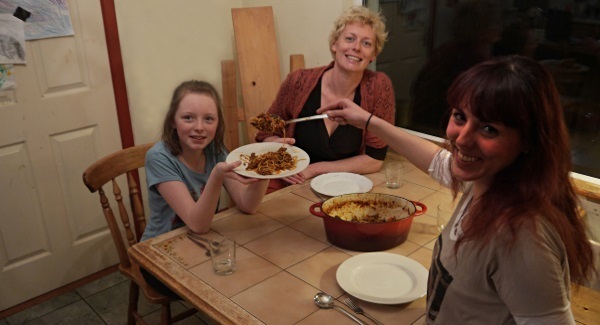
We’ve had hits and misses. We’ve had au pairs who confidently declared themselves “excellent cooks” serve up pasta bakes where the pasta was still crunchy. We’ve had au pairs like older sisters to the kids, always up for a laugh and a cuddle, who helped with homework with grace and good humour. We’ve had au pairs who sulked, ignored the kids and spent every Monday in a hung-over fog, having blown their entire allowance on beer at the weekend. We’ve had au pairs with breathtaking fridge-raiding tendencies.

I’ve heard horror stories of outrageous exploitation. One of our au pairs was with a family with three children under five and both parents working. She was expected to do night feeds with a four-month-old baby five nights a week on top of her daily duties of caring for the baby and two pre-schoolers. We met to discuss her coming to us instead, and she cried when she told me her story.

Another au pair confided that a friend was driven to tears, screaming at the baby in her care, “What do you WANT?” The infant had special needs and the girl was isolated in a rural area for long hours with no transport and a constantly crying baby whose needs she didn’t understand — a child protection nightmare if ever I heard one.

What I really don’t understand is how exploitative parents can imagine that their child’s welfare could be safe in such hands. It’s extraordinary that we’re all talking about the welfare of au pairs and the needs of parents with no mention at all of the most voiceless and vulnerable group of all: the babies and children whose safety is on the line.

For anyone contemplating an au pair, there are plenty of guidelines on the Irish National Au Pair Association website at inapa.org. Au pairs should work 30- 35 hours per week maximum, be available for light housework, have weekends free and access to language classes. The guidelines ensure you don’t take advantage of an au pair and treat her as a skivvy while ensuring that your kids aren’t being minded by a stressed-out, resentful person.

A huge black market in childcare is being fed by parents, au pairs and don’t forget, local cash-in-hand childminders. The Au Pairs in Cork closed Facebook group has 5,500 members, and the prevalence of young women from South America and the Philippines is notable; many of them want cash-in-hand work, and a way to stay and build a life in Ireland.

But in some cases, the term au pair seems to be rapidly becoming an euphemism for an undocumented domestic worker, and informal online arrangements provide no safety net for parents or vulnerable young people.

Ger Mallon and his wife Viv run Douglas Au Pairs, an agency in the suburbs of Cork. A line of distinction needs to be drawn between an au pair and a qualified childminder, Mr Mallon believes.

“Being an au pair is not domestic labour, it’s a cultural exchange,” Mr Mallon said. “We’ve been asking politicians to legislate for years; Ireland is the only country in the EU where au pairing is unregulated. We need to formalise the concept of an au pair as a separate cultural institution; it’s not a replacement for full-time childcare.”

There’s no denying that many beleaguered parents are feeling aggrieved at the WRC ruling. Many say they go beyond the call of duty and that their role far exceeds that of employers. They say the €54 weekly room and board the WRC allowed parents as a deduction goes no way towards the true value, both financial and supportive, of their role as hosts to young girls.

“I’m so cross about this,” said one mother-of-three who has had six au pairs in the last four years. “On their days off we feed them and they have the full use of our homes seven days a week? What about taking them on holidays, hosting birthday parties for them, having their family to stay ?”

How does her role differ to that of an employer? “Paying for toiletries, doing their laundry, driving them into town on nights out, helping one of my au pairs get the morning-after pill, or being there emotionally for another who coming out as lesbian.”

x

More in this section

Cookie Policy Privacy Policy Brand Safety FAQ Help Contact Us Terms and Conditions

© Examiner Echo Group Limited













