Exploring the nature of time through art
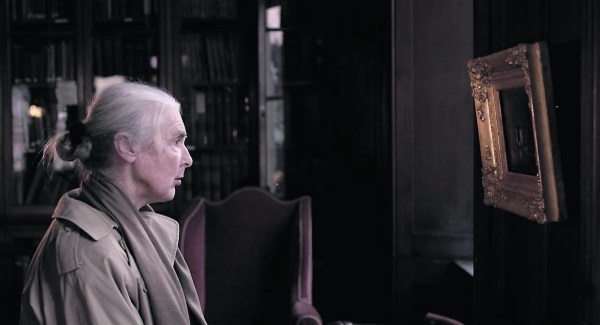
THE artist Martin Healy comes to the Crawford Gallery in Cork with a major exhibition of recent works, opening today. The exhibition, displayed over two floors, includes a number of new photographic and sculptural works and two film pieces, Harvest and A Moment Twice Lived.
The latter’s title, from which the show takes its name, alludes to a key concern for Healy: The nature of time, something he sees as a point of connection between the show’s various elements. “I’m not sure there is a single, simple premise,” he says, “but if I had to think of a connective for them, it would be that they have something to do with time, and our perceptions of time.”

Healy cites the work of JW Dunne, a British philosopher who proposed ideas of the coincidence of all moments, with different kinds of time existing existing within the dimensions of spacetime. Dunne’s impressions of this veer closer to the science-fictional than the scientific, with accounts of precognitive dreams and so on, but Dunne’s 1927 work has proven fecund imaginational ground for artists, writers, and quantum physicists.
For Healy, it’s an invitation towards contemplation, something he extends into a literal manifestation of this, via a bench included in the show. “I had it made with iron meteorite fused through the cast-iron base that was done in the casting process, so within that bench there are Millenia, so to speak.
“It’s a space to consider time,” he says. “You can sit on that bench, say, and consider multiple layers of time. You can consider it in terms of billions of years, as part of it is billions of years old. There is a pensiveness in that, I think.”
A Moment Twice Lived references a minor work by the 18th-century Cork painter Nathaniel Grogan. During the course of the film, a narrator periodically refers to dreams and experiences of temporal dislocation, questioning our perception of the passage of time and its relationship to our understanding of the world.
Harvest, meanwhile, was filmed in the Botanic Gardens in Dublin, a mesmeric film that again invites contemplation of different orders of time: The manmade, the natural and, perhaps, something in between, which a botanical garden seems to be. “I’d made another piece in that space before,” says Healy, “and I really liked the kind of particular atmosphere that’s in that place. It has a feeling of frozen time that is kind of interesting.”
Harvest points to a concern of Healy’s, not just with time itself, but with our particular time also. The piece touches on man’s relationship with nature, at a time when that has reached crisis point. Healy cites other works, including Alan Weisman’s 2007 imaging of a post-human world, The World Without Us, and John Christopher’s apocalyptical 1956 sci-fi classic The Death of Grass.
“There are areas of literature that I turn to where I might piece together an idea,” he says, “or that might feed into a piece in some way. But it’s not a wholly conscious decision. It’s more that’s what I’m aware of, and what I’m reading. I don’t set out to do something specific, but I think those concerns naturally come into it. If you think of science fiction books from the 1950s and 1960s, they might have been looking at these concerns and making them manifest, bringing them to a natural conclusion. They’ve presented us with this variety of futures, which in some ways you could say are coming to pass.
“You’d wonder would a botanic gardens be the only place where people might experience a tropical forest environment, eventually,” says Healy. “That’s extrapolating it to an extreme, but at the same time, you do have an awareness of these things and, as an artist, you’re free to present an idea and not conclude it.”












