First Thoughts: The Woman in Black, and other Ghost Stories
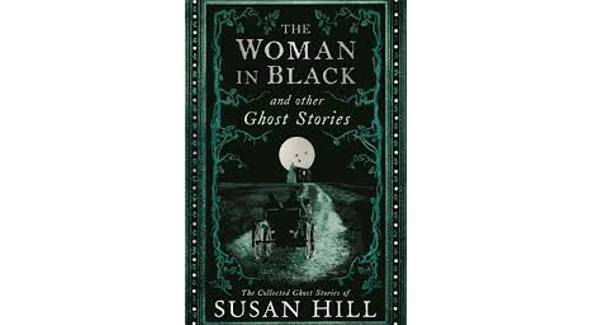
Yet as prolific, versatile and acclaimed as she is, her reputation lies largely with one book.
With ‘The Woman in Black’, Hill established herself not only as a masterful exponent of the traditional ghost story but as the natural heir to the likes of Henry James, Dickens and, most obviously, MR James.
First published in 1983, this instant classic has thrilled generations both on the page and in a West End stage adaptation still smashing box-office records after more than 25 years of continuous production. Then, in 2012, it reached a still wider audience when Hammer presented it for the big screen.
The story: Junior solicitor Arthur Kipps travels to the north-east town of Crythin Gifford for the funeral of a reclusive client, Alice Drablow. Needing to set her affairs in order, he spends several days at Eel Marsh House, an isolated mansion at the end of a causeway that is cut off from the mainland at every high tide. It is a disturbing place, full of odd noises and increasingly intimidating atmosphere.
At the funeral, he’d glimpsed a woman dressed in black. The locals are reluctant to speak of what he saw, though there is clearly a story to be told.
Thoroughly spine-chilling, perfectly paced, and evoking such genre masterpieces as The Turn of the Screw and The Hound of the Baskervilles, and making exquisite use of setting and mood, it is this volume’s obvious highlight. The four other short novels that comprise the collection — each of which has been published by Profile in stand-alone editions over the past five years — can’t quite hit the same stellar heights, but still offer much in the way of worthwhile reading.
‘Dolly’ finds Edward Cayley remembering a childhood summer at Iyot Lock, a large old house in the English Fens, with his spoilt and wicked cousin, Leonora, and their aunt Kestrel.
Trouble arrives on Leonora’s birthday, when Kestrel, in an attempt to grant her niece’s dearest wish, gifts her a china doll. It’s not the doll she wanted, though, and she smashes it against the wall in a fit of rage. They bury the ruined toy in the graveyard, but this is one doll that won’t stay down.
Better, and probably the best of the rest, is ‘The Man in the Picture’, a strange tale recounted to our narrator, Oliver, by his old Cambridge professor, Theo Parmitter.
Theo, a life-long art collector, once chanced across an unusual 18th century oil painting, depicting a wild Venetian carnival, and by fortune or otherwise won it at auction ahead of the rich and elderly Lady Hawdon. But what hangs on his wall now has a rare and absorbing power.
In ‘Printer’s Devil Court’, arguably the weakest of the stories, Hugh Meredith, a young student attending medical college, lodges with three other doctors in an old London house. One drunken night, two of the young men, Walter Powell and Rafe McAllister, start theorising about raising the dead. The third man is horrified, but Hugh’s curiosity keeps him involved in experiments that will have far-reaching consequences.
Completing the collection in strong fashion is ‘The Small Hand’. Adam Snow, an antiquarian book dealer, takes a wrong turn and comes upon an old, crumbling mansion, The White House. Inexplicably drawn to the place, he is exploring the overgrown garden when he feels the unmistakable touch of a small hand. Once the shock abates, Adam attempts to research the house’s history, but the haunting for him is nowhere near done.
Fans of a good old-fashioned ghost story will devour this one.












