Jane Smiley gives some food for thought
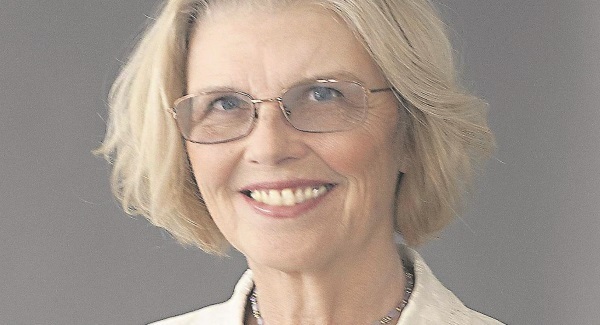
THE Pulitzer Prize-winning novelist Jane Smiley chose to sow the seed for her 100-year family trilogy on a farm in Iowa, the final volume of which will be published in the autumn.
The action — which follows the progeny of Walter Langdon, a Great War veteran, and his Germanic wife, Rosanna, as their messy lives unfurl across the twentieth century — starts in 1920 in the first instalment, Some Luck. There were a couple of drivers, says Smiley, for deciding to start her tale in America’s Midwest, the nation’s breadbasket.
“I wanted to start with farming because the American idea of what food is and how it should be produced is so weird. It has led to huge-scale industrial farming and this weird diet that Americans have. It’s sort of like eating plastic. That’s what we do! It’s sick. I’m not in favour of it. I thought that was an interesting aspect of the last 100 years — how a culture feeds itself is really symptomatic and indicative of how that culture sees itself.
“The other thing I wanted to explore is that when you have characters who start out in Iowa, at least some of them have to get out and go places because there’s just not enough money on the farm for everybody to stick around. I knew if I started my characters in Iowa they would go to the war, to the east coast, to the west coast; they’d go find other jobs. I figured they would be much more exploratory than if they started in, say, New York City.”
It is a fascinating, fundamental truth that Smiley explores — the way in which food and farming tells a lot about a culture. The most radical way in which life for her characters has changed since 1920 to modern times, which has resonances across the western world, is their attitude to food consumption.
She adds: “Agriculture has become industrialised. You have to have a lot of land and you have to be able to afford the equipment and the acreage and the feed and the pesticides. In the 1920s, in Some Luck, Walter talks about things like whether he should keep growing oats or not. He’s got horses so the oats and the oat hay get the horses and the people through a bad winter. Even if he’s not getting much money for the oats, he’s using them to exist.
“That’s not the way it works anymore. Now they wouldn’t grow oats at all. They would be growing corn or beans. They wouldn’t be eating those corns and beans. It is now entirely commercialised. They might have their own garden and a few animals but the idea that the farm is at root self-sufficient doesn’t exist in most places anymore because it’s been industrialised.
“A lot of the land is owned by big companies anyway, so the idea of a farmer having his own farm still lingers but is going by the wayside. As farming gets too expensive then it’s only corporations that can afford to buy farms, which they buy as investments and hire out to farms. That doesn’t even address the issue of climate change.
“I keep talking about these issues through all three volumes of the trilogy but there is still this chance in the current era that if you’re in Iowa, [your predicament] is lucky and unlucky because a) you’re in a beautiful and verdant place but b) you’re in the middle of nowhere!
“I remember when I lived in Ames, Iowa. It is a wonderful place to live and a wonderful place to have kids but if we wanted to have a good time we used to say to each other, ‘OK, are we going to go to Minneapolis? Are we going to go to Chicago? Are we going to go to Kansas City?’. All three of those places seemed incredibly exotic to us. There would be so much music and things to look at, and museums, and things to buy. It seemed so exciting.”
Smiley’s characters endure many of life’s travails, including breast cancer, and brushes with the significant historical events of the last American century, going to Europe during the Second World War, the angst over the invasion of Vietnam in the 1960s and the Cuban Missile Crisis amongst them. She remembers vividly the spectre that loomed over her as a child during the United States-Soviet Union face-off in 1962.
“I was born in 1949. Many people of my generation, certainly this is true of me, were very much shaped by the Cold War and by the fear we had of mutually assured destruction. One of my strongest memories was when I was 13. We came home from school and the Cuban Missile Crisis was unfolding. I was afraid. I’ll never forget sitting at the kitchen table and asking my stepfather, who was a kind man, if they started sending missiles were we going to get in the car and drive west. He said, ‘No, we’ll stay right here because we won’t want to survive’.
“He knew there would be so much destruction and fallout it would be terrifying and painful. I’m sure my jaw dropped. I believed him. I never forgot that. I can still picture the table. And him saying that.”
Jane Smiley will appear at Kilkenny Arts Festival on Sunday, August 16. www.kilkennyarts.ie.
Kilkenny Arts Festival highlights
Trad star Martin Hayes, who was the nexus for last year’s acclaimed Gloaming project, is curating a Marble City sessions in which he gathers various artists from around the world. They will number Jordi Savall, David Power and the Cork Gamelan Ensemble.
A strand highlight of the festival will be the 18 live concerts that will be performed from JS Bach’s oeuvre, including the Brandenburg Concertos 1,2 & 4, around the city.
It’s not often someone who has guested on The Simpsons visits Kilkenny, so it will be interesting to hear the thoughts of American laureate, Robert Pinsky, who is known for translating Dante’s Inferno and also for moderating a heated television debate between Stephen Colbert and Sean Penn on The Colbert Report.
Other selections to consider are the condensed, six-hour DruidShakespeare adaptation of the Wars of the Roses play cycle, suitably performed in the Castle Yard beside where Richard II was billeted during his Irish wars.















