Book review: Jeremy Hutchinson’s Case Histories
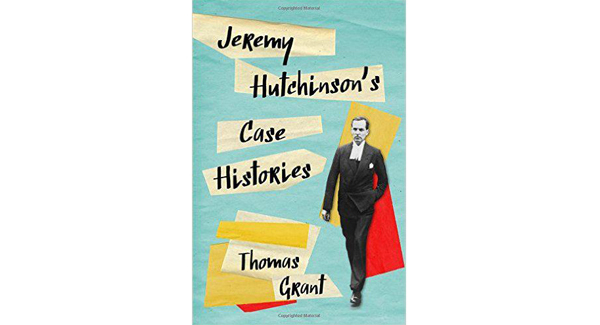
IF Gay Byrne was responsible for dragging Ireland into the modern age, the same could be said of Jeremy Hutchinson in Britain.
His stage of choice, though, was not the television studio but the courtroom, employing his considerable oratorical skills as a barrister to exploit the quirks of Britain’s legal system, thereby helping to usher in a new age of permissiveness there.
His name will forever be associated with the most famous cases of the 1960s, ’70s and early ’80s.
Hutchinson is still considered the greatest advocate of his generation, a pivotal figure in some of the most celebrated trials of the 20th century, whose clients included Christine Keeler, the spy George Blake and Penguin Books in the Lady Chatterley case.
He is also believed to have been the inspiration for John Mortimer’s Rumpole of the Bailey.
Born in 1915, he had an auspicious start in life, connected to the Bloomsbury set.
His mother, on whom Virginia Woolf supposedly modelled her fictional socialite Mrs Dalloway, was a cousin of Lytton Strachey, the notorious founder of the Bloomsbury group who had a taste for sado-masochism.
He and his sister grew up well acquainted with the literary giants of the time, with regular house guests including TS Eliot and Aldous Huxley.
His theatrical connections were equally impressive; his first wife was the actress Peggy Ashcroft. He left her 25 years later for June Osborn, whose father ‘Boy’ Capel had been the lover of Coco Chanel.
He served as a naval officer in WWII and was found clinging with Captain Lord Louis Mountbatten to the wreckage of their destroyer, HMS Kelly, when it was sunk off Crete in 1941.
But it is his remarkable legal career on which Thomas Grant’s fascinating book focuses, and understandably so, for Grant is himself a barrister.
Case Histories provides a definitive account of Jeremy Hutchinson’s life and work.
From the sex and spying scandals which contributed to Harold Macmillan’s resignation as British Prime Minister in 1963 and the subsequent fall of the Conservative government, to the fight against literary censorship through his defence of Lady Chatterley’s Lover and Fanny Hill, Hutchinson was involved in many of the great trials of the period.
He defended George Blake, Christine Keeler, Great Train robber Charlie Wilson, Kempton Bunton (a disgruntled bus driver and the only man successfully to ‘steal’ a picture from the National Gallery), art faker Tom Keating, and Howard Marks who, in a sensational defence, was acquitted of charges relating to the largest importation of cannabis in British history.
He also prevented the suppression of Bernardo Bertolucci’s notorious film Last Tango in Paris and did battle with Mary Whitehouse when she prosecuted the director of the play The Romans in Britain.
Hutchinson’s speciality was the ‘glamour brief’, defending the great and the good — even if they were bad — in England’s swinging ’60s.
He defended Lady Bridget Parsons, wife of the Irish peer, Edward Parsons, fifth Earl of Rosse, when she was charged with drink driving. Her passengers were the Duke and Duchess of Devonshire.
After her arrest, Lady Parsons was seen to sway as she was carted off in a Black Maria. Hutchinson managed to persuade the jury that her unsteadiness was not drink-related but as a result of wearing a tight evening dress and high heels.
He did the same for actor Trevor Howard. The high heels defence in this case was not an option but he enchanted the jury with Howard’s love of cricket and a conversation he had with the arresting policeman about the difference between a ‘googly’ and a leg break.
“Is it really possible, members of the jury, that a man could have such a conversation and still be incapable of controlling a car?”
That did the trick.
He had less success with racing driver Stirling Moss on his conviction for dangerous driving, leading to the origin of the police (and garda) cliche: “who do you think you are, Stirling Moss?”
Hutchinson is still around, turning 100 last March, and as sharp as ever with a clear recollection of his very first case, the court martial of a British sailor for the capital murder of another Allied serviceman in Italy during WWII.
In Rome in 1944, a group of Allied deserters had set up as outlaws, plundering the countryside and selling their wares on the black market.
In November of that year, the body of one of the gang, a Canadian soldier, was found outside the city. He had fallen out with his fellow gang members over distribution of the spoils. He had been shot and his body dumped by the gang leader, Bill Croft.
The court martial took place at San Carlos opera house in Naples where Hutchinson had seen La Traviata weeks earlier. It was “a wonderful room with chandeliers and beautiful paintings and so on,” he recalled in a recent TV interview.
“There I was, a just-qualified barrister ... it must be unique in the history of the bar. My first case was a murder case.” In what was, perhaps, a portent of things to come, Hutchinson’s recollection of the case centres on Croft’s scorned dark-eyed Italian mistress.
“On her arm was a six-month old baby, the child of Croft. As she gave evidence, she suddenly opened up her dress and out came this beautiful breast to feed the baby. In typical naval attitude, nobody batted an eyelid.”
Hutchinson won his first case. Croft was found guilty and sentenced to death, the last British sailor to be executed.
But Hutchinson had enough of war and, in another sign of things to come, showed how crafty he could be.
As the war in Europe was coming to an end, he seized the opportunity to get some badly needed home leave by contesting the British General Election of 1945, as candidates in the forces were allowed a month’s campaigning leave.
He threw himself into the campaign with vigour, even having the cheek to canvas Prime Minister Winston Churchill at 10 Downing Street which was in his constituency, asking the doorman: “is the householder in?” Luckily for him and British justice, he lost the election and could finally begin his legal career in earnest.
Case Histories is a comprehensive — albeit uncritical — look at Hutchinson’s remarkable life. He clearly is Thomas Grant’s hero and who could blame him?
Hutchinson’s career, both at the bar and later as a member of the House of Lords, has been one devoted to the preservation of individual liberty and to resisting the incursions of an overbearing state.
Once asked about joining the ranks of the judiciary, he responded: “I could not bear to be respectable” — the words of a true hero.
CONNECT WITH US TODAY



Be the first to know the latest news and updates

















