Book review: The Framing of Harry Gleeson
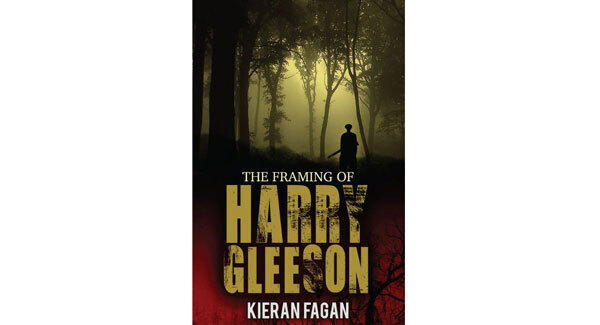
Kieran Fagan
Collins Press €12.99
While convicts often talk about being in the wrong place at the wrong time, Tipperary man Harry Gleeson was certainly in the wrong place at the wrong time and — in terms of the punishment for the crime for which he was wrongly convicted — he lived in the wrong era.
From the first page of this new book, Kieran Fagan hits the ground running with a journalistic zeal to set out in forensic detail how it happened that the neighbour who reported finding the body of Moll McCarthy with her face shot off in a Tipperary field in November 1940 came to be tried, convicted and hanged for her murder.
Before his execution, Harry Gleeson said he had no confession to make except the prayer, “that whoever did it will be discovered and that the whole thing will be like an open book … I have no confession to make, only that I didn’t do it.”
He went on to implore his defence lawyers to clear his name after his death.
Since his execution in 1941, his story has not gone away in his townland of New Inn and surrounding areas in Tipperary.
At a wider level, there have been some books and a documentary from RTÉ but it had run cold until Kieran Fagan looked into it again with fresh eyes.
Also investigating it was the Irish Innocence Project — as part of the international organisation to investigate cases where they believed there has been a miscarriage of justice.
The latest development in this case came in January of this year when Harry Gleeson received a posthumous pardon.
Fagan continues this process of exoneration and honouring the last wish of a man to make the murder an open book.
Forensically examining shaky evidence put forward for the prosecution and looking further into the social and political framework of the locality, not least sharp practice in the garda investigation, he sets to his task like a defence lawyer.
Harry Gleeson emerges as an outsider merely by virtue of coming from another part of Tipperary a few parishes away, who worked his uncle’s farm, not for a wage but on the tenuous basis that he would inherit the farm and then a life of some slight substance would enable him to marry.
Fagan paints him as a pathetic figure who walked into a local conspiracy and left himself open by lying about innocuous matters.
Also in the manner of a defence counsel, Fagan is too busy defending Gleeson to labour the whodunit. It is almost in passing that the writer lays the blame at the feet of a group of neighbours who had IRA links and he names the man he believes shot her.
Moll McCarthy gave birth to seven children, each by a different father, and she lived with her children without a constant partner.
In Fagan’s account, many men used her for sex, among them several local IRA men who became paranoid about the fact that she may have been informing on them to a local sergeant.
Sometimes in the mass of details, one might long for a wider angle on the mores of the day that made the conviction and execution of Harry Gleeson both necessary and inevitable to sustain the hypocrisies of local society.
But even in the thicket of evidence and details here, we get many pictures, impressions and senses of the world of 1940s Ireland, and many of them are less than heartening.









