Book review: Told Again
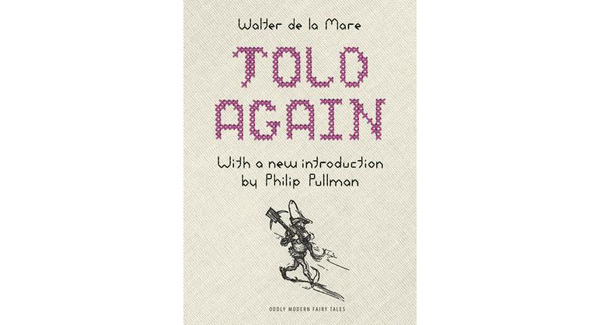
Walter de la Mare (with a new introduction by Philip Pullman)

Book review: Told Again

MENTION Walter de la Mare, and most Irish people of a certain vintage will recall his name from poems learned in school, particularly the evocative Edgar Allan Poestyle verses of ‘The Listeners’ (‘Is there anybody there?’ said the Traveller, / Knocking on the moonlit door; / And his horse in the silence champed the grasses / Of the forest’s ferny floor...)

De la Mare was certainly best known as a poet, but he was also widely acknowledged as one of finest ghost story writers of his era, in addition to being an acclaimed and award-winning novelist, deeply admired by such literary giants as WH Auden, Dylan Thomas and Vladimir Nabokov.

But beyond the touchstones of a few ingrained verses and, for aficionados of the macabre, the supernatural stories, he is a writer who seems to have been largely forgotten by the modern world. Which is a great shame.

Told Again is a genuinely beautiful book. Most of the 19 stories included here are known to everyone by heart, classic bedtime tales like ‘Jack and the Beanstalk’, ‘Little Red Riding-Hood’, ‘SnowWhite’ and ‘The Sleeping Beauty’.

But where the likes of the Brothers’ Grimm favoured lean folk renditions, with characterisations kept paper thin in favour of such fairytale necessities as pacing, plot twists and the inevitably heavy helpings of moral consequence, de la Mare favours a more literary turn, which allows him to find the song inside each story.

In language rich, vivid and always full of melody, he understands the value of setting, and if pace is sometimes lost as he lingers over a scene, then it is always to a purpose.

These are stories that unfurl across a living landscape, however magical.

‘Expansive’ is a word Philip Pullman uses in his insightful introduction, and that’s a good summation of de la Mare’s style.

But even when the author gives us sentences that can be deemed unnecessary to the plot, nothing is wasted.

His sense of story is immaculate. Characters are often flawed but always properly motivated, and the descriptions work because of their vivid intensity and because of how they so subtly and so often foreshadow things to come.

Sometimes, the stories (‘Rapunzel’, for example, or the less familiar ‘The Four Brothers’ or ‘The Dancing Princesses’) will occasionally stray in detail from the ways we’ve known them told, but folk tales are defined by their constant state of flux, and it’s important to remember that these had already passed through generations of oral tradition by the time the Brothers’ Grimm and others finally got around to setting them in print.

With Told Again, Princeton University Press have resurrected a 1927 classic that deserves a place in any home where young children lay down their heads to sleep.

More in this section

Cookie Policy Privacy Policy Brand Safety FAQ Help Contact Us Terms and Conditions

© Examiner Echo Group Limited













